Why Use a Gantt Chart? Key Purposes Explained for 2026
A project can feel chaotic even when everyone is working hard. Deadlines shift, tasks depend on one another, and a small delay can quietly affect the entire delivery plan. Without a clear visual schedule, your team may discover problems only after they become urgent.
That confusion creates more than missed dates. People struggle to see priorities, managers spend extra time explaining progress, and stakeholders receive vague updates instead of useful answers. A task list alone rarely shows how work fits together across weeks or months.
But here's the truth: a Gantt chart turns project timing into a visual plan. It shows tasks, durations, dependencies, milestones, and progress on one timeline. This guide explains its purpose, its practical benefits, its limits, and how you can use it effectively in 2026.
What Is the Purpose of a Gantt Chart?
The purpose of a Gantt chart is to visually plan, schedule, monitor, and communicate project work across a timeline. It places tasks on horizontal bars, so you can see when work begins, how long it lasts, what depends on it, and whether the project is progressing as planned.
A Gantt chart connects the project scope with a calendar. For example, a website launch plan might show research during week one, design during weeks two and three, development during weeks four through six, testing during week seven, and launch preparation during week eight.
Here’s why: a task list tells you what needs to happen. A Gantt chart also shows when it should happen, how long it may take, and which activities must happen first.
The Main Elements of a Gantt Chart
- Tasks: The activities required to complete the project.
- Time scale: Days, weeks, months, or quarters displayed across the top.
- Duration bars: Horizontal bars showing each task’s planned start and finish.
- Dependencies: Links showing that one task relies on another.
- Milestones: Important events or checkpoints with little or no duration.
- Progress indicators: Visual markers showing how much work is complete.
- Assignments: The people or teams responsible for each activity.
A Simple Example
Imagine you are organizing a product launch. Market research must finish before positioning can be approved. Positioning must be approved before the campaign team creates advertisements.
A Gantt chart makes that chain visible. If research slips by three days, you can immediately inspect the effect on positioning, advertising, review, and launch readiness.
The best part? You can discuss the plan using a shared visual reference instead of explaining every timing relationship verbally.
Five Practical Purposes of Gantt Charts
1. Planning the Project Timeline
A Gantt chart helps you translate a broad goal into scheduled work. You can break a launch, construction effort, software release, or event into manageable activities.
For example, “release the mobile app” may become research, interface design, development, security review, testing, store submission, and rollout monitoring. Each activity receives a planned period on the calendar.
This planning view helps reveal whether the target date is realistic. If the team has six weeks but the work requires eight weeks of sequential effort, you can adjust the scope, add capacity, or move the deadline early.
2. Showing Task Dependencies
Many project delays happen because work occurs in the wrong order. A Gantt chart exposes those relationships before they create disruption.
Suppose a construction team schedules electrical installation before the interior walls are ready. The plan may look busy, yet the sequence is impractical. A dependency link makes the required order clear.
Dependency planning also helps you identify critical activities. A delay on a task with several successors can affect the final delivery date more than a delay on an independent task.
3. Coordinating People and Resources
A timeline helps you see who is responsible for work and when their availability matters. That view can prevent several teams from competing for the same specialist at the same time.
Consider a product team that needs one security engineer for architecture review, penetration testing, and release approval. A Gantt chart can place those activities in a workable sequence.
It can also expose quiet periods. If a designer finishes early while another designer faces overlapping deadlines, you may redistribute work before pressure builds.
4. Tracking Progress Against the Plan
A Gantt chart becomes more useful after work begins. You can compare planned timing with actual progress and see where the project is drifting.
For example, a three-day task might be 60% complete after four days. That difference deserves attention, especially if the task blocks testing or approval.
Progress tracking supports earlier decisions. You might reduce scope, change the sequence, add help, or revise the delivery date while options remain available.
5. Communicating Project Status
Stakeholders often need a quick answer to three questions: What has finished? What is happening now? What could affect the deadline?
A well-maintained Gantt chart answers those questions visually. Executives can review major milestones, team leads can inspect dependencies, and contributors can focus on their upcoming responsibilities.
For instance, a marketing director may not need every testing task. A milestone view can show campaign approval, creative completion, launch readiness, and the planned release date.
How Gantt Charts Support Better Project Decisions
They Make Schedule Risk Easier to Spot
Schedule risk often hides inside small delays. One late approval may postpone design changes, quality checks, training, and launch preparation.
When those relationships appear on a timeline, you can investigate the risk earlier. The chart does not solve the delay automatically, but it shows where the delay may travel.
They Clarify the Critical Path
The critical path is the sequence of activities that directly determines the earliest possible completion date. If a task on that path slips, the project may finish late unless you take corrective action.
Imagine a home renovation with this sequence: permits, demolition, plumbing, wall closure, painting, and final inspection. A delay in furniture selection may have little effect, while a delay in plumbing can affect several later activities.
Marking critical activities helps you focus attention where schedule protection matters most.
They Improve Scope Discussions
When someone requests an extra feature, a timeline helps you examine its consequences. You can ask whether the work needs new design time, engineering effort, testing, approval, or training.
For example, adding a reporting dashboard near the end of a software release may require changes to architecture and testing. The visual schedule makes those effects easier to discuss.
That clarity supports practical trade-offs between scope, time, quality, and capacity.
Gantt Charts Compared With Other Project Views
No single project view answers every question. A Gantt chart works best when you need schedule context, while other views help with different types of work.
| Project view | Best purpose | Example use |
|---|---|---|
| Gantt chart | Planning timing and dependencies | Coordinating a six-month product release |
| Kanban board | Managing workflow and work in progress | Moving support requests through review stages |
| Calendar view | Checking events and date commitments | Reviewing meetings, launches, and due dates |
| Task list | Recording individual responsibilities | Tracking personal actions for a campaign |
| Roadmap | Communicating strategic direction | Showing quarterly product themes |
You might be wondering: should you choose one view and ignore the rest? Usually, the better choice depends on the question you need to answer.
A product team might use a roadmap for long-term priorities, a Gantt chart for a release plan, and a board for daily execution. Each view serves a different planning layer.
When a Gantt Chart Works Best
Projects With Clear Start and Finish Dates
Gantt charts are especially useful when the project has a target completion date. Examples include office moves, software releases, conferences, construction work, and regulatory initiatives.
The timeline gives the team a shared view of progress toward that date. It also helps you check whether unfinished work still fits inside the remaining time.
Projects With Many Dependencies
Dependency-heavy projects benefit because timing relationships are visible. Product launches, facility upgrades, and system migrations often include activities that must happen in a specific order.
For example, a migration may require access preparation, configuration, testing, training, rehearsal, and cutover. Moving one activity can affect everything that follows.
Projects With Cross-Functional Teams
Different departments may use different working styles. A timeline gives marketing, engineering, finance, legal, and operations one shared planning language.
It can show when each team needs to contribute. That reduces the chance that one group assumes another group will finish a prerequisite automatically.
When a Gantt Chart Needs Extra Care
Highly Flexible Work
Some work changes constantly. Exploratory research, creative development, and urgent support operations may not have stable durations or predictable sequences.
You can still use a high-level Gantt chart for major checkpoints. Avoid pretending that every small activity has a precise finish date when the work is intentionally adaptive.
Very Large Plans
A timeline with hundreds of tiny activities can become difficult to read. The chart may contain so much detail that important risks disappear visually.
Use summary tasks for major phases and keep detailed activities in focused views. A portfolio plan might show discovery, build, test, and release, while a team plan expands only the active phase.
Plans That Are Never Updated
A schedule loses value when actual progress changes but the plan remains untouched. An outdated chart can create false confidence and poor decisions.
Set a review rhythm that matches the project. A weekly update may suit a long initiative, while a daily review may be appropriate during a launch week.
How to Build a Useful Gantt Chart
Start With the Outcome
Write the project outcome in clear terms. “Improve customer onboarding” needs more detail before it becomes a workable plan.
A stronger outcome might be “launch the redesigned onboarding flow to all new customers by September 30.” That statement gives you a target and a way to evaluate completion.
Break the Work Into Manageable Activities
List the major phases first. Then divide each phase into activities that one person or one team can reasonably own.
A task such as “prepare launch” may be too broad. Separate it into announcement writing, approval, campaign setup, support training, and release monitoring.
Estimate Duration Carefully
Estimate the time required for active work and include realistic waiting periods. Reviews, approvals, handoffs, holidays, and technical uncertainty can affect the schedule.
If design normally takes five working days plus two days for review, schedule both parts. Combining them into one estimate can hide the approval risk.
Link Dependencies
Connect tasks when one activity cannot begin or finish until another reaches a specific point. Use dependencies selectively so the plan remains understandable.
For example, testing may begin after the first usable build arrives. It may continue while later development work proceeds, so a strict finish-to-start relationship may be inaccurate.
Add Milestones and Owners
Milestones provide clear checkpoints, such as “prototype approved,” “pilot complete,” or “release authorized.” Assign an owner to every meaningful activity.
Ownership improves follow-through because each person can see what they are expected to complete and when their work affects others.
Review and Adjust the Plan
Compare actual progress with the intended timeline. When a task slips, inspect downstream effects and decide whether to adjust scope, capacity, sequence, or timing.
Let me explain: updating the schedule is part of project control. It does not mean the original plan failed. It means the plan now reflects what the team knows.
Natural Topic Solution: ONES.com
Value Proposition
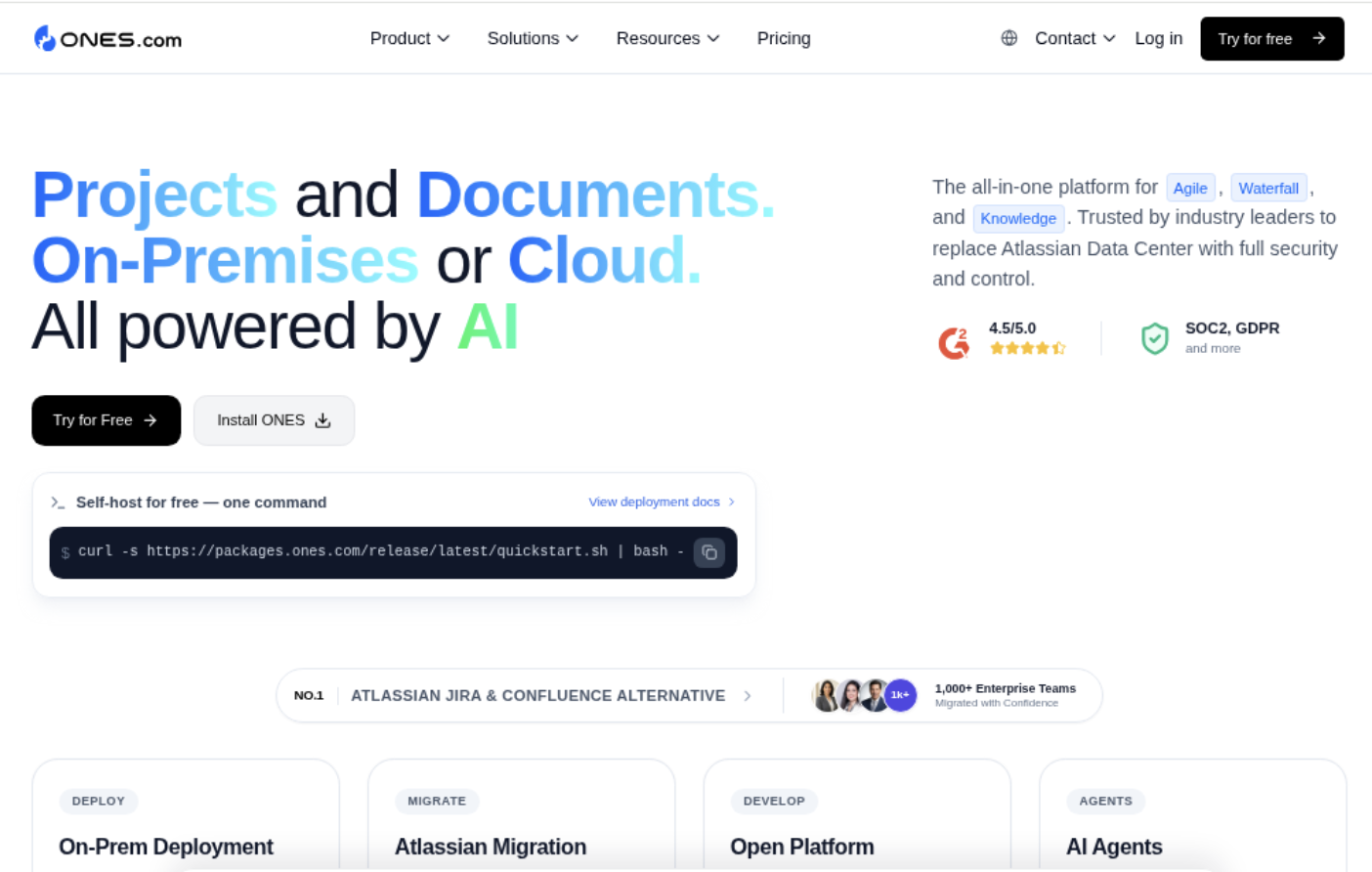
ONES.com combines project management and knowledge management in one platform. It can help teams connect scheduled work, collaboration, reporting, and shared project knowledge without assembling many separate plugins.
ONES Project is the project management product and a Jira alternative. ONES Wiki is the knowledge management product and a Confluence alternative. You can purchase them separately.
Core Capabilities
Scattered project details → Unified project workspace → Better schedule visibility
When plans, responsibilities, and updates live in different places, timeline decisions take longer. ONES Project brings project activities, assignments, and progress into a connected workspace.
Manual timeline maintenance → Gantt planning and dependency management → Clearer delivery sequences
Teams can organize activities on Gantt timelines, connect dependencies, and inspect how schedule changes affect later work. This supports release planning, implementation programs, and cross-team initiatives.
Inconsistent team processes → Custom workflows and fields → More reliable project tracking
Different teams may need different statuses, approval stages, or categorization fields. ONES Project supports custom workflows and custom fields, so your project structure can reflect the work you actually perform.
Unclear iteration planning → Sprint management → More focused delivery cycles
Agile teams can plan sprints, organize upcoming work, and review progress within the same project environment. A Gantt view can provide the broader release context around those shorter cycles.
Repetitive coordination → Automation → Fewer routine handoffs
Repeated actions can consume time and create avoidable mistakes. Automation can support recurring project rules, status changes, and notifications so the team spends more attention on meaningful decisions.
Limited progress insight → Built-in reporting → Faster status reviews
Managers often need more than a list of completed tasks. Built-in reporting helps teams inspect progress, workload, and project health through a consistent view.
Plugin-heavy project setup → Native feature parity → Lower configuration overhead
Teams using many add-ons may face maintenance work and inconsistent behavior. ONES Project provides native support for Jira-compatible workflows, reporting, custom workflows, custom fields, sprint management, and automation.
Restricted deployment requirements → Cloud and self-hosted options → More control over operations
ONES.com supports Cloud, On-Premise, Private Cloud, and Air-gapped deployments. The self-hosted version provides full feature parity with the cloud version, which can help organizations with strict environment requirements.
Application Scenarios
Software release coordination
An engineering team can connect discovery, design, development, testing, security review, and release milestones. Sprint work can sit within a broader Gantt schedule, helping leaders see both daily execution and delivery timing.
Regulated implementation programs
A company rolling out a new internal system can coordinate approvals, configuration, training, pilot testing, and deployment. An On-Premise, Private Cloud, or Air-gapped environment may suit operational restrictions.
Cross-department campaign launches
Marketing, sales, legal, and customer support can track their responsibilities against a shared launch calendar. ONES Wiki can hold connected knowledge when the team also needs a structured place for procedures and guidance.
Common Challenges and Practical Solutions
Challenge: The Schedule Contains Too Much Detail
Solution: Use a layered plan. Keep major phases visible at the leadership level, then expand only the phase that requires active management.
Challenge: Estimates Feel Unreliable
Solution: Separate active work from waiting time and review previous similar activities. Add reasonable contingency where uncertainty is high.
Challenge: Dependencies Become Confusing
Solution: Link only meaningful relationships. Explain why each important dependency exists, especially when several teams share the same milestone.
Challenge: Progress Updates Stop After Launch
Solution: Assign a schedule owner and define a review routine. Make updates part of the project meeting rather than an optional administrative task.
Challenge: Stakeholders Misread the Timeline
Solution: Add a short legend, highlight major milestones, and show the current reporting date. Explain whether a bar represents planned work, actual work, or both.
FAQs
Is a Gantt chart only useful for large projects?
No. A small project can benefit from a simple timeline with ten tasks and three milestones. The key is matching the level of detail to the project’s complexity. For a two-week campaign, you may need days instead of months. A lightweight chart can still reveal dependencies, ownership gaps, and timing risks without creating unnecessary administration.
What is the difference between a Gantt chart and a task list?
A task list mainly records activities and responsibilities. A Gantt chart adds time, duration, sequence, dependencies, milestones, and progress context. For example, a task list may say “complete testing.” A Gantt chart can show when testing begins, which build it depends on, who owns it, and whether it threatens the launch date.
Can agile teams use Gantt charts?
Yes. Agile teams can use Gantt charts for release planning, dependency management, and milestone communication. They may use a board for daily work and sprints for short delivery cycles, then use a higher-level timeline to connect those cycles to a broader goal. Keep estimates flexible and update the schedule as the team learns.
How often should you update a project timeline?
Update it whenever a meaningful change affects timing, ownership, scope, or dependencies. A weekly review suits many projects, while a daily review may help during a release or major transition. Avoid updating every minor detail if that effort does not improve decisions. The right rhythm keeps the timeline useful without turning it into busywork.
Conclusion
A Gantt chart gives you a visual explanation of how project work fits together over time. Its main purposes include planning schedules, exposing dependencies, coordinating teams, tracking progress, communicating status, and identifying delivery risk.
But here's the truth: the chart is only as useful as the planning decisions behind it. Clear activities, realistic estimates, meaningful dependencies, named owners, and regular updates create the value.
When your team needs connected project planning, reporting, workflows, and knowledge management, ONES.com offers a practical platform option. Start with the timeline questions that matter most, then choose the views and processes that help you act early.