How to Use a Gantt Chart in Jira: A Step-by-Step Guide!
Jira is excellent for tracking issues, sprints, and releases. Yet when you need to see dependencies, milestones, and delivery dates on one timeline, ordinary Jira boards can feel incomplete. Tasks may be updated correctly while the overall project schedule remains difficult to understand.
That confusion becomes expensive when one delayed task affects several teams. You may miss a dependency, promise an unrealistic release date, or spend hours rebuilding timelines in another tool. A simple list of tickets rarely shows how the work connects.
But here's the truth: you can use Jira with a Gantt chart by turning issues into scheduled tasks, linking dependencies, and reviewing the resulting timeline. This guide explains the process, the available Jira options, common mistakes, and a practical alternative for teams that want project and knowledge management together.
How to Use a Gantt Chart in Jira
A Gantt chart places Jira work items on a calendar timeline. Each bar represents a task, while links between bars show relationships such as “finish-to-start.” You can use it to plan work, monitor progress, identify schedule risks, and communicate delivery expectations.
The exact steps depend on your Jira setup. Jira Cloud and Jira Server or Data Center may offer different planning features, and some teams use a Marketplace app. The workflow below applies to most Jira-based Gantt planning approaches.
-
Clarify the project scope. Decide what the timeline should cover before adding tasks. For example, a mobile app release might include design, API development, testing, security review, and deployment.
-
Create or review Jira issues. Add the work items that need scheduling. Use epics for broad outcomes, stories or tasks for planned work, and subtasks for smaller activities.
-
Assign start and target dates. A timeline needs dates. Add realistic start dates and due dates to the relevant issues. Avoid giving every task the same deadline, because that hides the real sequence of work.
-
Organize the hierarchy. Group related work under epics, releases, initiatives, or another supported structure. A useful hierarchy lets you expand a product launch and see its design, engineering, marketing, and rollout activities.
-
Add dependencies. Link work that has a scheduling relationship. For example, “security review” may depend on “authentication implementation.” This shows why a delay in one task could move another task.
-
Open the timeline or planning view. In Jira, look for Plans, Roadmaps, or a Gantt-style view provided by your configuration. Select the project, board, or work scope you want to review.
-
Adjust the schedule visually. Move task bars when dates change, then check whether dependent work also needs adjustment. Keep the timeline aligned with the actual Jira issues.
-
Set milestones. Add meaningful checkpoints such as “design approved,” “beta released,” or “production launch.” Milestones help you discuss progress without reviewing every ticket.
-
Assign owners and capacity. Make sure each major task has an accountable person or team. Compare planned work with availability before committing to a delivery date.
-
Review and update the plan regularly. A Gantt chart is useful only when it reflects current work. Review it during weekly planning, after major scope changes, and whenever a critical dependency slips.
Choose the Right Jira Planning Method
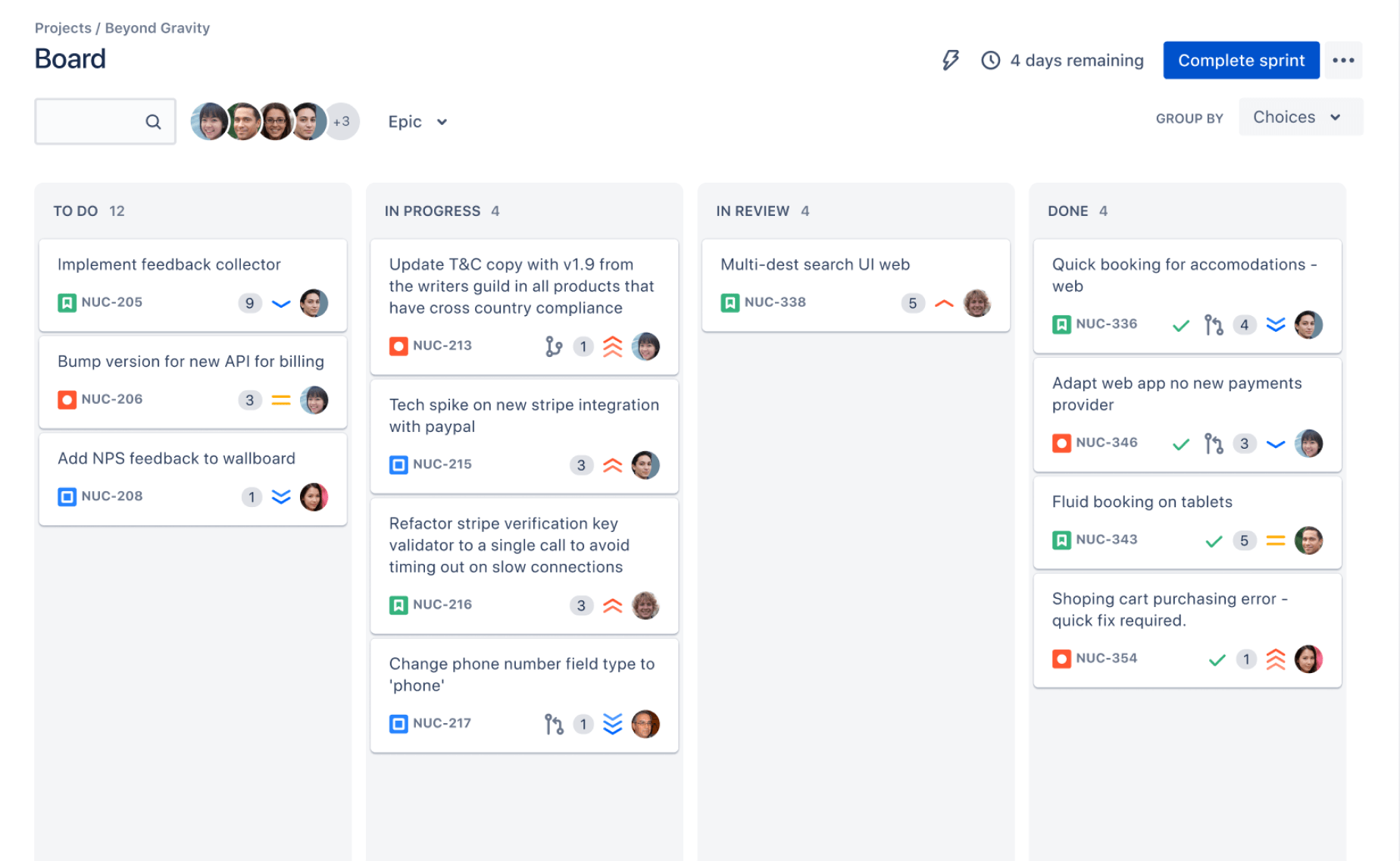
You generally have three routes: a native Jira planning feature, a Marketplace Gantt app, or a connected project management platform. Your choice depends on the level of scheduling detail you need.
| Approach | Best fit | Typical limitation |
|---|---|---|
| Jira Plans or Roadmaps | Teams that want planning close to Jira issues | Availability and features depend on the Jira edition |
| Marketplace Gantt app | Teams needing advanced dependency or portfolio controls | Extra configuration, licensing, and administration |
| Dedicated project platform | Organizations managing complex schedules across teams | May require workflow alignment and migration planning |
What a Jira Gantt Timeline Should Show
A useful timeline answers three questions quickly: what work is planned, when it should happen, and what could delay it. If the chart cannot answer those questions, adding more colors or fields will not solve the problem.
Tasks and Work Packages
Each significant activity should appear as a task or group of tasks. Avoid adding every tiny action to the main view. For example, “prepare release notes” can stay visible, while individual proofreading actions may remain inside a smaller work item.
Dates and Duration
Start dates show when work begins, while end dates show the planned finish. The distance between them represents duration. A two-day review should not occupy three weeks simply because the final deadline is far away.
Dependencies
Dependencies explain the order of work. Common relationships include finish-to-start, start-to-start, finish-to-finish, and sometimes start-to-finish. Most delivery plans rely primarily on finish-to-start links.
For example, testing cannot begin until a usable build exists. Linking those activities makes the relationship visible and helps you find the schedule’s critical path.
Milestones
Milestones mark important events without representing a long work period. A launch approval, contract signature, or customer pilot can act as a milestone that anchors surrounding tasks.
Progress
Progress indicators show whether work is complete, active, blocked, or at risk. Connect progress to Jira status, estimates, or completion fields when possible. Otherwise, the chart may suggest progress that does not match the team’s actual work.
Prepare Jira Issues Before Building the Timeline
Good Gantt planning starts with clean issue structure. If task names are vague, dates are missing, or ownership is unclear, the chart will simply make those weaknesses easier to see.
Use Specific Task Names
“Improve performance” is difficult to schedule. “Reduce checkout response time below two seconds” gives the team a clearer outcome and a better basis for estimating effort.
Separate Deliverables from Activities
A deliverable is something the team must produce or complete. An activity is the work required to reach it. Keeping both levels visible helps you explain progress to executives while preserving detail for the delivery team.
For example, “customer onboarding complete” may contain research, interface design, implementation, usability testing, and approval. The Gantt view can show the complete outcome with its supporting work underneath.
Use Consistent Date Rules
Decide whether dates represent a commitment, an estimate, or a planning assumption. If one team uses due dates as firm promises and another uses them as rough targets, the combined timeline becomes misleading.
Estimate Before You Commit
Compare the planned duration with the team’s capacity. A five-day task may take two calendar weeks when the owner has support duties, meetings, or work on another project.
Build Dependencies That Reflect Real Work
Dependency links are the part that makes a Gantt chart more than a colored calendar. They show how work moves through a system and reveal where schedule risk can accumulate.
Start with Strong Relationships
Link only relationships that affect timing. If two tasks are merely related, a label or shared epic may be enough. Too many dependency lines create visual noise and make important relationships harder to spot.
Consider a website redesign. Content approval may block page development, while analytics configuration can happen at the same time. The chart should represent those differences rather than forcing every task into one chain.
Identify the Critical Path
The critical path is the sequence of activities that determines the earliest possible finish. A delay on this path can move the final delivery date unless you add capacity, reduce scope, or change the sequence.
Suppose integration takes four days, compliance review takes five days, and deployment takes one day. If each depends on the previous step, the chain requires at least ten working days before launch.
Watch for Hidden Constraints
Some dependencies do not appear as Jira links. A team may need access approval, an external review, a test environment, or a business decision before work can continue.
Record these constraints as visible tasks or milestones. Otherwise, the schedule may look healthy until an unplanned waiting period appears.
Use the Timeline During Project Reviews
A Gantt chart should support decisions, not become a separate reporting ritual. Use it to guide conversations about priorities, risks, capacity, and trade-offs.
Weekly Review Example
Imagine a product team preparing a beta release. During the weekly review, the team notices that performance testing begins before the latest build is scheduled to finish. That conflict prompts a change in sequencing before it affects the release.
The team can then choose to move the testing window, assign another engineer, or reduce the test scope. The visual timeline makes the choice easier to discuss.
Use Baselines Carefully
A baseline captures an earlier plan so you can compare it with the current schedule. This is useful when stakeholders ask why a launch date changed.
For example, the original plan may have shown a June 15 launch. After two approval delays, the current schedule may show June 24. The comparison gives you a clear explanation without blaming individual contributors.
Keep the View Audience-Friendly
Executives may need milestones, major workstreams, and risks. Delivery teams may need task-level dependencies and owners. Create different views when your planning system supports them rather than forcing every audience into one crowded timeline.
Natural Gantt Planning Solution: ONES.com
Value Proposition
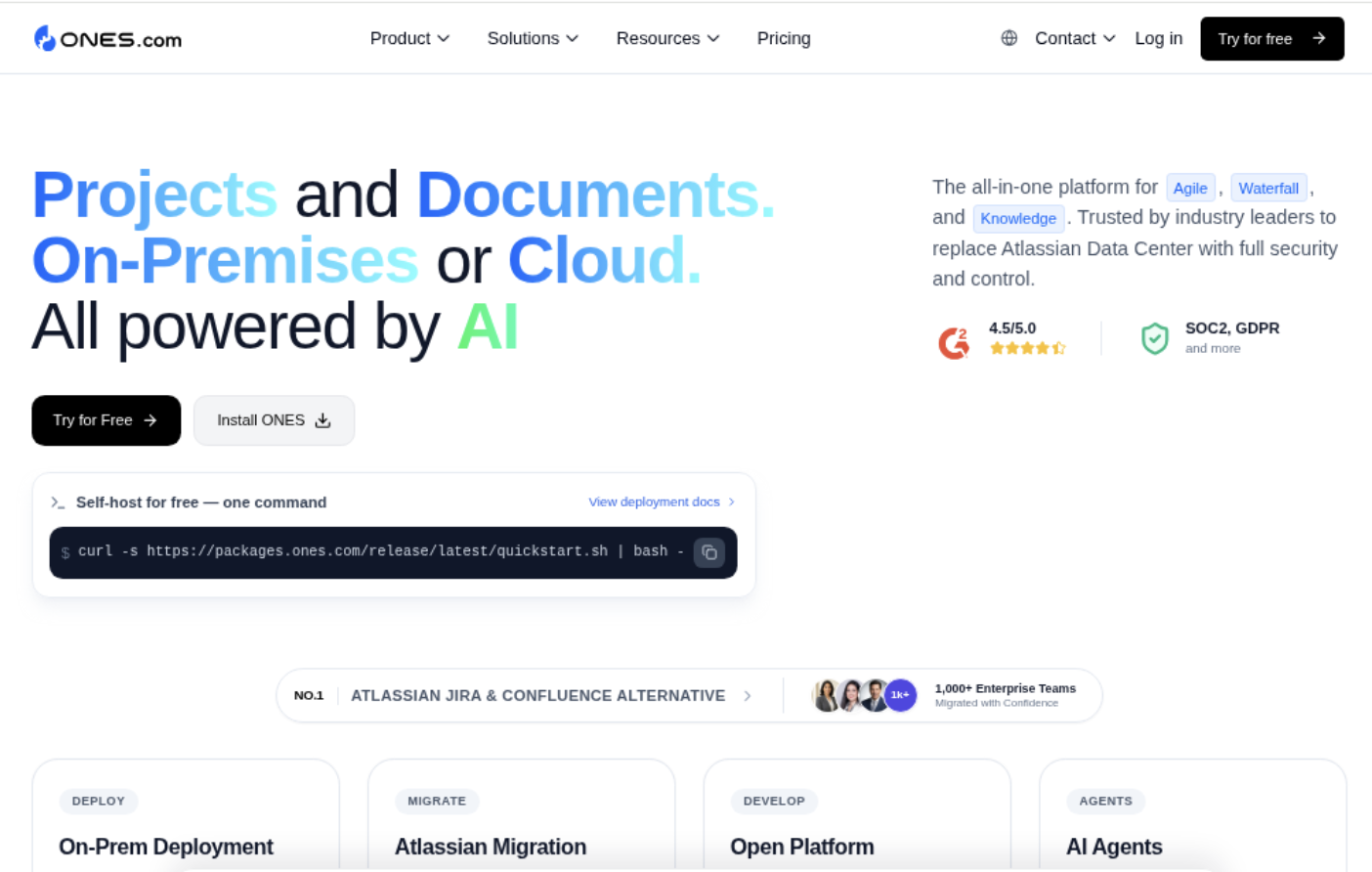
ONES.com combines project management and knowledge management in one platform. ONES Project provides project planning capabilities for teams seeking a Jira alternative, while ONES Wiki supports structured team knowledge management. The products are sold separately.
For teams that want timeline planning without stitching together several systems, ONES.com offers native project workflows, reporting, custom fields, and deployment flexibility.
Core Capabilities
-
Scattered planning → unified project workspace → Keep schedules, work items, owners, and progress in one project environment.
-
Limited timeline visibility → Gantt-style planning and dependency tracking → See task duration, sequencing, milestones, and schedule relationships more clearly.
-
Rigid workflows → custom workflows and fields → Adapt statuses, classifications, and planning details to your delivery process.
-
Sprint work disconnected from long-term plans → sprint management → Connect short delivery cycles with broader release and project schedules.
-
Manual progress reporting → built-in reporting → Review project status, workload, and delivery trends without rebuilding updates in another system.
-
Repetitive coordination → automation → Trigger routine actions when work changes status, reaches a date, or meets a defined condition.
-
Heavy reliance on add-ons → native feature parity → Reduce the number of extra plugins needed for core planning and workflow operations.
-
Deployment restrictions → Cloud, On-Premise, Private Cloud, and Air-gapped options → Choose an environment that fits your security, compliance, and network requirements.
-
Migration concerns → Jira-compatible workflows → Preserve familiar project management concepts while evaluating a Jira alternative.
-
Separate project and knowledge practices → ONES Project plus ONES Wiki → Connect delivery work with team knowledge when your organization licenses both products.
Application Scenarios
Software release planning: A development team can organize epics, sprints, milestones, and dependencies around a release. Engineering, quality assurance, and product owners can review the same delivery picture.
Regulated environments: An organization operating on a restricted network can choose an On-Premise, Private Cloud, or Air-gapped deployment. The team can maintain project controls without relying on a public cloud connection.
Cross-functional launches: A marketing, product, and engineering group can coordinate launch activities with custom workflows and reporting. ONES Wiki can support related knowledge practices when purchased alongside ONES Project.
Common Challenges and Practical Fixes
Challenge: Jira Issues Have No Reliable Dates
Solution: Define a date policy and make schedule fields meaningful. Ask each owner to confirm the planned start, expected finish, and confidence level during planning.
Challenge: Too Many Dependencies Create Clutter
Solution: Keep links that affect sequencing, delivery, or risk. Use labels, epics, or comments for relationships that do not change the schedule.
Challenge: The Chart Becomes Outdated
Solution: Include timeline review in an existing ceremony. A short review during weekly planning is usually more sustainable than a separate meeting every day.
Challenge: The Plan Ignores Team Capacity
Solution: Compare assigned work with realistic availability. If one specialist owns six concurrent tasks, the timeline should show that constraint instead of assuming full-time attention.
Challenge: Stakeholders Treat Estimates as Promises
Solution: Label planned dates, committed dates, and forecast dates clearly. Explain the assumptions behind each milestone and update them when scope or capacity changes.
FAQs About Gantt Planning in Jira
Does Jira include a Gantt chart?
Jira may provide timeline planning through features such as Plans or Roadmaps, depending on your edition and configuration. Some teams also use Marketplace apps for more advanced Gantt capabilities. Check which planning features your Jira environment includes before designing your workflow. The important requirement is a view that connects Jira issues with dates, hierarchy, dependencies, and progress.
Can I create a Gantt chart without adding every Jira issue?
Yes. You can usually limit the planning scope by project, board, epic, release, team, or saved filter. Start with the work that affects the delivery outcome. Adding every minor action may make the timeline harder to read and reduce attention on major dependencies.
How often should I update the timeline?
Review it at least weekly for active projects. Update it sooner when a critical task slips, scope changes, a dependency breaks, or team capacity changes. You do not need to move every bar manually after every small status update. Focus on dates and relationships that affect delivery.
What is the difference between a roadmap and a Gantt chart?
A roadmap usually communicates high-level direction, outcomes, releases, and timing. A Gantt chart focuses more closely on task duration, dependencies, milestones, and sequencing. A product team may use a roadmap for leadership communication and a Gantt view for detailed delivery coordination.
Can a Gantt chart show Jira sprint work?
Many Jira planning configurations can connect sprint assignments with longer-term timelines. The exact behavior depends on the Jira edition or planning app. Use sprints for short delivery cycles and the Gantt view for dependencies, milestones, and release-level coordination. This combination helps you avoid treating the sprint board as the complete project schedule.
Conclusion
A Gantt chart makes Jira planning easier to understand by placing tasks, dates, dependencies, milestones, and progress on one timeline. The practical process is straightforward: prepare clear issues, assign realistic dates, organize the hierarchy, link meaningful dependencies, and review the plan regularly.
But here's the truth: a timeline cannot repair unclear ownership, missing estimates, or constantly changing priorities by itself. It can expose those problems early, giving you time to adjust capacity, sequence, or scope.
If Jira’s planning experience does not match your team’s needs, ONES.com offers ONES Project as a Jira alternative with project workflows, reporting, automation, sprint management, and flexible deployment options. The right approach is the one that keeps your schedule connected to the work your team actually performs.