How to Make a Gantt Chart in Trello: A Step-by-Step Guide
Gantt charts make schedules easier to understand, but Trello does not offer a traditional Gantt chart inside its standard board view. That can make project timing, dependencies, and workload harder to track.
You may end up moving cards manually, guessing which task should start next, or missing a deadline because several activities overlap. A simple board can quickly become confusing when a launch includes design, development, testing, and approval stages.
But here's the truth: you can create a practical Gantt-style schedule with Trello by adding dates, using Timeline view, or connecting a planning Power-Up. This guide shows you the clearest method step by step, explains its limits, and helps you choose the right workflow for your team.
How to Make a Gantt Chart in Trello
The simplest approach is to organize Trello cards as tasks, add start and due dates, then display them on a timeline. Trello Premium and Enterprise plans include Timeline view, while other plans may require a third-party Power-Up.
Step 1: Create a Trello board for the project
Start with a dedicated board for the project you want to schedule. A focused board keeps timeline planning separate from unrelated work.
For example, create a board called “Website Launch Plan.” Add lists such as:
- Backlog
- Ready to Start
- In Progress
- Review
- Complete
These lists show workflow status. The timeline will show when each task happens.
Step 2: Turn every major task into a card
Create one card for each meaningful activity. Avoid putting an entire project phase on one card if several people must complete different actions.
For a product launch, your cards might include:
- Confirm product requirements
- Create the landing page design
- Write launch emails
- Build the registration form
- Review legal wording
- Test the campaign page
- Publish the launch announcement
A card should represent work that someone can complete and review. If a card takes three weeks, divide it into smaller tasks.
Step 3: Add start dates and due dates
Open each card and add a start date and due date. These dates create the horizontal task bars that appear in a timeline.
Use realistic durations. If design takes four working days, give the card a four-day range rather than assigning one deadline at the end of the month.
For example:
- Landing page design: March 4 to March 8
- Landing page development: March 11 to March 15
- Quality check: March 18 to March 19
- Launch approval: March 20 to March 21
Start dates show when work should begin. Due dates show when it should finish. Both matter when you are building a schedule.
Step 4: Add task details to each card
Use the card description for the expected result, acceptance criteria, and important context. Add checklists for smaller actions that do not need separate timeline bars.
For a “Test registration form” card, a checklist could include:
- Test desktop layout
- Test mobile layout
- Confirm confirmation email
- Check required fields
- Verify analytics tracking
This keeps the Gantt-style view readable. Only major tasks appear on the timeline, while smaller actions remain inside their parent cards.
Step 5: Assign members and labels
Assign each card to the person responsible for completing it. Add labels for work categories, priorities, or project phases.
You might use these labels:
- Design
- Engineering
- Marketing
- Approval
- High priority
Color coding makes a busy timeline easier to scan. For example, red labels can highlight approval work, while blue labels can identify engineering tasks.
Step 6: Open Trello Timeline view
If your Trello plan includes Timeline view, open the board and choose the timeline option. Trello will arrange cards with start and due dates across a calendar-style schedule.
You can then review:
- Which tasks overlap
- Where idle periods appear
- Whether a phase has too much work
- Which deadlines are approaching
- How long the complete project may take
Drag cards across the timeline when dates change. Always check the card details afterward, especially when shifting a task affects another activity.
Step 7: Add milestones for important outcomes
Trello cards can represent milestones such as “Design approved,” “Beta released,” or “Campaign launched.” Give milestone cards a short duration or a single due date.
Use a distinctive label, such as gold or purple, so milestones stand apart from routine tasks. This creates visible checkpoints across the schedule.
A milestone should describe an outcome, not an activity. “Landing page approved” is a milestone. “Review landing page” is a task.
Step 8: Check dependencies manually
A traditional Gantt chart often shows dependencies between tasks. Trello cards can show dates and workflow status, but dependency handling may require manual planning or an additional Power-Up.
Record relationships in card descriptions using clear wording:
- Starts after: Landing page design
- Blocked by: Legal approval
- Must finish before: Public launch
You can also link related cards within Trello. This gives your team a visible path through the project, even when the timeline does not automatically move connected tasks.
Step 9: Review the schedule with your team
Schedule a short planning review before work begins. Ask whether the dates reflect actual capacity, holidays, approval time, and technical risk.
For example, a developer may explain that a two-day build requires five days because an external integration needs testing. Adjusting the timeline early prevents rushed work later.
Step 10: Update the timeline regularly
A Gantt chart becomes unreliable when dates remain unchanged after the plan shifts. Review the timeline at least once each week.
During the review, look for cards that are:
- Past their due date
- Blocked by another task
- Assigned to an overloaded person
- Waiting for approval
- Scheduled before a required activity finishes
Move dates only after confirming the effect on later work. A small delay in design may affect development, testing, approval, and launch.
Which Trello Method Should You Use?
You have three practical ways to create a Gantt-style schedule in Trello: Timeline view, a planning Power-Up, or a connected planning tool.
Use Timeline view for straightforward schedules
Timeline view works well when your project has clear dates and moderate task complexity. It is useful for marketing campaigns, product releases, onboarding plans, and event preparation.
For example, a six-week campaign with 25 cards can remain manageable when each card has a clear owner, date range, and label.
Use a Power-Up for dependencies and advanced planning
A Power-Up may add dependency links, workload planning, custom views, or more detailed scheduling. This option suits teams that want to keep Trello as their main workspace.
Check the Power-Up’s current pricing, permissions, data handling, and compatibility before installing it. A tool that adds complexity can slow down a small team.
Use a dedicated planning platform for complex projects
A separate project management platform may be better when you need resource capacity, advanced dependencies, portfolio views, approvals, or detailed reporting.
For example, a construction rollout with 200 tasks and several contractors may outgrow a basic Trello timeline. In that case, moving to a platform designed for structured project planning can reduce manual coordination.
How to Structure Trello Cards for Better Scheduling
A timeline is only as useful as the cards behind it. Clear card structure helps you estimate work, identify delays, and maintain a realistic schedule.
Write task names as actions
Use “Create mobile checkout design” instead of “Mobile checkout.” Action-based names make ownership and completion easier to understand.
Compare these examples:
- Weak: Customer emails
- Clear: Approve the customer welcome email
- Weak: Analytics
- Clear: Verify purchase conversion tracking
Keep one accountable owner per card
Multiple people can contribute to a card, but one person should own the result. That person coordinates updates and confirms completion.
If design, engineering, and marketing all need to act, create separate cards when their work has different dates or handoffs.
Use checklists for small actions
Checklists work best for steps that share one deadline and one owner. They prevent the timeline from becoming crowded with tiny bars.
For example, “Prepare webinar” could contain speaker confirmation, slide review, rehearsal, and attendee reminder tasks.
Set working-day estimates
Estimate the actual time required rather than the total calendar gap. A task scheduled from Monday to Friday may include only three working days if the team has meetings or holidays.
Short estimates also make delays more visible. A one-day task that remains open for a week deserves attention.
How to Show Dependencies in Trello
Dependencies explain why one task must wait for another. They matter when a delay in one activity can push several later deadlines.
Use linked cards
Create links between related cards and mention the relationship in both places. For example, the development card can state that it waits for design approval.
This approach works for small projects because everyone can see the connection without learning a new planning system.
Use blocked labels
Add a “Blocked” label when work cannot continue. Include the reason inside the card, such as “Waiting for security review.”
Blocked labels turn hidden delays into visible risks. A project manager can then focus on removing the obstacle rather than asking for repeated status updates.
Use milestones as control points
Create a milestone after each major dependency chain. A launch approval milestone, for example, can follow design, development, testing, and legal review.
If the milestone moves, review every task connected to it. This prevents a single late activity from quietly changing the whole schedule.
Common Mistakes When Building a Gantt Chart in Trello
Trello can support timeline planning, but several mistakes reduce its value. Recognizing them early makes your schedule easier to maintain.
Adding dates only at the end
Some teams create cards first and add dates just before a deadline. That produces a task list with decoration rather than a useful plan.
Add dates during planning. You need timing information to spot overlap, missing phases, and unrealistic delivery targets.
Making cards too broad
A card called “Build the website” hides too much work. Design, coding, content, testing, accessibility, and approval may all have different owners.
Break the work into cards that can be estimated and assigned. Keep the timeline focused on meaningful deliverables.
Creating too many tiny cards
The opposite problem also occurs. A card for every five-minute action turns the timeline into visual noise.
Group small actions under a shared outcome when they have the same owner and deadline.
Ignoring capacity
A schedule may show that five tasks happen during the same week, but one person may own all five. The dates appear possible until workload enters the picture.
Review assignments alongside the timeline. Move work or add support when one person carries too many overlapping responsibilities.
Natural Timeline Planning Solution: ONES.com
ONES.com brings project planning and knowledge management together through ONES Project and ONES Wiki. It suits teams that need more structure than a basic board can provide.

Value proposition: You can manage schedules, workflows, reporting, and team knowledge in one environment, while reducing the need for multiple plugins and disconnected workspaces.
Scattered task planning → ONES Project → A clearer project schedule
When tasks live across separate boards, chats, and planning tools, deadlines become difficult to reconcile. ONES Project provides structured project spaces with timelines, task ownership, and status tracking.
Manual status updates → Built-in reporting → Faster progress reviews
Teams often spend review meetings collecting updates. Built-in reporting gives you a consistent view of progress, overdue work, and project trends.
Rigid workflows → Custom workflows and fields → Better process fit
Every team handles approvals differently. ONES Project lets you configure workflows and custom fields for stages such as review, testing, approval, and release.
Plugin-heavy planning → Native project capabilities → Less maintenance
Several add-ons can create overlapping settings and extra administration. Native planning capabilities reduce the number of separate extensions your team must manage.
Unclear sprint planning → Sprint management → More predictable delivery
Agile teams can plan sprints, assign work, and review completed tasks within a consistent workflow. This makes short delivery cycles easier to compare.
Repeated manual actions → Automation → Fewer routine handoffs
Automation can move work, notify assignees, or trigger actions after status changes. That helps your team spend less time repeating administrative steps.
Limited deployment choices → Cloud and self-hosted options → Better control
ONES.com offers Cloud, On-Premise, Private Cloud, and Air-gapped deployments. The self-hosted versions provide full feature parity with the cloud version.
Jira workflow requirements → Jira-compatible workflows → Easier process transition
Teams looking for a Jira alternative can use compatible workflow concepts while gaining built-in reporting, custom fields, sprint management, and automation.
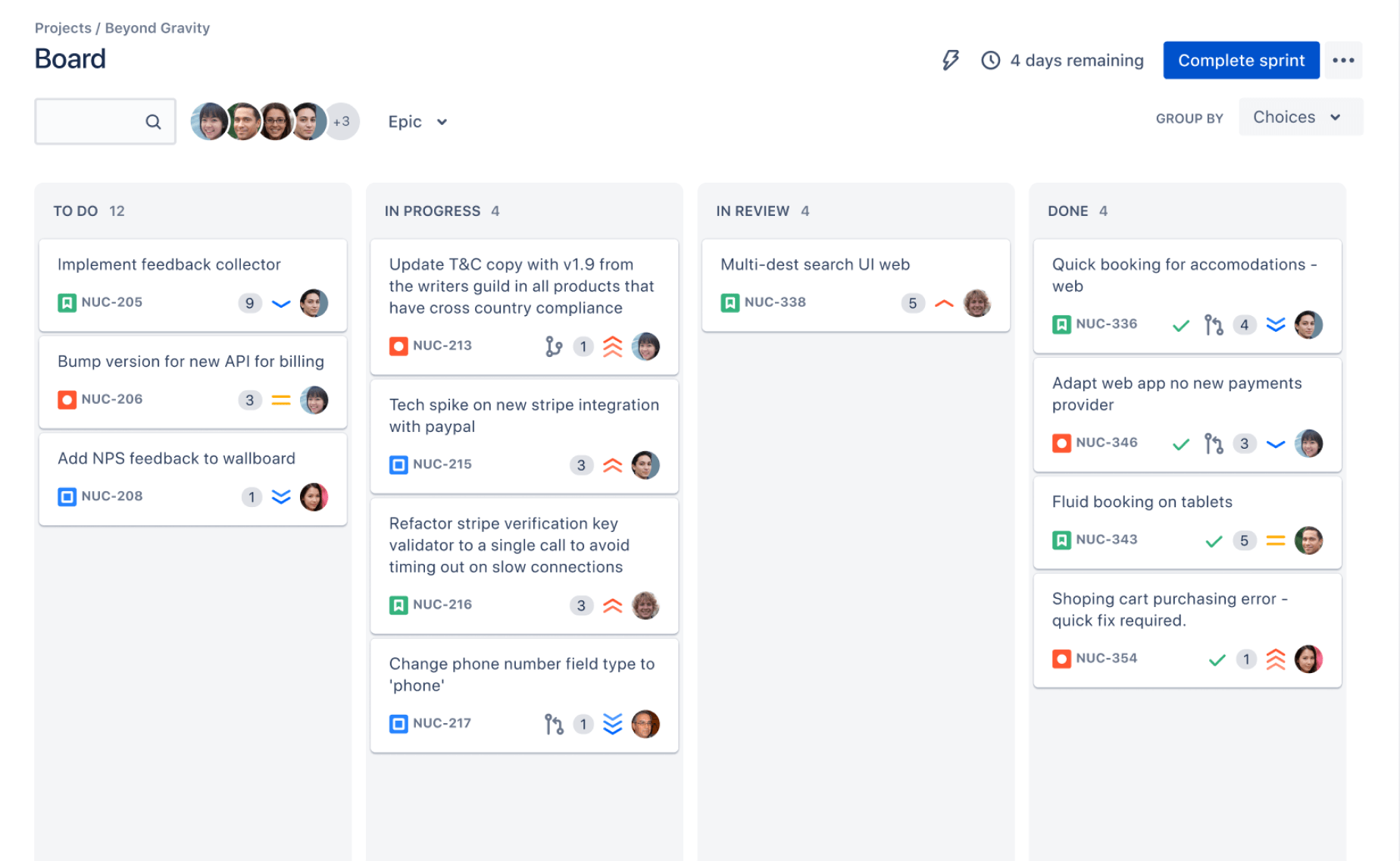
Separate project and knowledge spaces → ONES Project and ONES Wiki → Connected team context
ONES Project handles project management, while ONES Wiki supports knowledge management. They are sold separately, so you can select the product that matches your immediate needs.
Application scenarios
A software team could use ONES Project to plan a release with sprint tasks, dependencies, approvals, and progress reporting. Product requirements and technical guidance could live in ONES Wiki.
A regulated organization could choose an On-Premise or Air-gapped deployment when network restrictions matter. A growing team could begin with the free plan for up to 30 seats before expanding its workspace.
Common Challenges and Practical Solutions
Challenge: Trello has no standard Gantt chart in every plan
Solution: Check whether Timeline view is available on your plan. If it is not, use a compatible Power-Up or move complex scheduling to a platform with native timeline planning.
Challenge: Dates become outdated quickly
Solution: Review dates during a weekly planning session. Ask each owner whether the next deadline remains realistic and record the reason for major changes.
Challenge: Dependencies are difficult to follow
Solution: Link related cards, add blocked labels, and write the preceding task inside each card. For complex dependency networks, use a planning system with dedicated dependency support.
Challenge: The timeline becomes overcrowded
Solution: Show major deliverables on the timeline and place small actions inside checklists. This keeps the schedule readable without losing task detail.
Challenge: One person owns too much work
Solution: Review cards by member and week. Reassign tasks, change dates, or divide work before the overloaded person becomes a project bottleneck.
FAQs
Can Trello create a real Gantt chart?
Trello can create a Gantt-style project timeline, especially through Timeline view or a planning Power-Up. Standard Trello boards use cards and lists rather than traditional dependency-based scheduling. If you need automatic dependency movement, resource capacity planning, or advanced portfolio controls, a dedicated project management platform may fit better.
Is Trello Timeline view free?
Timeline availability depends on your Trello plan. Premium and Enterprise plans include more advanced views, while lower-tier plans may require another method. Check Trello’s current plan details before planning your workflow around Timeline view. A Power-Up may also add timeline features, but pricing and capabilities vary.
How do I add dependencies between Trello cards?
You can link related cards, mention predecessor tasks in descriptions, and use labels such as “Blocked.” These methods work for small projects. For larger projects, choose a Power-Up or project platform that supports formal dependency relationships and clearer scheduling controls.
Can I export a Trello Gantt chart?
Export options depend on the view, plan, and tool you use. Trello may let you share board information, while third-party planning tools may offer image, PDF, or other export options. Confirm the available format before promising a calendar view to stakeholders.
What is the best card structure for timeline planning?
Use one card for each meaningful deliverable, add a start date and due date, assign one accountable owner, and include a short checklist for smaller actions. Add labels for work type or priority. This structure keeps the timeline readable while preserving enough detail for daily execution.
Conclusion
You can create a useful Gantt-style schedule in Trello by turning tasks into cards, adding start and due dates, assigning owners, and displaying the work on Timeline view or through a compatible Power-Up.
Keep major deliverables on the timeline, use checklists for minor actions, and record dependencies clearly. Review the schedule regularly because an outdated timeline can create false confidence.
But here's the truth: Trello works best for lightweight and moderately complex schedules. When you need native reporting, custom workflows, automation, sprint management, or controlled deployment options, ONES.com provides a more structured path for managing projects and team knowledge.