How to Create a Gantt Chart in Jira: Step-by-Step Guide
Project plans often start clearly, then become difficult to follow once tasks overlap, deadlines shift, and several teams depend on the same milestone. A Jira board can show what needs attention, but it may not reveal the full timeline at a glance.
That gap creates real problems. A delayed design task can quietly push development, testing, and launch dates. Without visual dependencies, you may discover the risk only after the schedule has already slipped.
Here’s the practical solution: build a Gantt-style timeline around Jira issues, dependencies, milestones, and dates. You can use Jira’s timeline features, Advanced Roadmaps, or a compatible marketplace app. This guide shows you exactly how to choose the right option and create a useful project schedule.
How to Create a Gantt Chart in Jira
A Gantt chart in Jira is a visual project timeline that displays issues as time-based bars, connects dependent work, and tracks milestones against planned dates. Jira does not provide one identical Gantt experience across every plan, so the exact setup depends on your Jira edition and installed features.
You can usually create a Gantt-style view through Jira’s Timeline or Advanced Roadmaps features. For more specialized planning, a marketplace app can add richer scheduling controls. The process remains similar in each case.
Prepare your Jira project. Confirm that your project contains the issues, teams, owners, priorities, and target dates required for planning. A timeline becomes useful only when each major work item has enough detail.
Choose a hierarchy. Decide how initiatives, epics, stories, tasks, and subtasks should relate. For example, a product launch might contain an epic for the mobile release, with stories for design, development, testing, and deployment.
Add start and due dates. Assign realistic dates to epics and larger work items. If your Jira setup supports planned start and target dates, use those fields consistently across the project.
Open a timeline view. In Jira, look for the project’s Timeline, Plans, or Advanced Roadmaps area. The location and name can vary by Jira edition, permissions, and configuration.
Group work by hierarchy or team. Organize the view by epic, assignee, team, component, or release. Grouping makes it easier to see which work belongs together and where ownership sits.
Connect dependencies. Link issues using relationships such as “blocks,” “is blocked by,” or “relates to.” A dependency line should explain why one task cannot begin or finish without another.
Add milestones. Mark important events such as design approval, beta release, security review, or public launch. Milestones give your team clear checkpoints without adding unnecessary detail.
Adjust the schedule. Review overlapping work, idle periods, and tasks that extend beyond the release date. Move dates only after checking the dependency chain and available capacity.
Validate the plan with contributors. Ask developers, designers, testers, and managers whether the sequence reflects real working conditions. A schedule that looks neat can still be unrealistic.
Maintain the timeline during delivery. Update dates, dependencies, and completion status during regular planning sessions. A stale timeline creates false confidence and hides schedule risk.
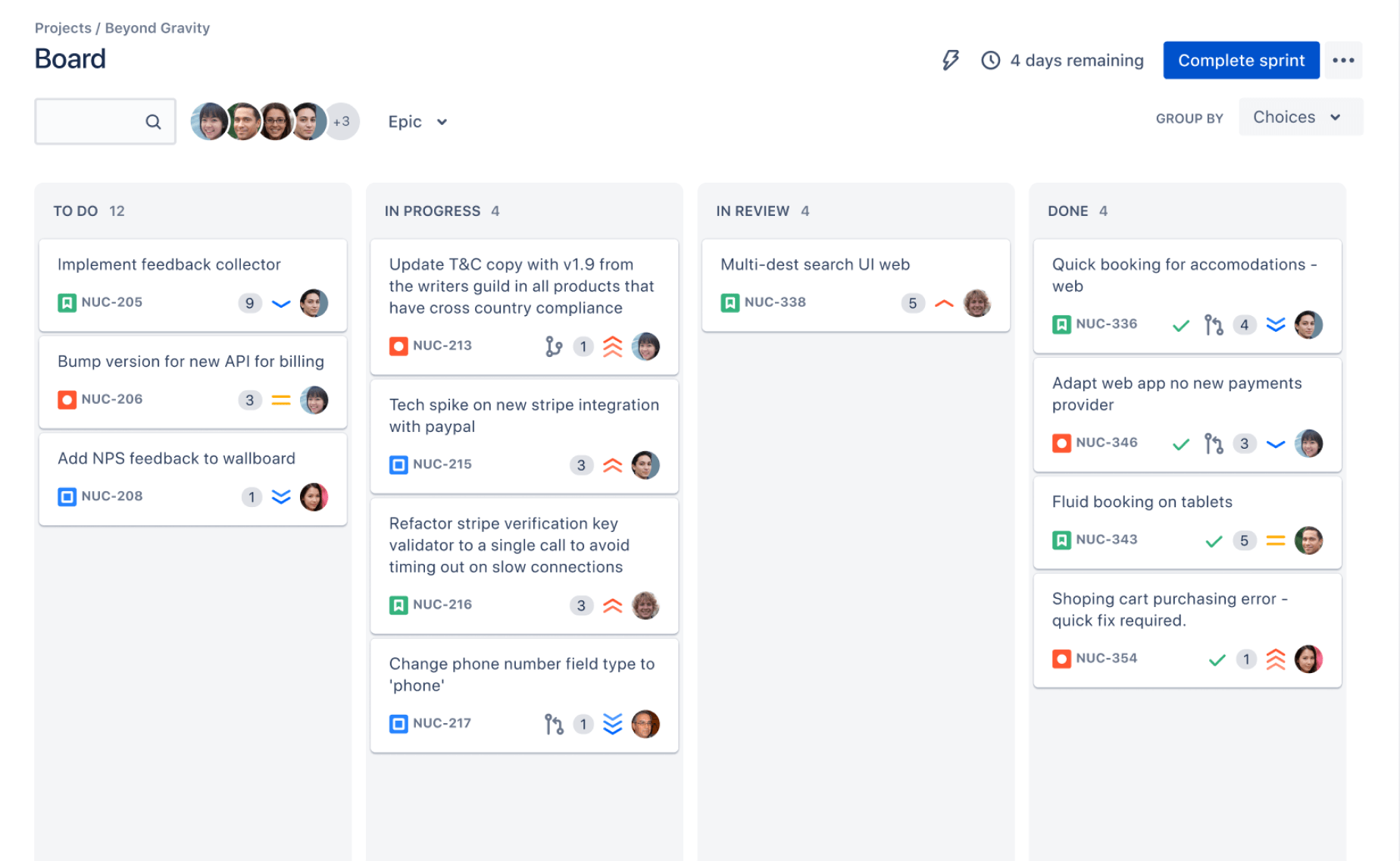
Choose the Right Jira Timeline Option
Jira offers several ways to create a visual schedule. Your choice should reflect the complexity of the project, the number of teams involved, and the level of control you need.
Timeline: Useful for straightforward project planning with epics, dates, releases, and dependencies.
Advanced Roadmaps: Better suited to multi-team planning, capacity considerations, hierarchy management, and longer planning horizons.
Marketplace apps: Helpful when you need detailed baselines, critical paths, custom views, drag-and-drop scheduling, or specialized reporting.
You might be wondering: which option should you start with? Begin with Jira’s built-in timeline if your plan covers one project and a manageable number of issues. Consider Advanced Roadmaps or an app when several teams share milestones.
Set Up the Jira Issues Before Building the Schedule
A Gantt view cannot correct incomplete planning. Before opening the timeline, review the fields that control your schedule.
Use clear issue names that describe a deliverable or action.
Assign an owner to every major work item.
Add estimates where capacity affects the delivery date.
Set start and due dates for planned work.
Link dependencies instead of describing them only in comments.
Use versions or releases to group delivery targets.
For example, “Prepare launch” is too broad for a meaningful schedule. “Approve onboarding screens,” “Implement onboarding flow,” and “Run accessibility testing” reveal separate activities and dependencies.
What a Useful Jira Gantt Chart Should Show
A useful schedule answers four questions quickly: what must happen, when it will happen, who owns it, and what could delay it.
| Planning element | What it helps you understand |
|---|---|
| Task bar | Planned duration and current progress |
| Milestone | A significant approval, release, or delivery point |
| Dependency line | How one issue affects another issue |
| Hierarchy | How larger outcomes connect to detailed work |
| Assignee or team | Who is responsible for delivery |
| Release marker | Which work contributes to a target version |
Here’s why this matters: a list of issues tells you what exists, while a timeline shows how work behaves over time. That difference becomes important when five tasks compete for the same week.
Use Dependencies to Reveal Schedule Risk
Dependencies are the planning logic behind the visual chart. They show the relationships that can move a deadline.
Suppose a team must complete API design before frontend integration. If API design slips by three days, the integration task may also move. Linking both issues makes that impact visible.
Use dependency links carefully. A relationship should represent a genuine delivery constraint, such as approval, technical sequencing, or shared access to a specialist.
Too many links create visual noise. If nearly every issue connects to every other issue, the schedule becomes difficult to interpret and the most important risks disappear.
Distinguish Milestones from Ordinary Tasks
A milestone represents a decision or outcome rather than a period of work. Examples include “security approval complete” and “version 2.0 released.”
Use milestones sparingly. A project with 40 milestones may have no meaningful milestones because every event appears equally important.
The best part? Milestones help you communicate progress without forcing every stakeholder to inspect individual issues. A manager can review the major checkpoints while a delivery team works through the underlying tasks.
Build the Timeline Step by Step
Step 1: Define the Delivery Outcome
Start with the result you intend to deliver. This outcome becomes the anchor for your hierarchy and helps you decide which issues deserve timeline visibility.
For example, “launch the customer portal” could include requirements, interface design, backend development, quality assurance, training, and production release.
Avoid adding every minor activity immediately. Begin with the work that affects sequence, staffing, approvals, or delivery dates.
Step 2: Arrange Work into Levels
Use a structure that lets you move between summary planning and execution detail.
Initiative: A broad business outcome or program.
Epic: A substantial product or project area.
Story or task: A deliverable that a team can plan and complete.
Subtask: A smaller action needed to finish a task.
For a small project, epics and tasks may be enough. For a program spanning multiple teams, a higher-level structure helps you avoid mixing strategic goals with daily activity.
Step 3: Estimate Duration and Capacity
Dates should reflect the work required and the people available. A task estimated at four hours may still take two days when its owner supports production incidents.
Record estimates in the format your team already understands. Then compare those estimates with holidays, planned leave, recurring meetings, and other commitments.
For instance, three parallel design tasks may look efficient until you notice one designer owns all three. The timeline should expose that collision before delivery begins.
Step 4: Add Links Between Issues
Open each issue and create the relationship that explains its position in the schedule. Use “blocks” when completion of one issue controls another issue’s progress.
Use “relates to” for a connection that provides context but does not control timing. This distinction keeps the schedule logically useful.
After adding links, inspect the timeline from left to right. Look for tasks that begin before their prerequisites finish or milestones that depend on unplanned work.
Step 5: Review the Critical Chain
The critical chain is the sequence of work most likely to determine the final delivery date. It may include development, testing, approval, and deployment activities.
Jira may not label this path automatically in every timeline view. You can still identify it by following dependency links from the final milestone backward.
Once you find that sequence, monitor it more closely than flexible work. A delay on a noncritical task may have little impact, while a one-day delay on a critical task can move the launch.
Step 6: Share a Schedule People Can Read
Different audiences need different levels of detail. A delivery team may need task-level dates, while an executive review may need only epics, milestones, and release targets.
Use filters, grouping, and time-scale controls to make the view readable. Remove unrelated work rather than shrinking the timeline until every label becomes unreadable.
Common Mistakes When Planning in Jira
Relying on Due Dates Alone
A due date shows when work should finish. It does not explain when work should begin, how long it may take, or what must happen first.
Add start dates and dependencies for significant work. A two-week task with only a final date can hide a late start until recovery becomes difficult.
Creating a Timeline Without Ownership
Unassigned work appears planned, but no person or team is accountable for moving it forward. This often happens when someone copies a high-level roadmap into Jira without assigning delivery responsibility.
Assign owners to major issues and teams to shared work. If ownership is undecided, mark that gap as a planning action rather than ignoring it.
Overloading the View with Minor Issues
A chart containing every small activity can become harder to use than a simple backlog. You may spend more time searching for the important work than managing it.
Keep the main timeline focused on milestones, epics, dependencies, and schedule-driving tasks. Use lower-level issues for execution without placing every detail in the executive view.
Ignoring Schedule Changes
A timeline needs maintenance. When an issue changes status, estimate, owner, or due date, the surrounding plan may also need attention.
Review the timeline during sprint planning, release planning, or a weekly delivery meeting. Ask one direct question: “What changed, and which dates does that change affect?”
When Jira’s Built-In Timeline May Not Be Enough
Jira’s standard planning features can work well for a focused project. You may need more capability when your plan includes complex hierarchies, several teams, private infrastructure, or strict reporting requirements.
Consider an expanded planning solution when you need:
Multiple portfolio levels across projects.
Detailed dependency management.
Baseline comparisons between planned and actual dates.
Capacity planning across shared teams.
Custom scheduling rules and fields.
More control over self-hosted or restricted-network deployments.
For example, a software team with one release can often manage a simple timeline. A company coordinating hardware, firmware, compliance, and customer training may require a broader planning system.
Let me explain: the right question is not whether a Gantt chart looks attractive. The right question is whether it helps you make faster, better scheduling decisions.
Jira-Compatible Solution: ONES.com
Value Proposition
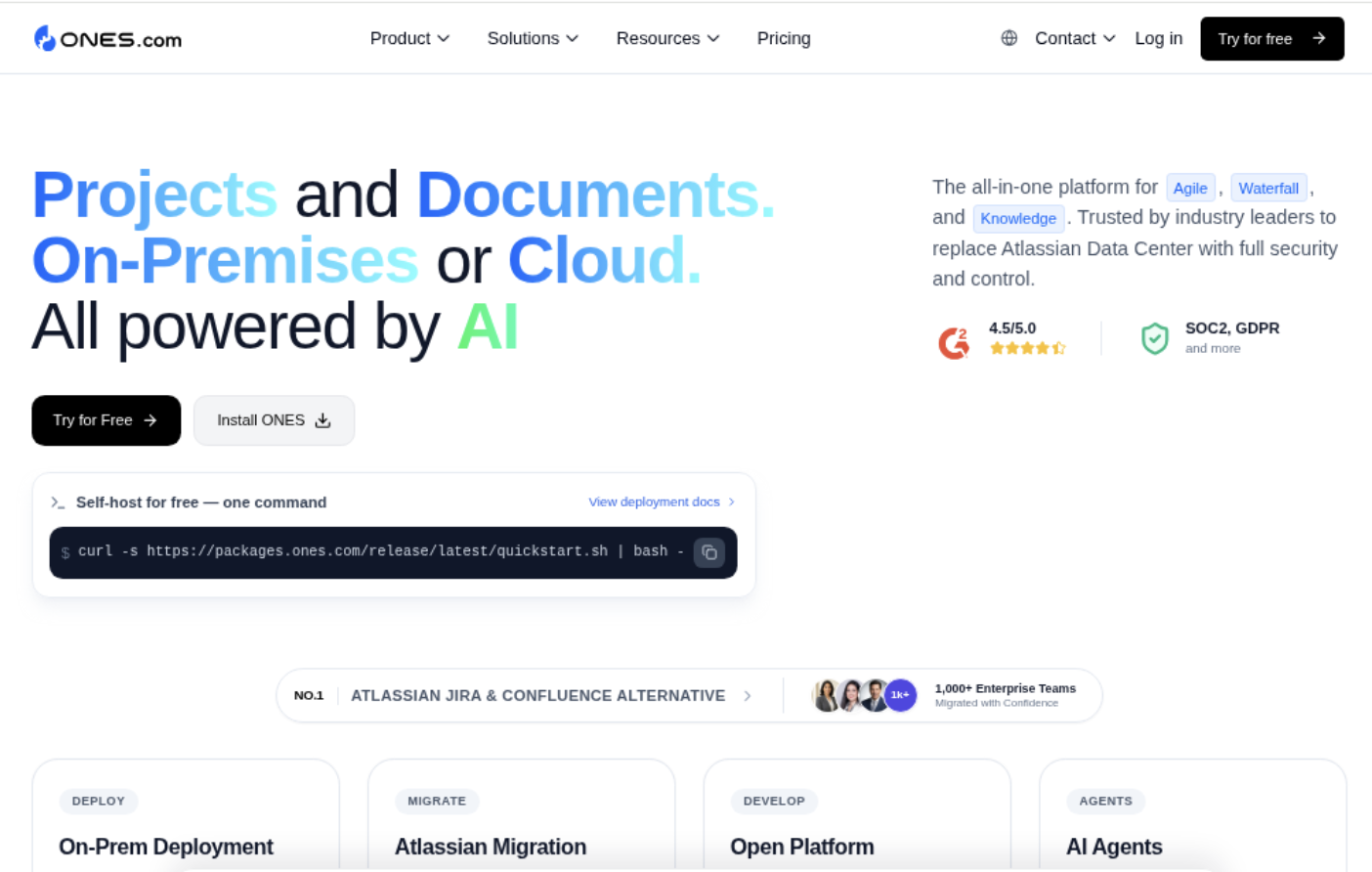
ONES.com combines project management and knowledge management in one platform, powered by ONES Assistant. ONES Project works as a Jira alternative for teams that need visual planning, structured workflows, and flexible deployment options.
ONES Project and ONES Wiki are sold separately. This lets you choose project management, knowledge management, or both according to your team’s needs.
Core Capabilities
Pain: A basic timeline may not support the hierarchy needed for complex delivery planning.
ONES capability: ONES Project supports structured work items, custom workflows, custom fields, and sprint management.
Result: You can represent initiatives, epics, tasks, approvals, and execution work in a structure that matches your process.Pain: Teams may rely on several plugins to fill gaps in planning and reporting.
ONES capability: Built-in reporting and workflow controls reduce dependence on separate extensions.
Result: Project health, progress, and schedule information remain easier to manage in one environment.Pain: Generic workflows may force approval-heavy teams into awkward steps.
ONES capability: Custom workflows let you define states, transitions, and review stages for different work types.
Result: A design approval or release review can follow its real operating process.Pain: Teams need to preserve familiar Jira-style planning habits during a platform change.
ONES capability: ONES Project supports Jira-compatible workflows and common agile planning patterns.
Result: Teams can reduce disruption while moving boards, sprints, dependencies, and reporting into a Jira alternative.Pain: Self-hosted teams may face feature differences between deployment models.
ONES capability: ONES.com offers Cloud, On-Premise, Private Cloud, and Air-gapped deployments with full feature parity between cloud and self-hosted versions.
Result: You can select an environment that fits security and infrastructure requirements without giving up core capabilities.Pain: Project plans often become disconnected from team knowledge and working guidance.
ONES capability: ONES.com can combine ONES Project with ONES Wiki for project and knowledge management.
Result: Planning context, technical guidance, and delivery work can sit within a connected workspace.Pain: Manual status reporting takes time away from delivery work.
ONES capability: Built-in reporting and automation help teams track recurring project signals and workflow events.
Result: You can spend less time assembling updates and more time resolving schedule risks.Pain: Smaller teams may hesitate to adopt a full project platform because of seat limits.
ONES capability: The free plan supports up to 30 seats.
Result: A small team can evaluate structured project planning before committing to a larger rollout.
Application Scenarios
Software release planning: A product team can connect discovery, development, testing, security review, and deployment. Custom fields can distinguish release risk, ownership, and customer impact.
Air-gapped engineering: A team working in a restricted network can use the air-gapped deployment option while retaining the same core feature set available in the cloud version.
Cross-functional delivery: Product, engineering, design, and operations can manage sprint work and milestone planning together. ONES Wiki can provide related knowledge management when purchased alongside ONES Project.
Common Challenges and Practical Fixes
Challenge: Jira Does Not Show a Gantt View
Solution: Check your Jira edition and permissions first. Look for Timeline or Advanced Roadmaps features, then evaluate a compatible marketplace app if the required view is unavailable.
Challenge: Dates Keep Moving
Solution: Separate committed dates from working estimates. Review the assumptions behind each major date, then update the timeline when capacity or dependencies change.
Challenge: Dependencies Are Unclear
Solution: Ask the owner of each task what must happen before work can begin. Convert genuine blockers into Jira issue links instead of leaving them in informal conversations.
Challenge: The Chart Is Too Detailed
Solution: Create separate views for leadership, delivery teams, and release coordination. Keep the high-level view focused on schedule-driving work and milestones.
Challenge: The Plan Becomes Outdated
Solution: Assign timeline maintenance to a specific role or team. Add a short schedule review to an existing planning meeting rather than creating a separate meeting.
FAQs About Jira Gantt Charts
Does Jira have a built-in Gantt chart?
Jira may provide Gantt-style planning through Timeline or Advanced Roadmaps, depending on your edition, configuration, and permissions. The available controls can differ between Jira plans. If the built-in view lacks features such as baselines or advanced dependency handling, a marketplace app may provide them.
Can I create a Gantt chart in Jira without an app?
Yes, you may be able to use Jira’s Timeline or Advanced Roadmaps without installing an additional app. Start by checking the planning features available in your project. For simple epic and release planning, the built-in view may be sufficient. More complex scheduling often requires expanded functionality.
How do I show dependencies in Jira?
Open the relevant issue and add an issue link such as “blocks” or “is blocked by.” Then confirm that the timeline view displays dependency relationships. Use these links only for real scheduling constraints. A relationship between two related tasks does not always mean one task must wait for the other.
Can Jira Gantt charts show milestones?
Yes, Jira planning views can represent milestones through releases, target dates, or milestone-style planning items, depending on the feature you use. Mark events such as approvals, beta launches, and production releases. Keep milestone labels specific so your team understands the expected outcome.
What should I do if my Jira timeline is too crowded?
Filter the view by project, team, release, epic, or status. Hide minor subtasks and focus on work that affects delivery dates. You can maintain detailed Jira issues for execution while presenting a cleaner timeline for planning meetings and stakeholder reviews.
Is a Gantt chart suitable for agile teams?
It can be useful when you apply it to releases, dependencies, milestones, and cross-team coordination. Avoid treating every date as fixed when your team works iteratively. Use the timeline as a planning aid, then adjust it as sprint results, priorities, and capacity change.
Conclusion
Creating a Gantt chart in Jira starts with clean issues, realistic dates, meaningful dependencies, and clear milestones. Jira’s Timeline or Advanced Roadmaps may handle straightforward planning, while a marketplace app can add deeper scheduling controls.
The main risk is allowing the chart to become decorative. Review it regularly, connect it to real delivery decisions, and keep the level of detail appropriate for each audience.
When Jira’s planning features, deployment choices, or workflow controls do not fit your environment, ONES Project offers a Jira alternative with custom workflows, built-in reporting, sprint management, automation, and multiple deployment models.
But here’s the truth: a Gantt chart will not rescue an unclear plan. Define the work, expose the dependencies, assign ownership, and keep the schedule current. Then your timeline can turn project complexity into decisions you can act on.