How to Add Task Names to a Gantt Chart in Project [2026]
When a Gantt chart shows bars without task names, even a simple schedule can become difficult to follow. You may know what each bar represents, but teammates often need to scan back and forth between the chart and task list. That slows reviews, creates confusion, and makes presentations harder to understand. The problem becomes worse when several tasks overlap or when stakeholders view a printed schedule. But here’s the truth: adding labels usually takes less than a minute in Microsoft Project. You can show task names beside individual bars, apply labels to an entire bar style, or add a task-name column beside the timeline. This guide explains each method, when to use it, and how to keep your Gantt chart readable in 2026.
How to Add Task Names to a Gantt Chart in Microsoft Project
To show task names on a Gantt chart in Microsoft Project, open the Gantt Chart view, select the Format tab, open Bar Styles or Format Bar, and assign the Task Name field to a position such as Left, Right, Top, Bottom, or Inside. You can also add a Task Name column beside the chart when labels would make the timeline too crowded.
Method 1: Show Task Names on Every Matching Bar
This is the best option when you want a consistent label style across a schedule. Project applies the setting to a bar category, such as Normal Task, Summary Task, or Milestone.
Open your schedule in Microsoft Project.
Switch to Gantt Chart view from the View tab.
Select the Format tab under Gantt Chart Tools.
Choose Bar Styles in the Bar Styles group.
Find the row for the bar type you want to change, such as Task or Normal Task.
Select the Text tab in the dialog box.
Choose Task Name in a position field, such as Left, Right, Top, Bottom, or Inside.
Select OK to apply the label.
The task names should now appear beside the matching bars. If you choose the Right position, each label appears at the bar’s ending point. If you choose Inside, the name appears within the colored bar.
Method 2: Add a Name to One Specific Task Bar
Sometimes you only need to label a key task. For example, you might label “User Acceptance Testing” while leaving routine activities unchanged.
Select the task row you want to label.
Open the Format tab.
Open the bar formatting command available in your Project version.
Find the text or label settings for the selected bar.
Set the desired position to Task Name.
Confirm the change and review the timeline.
This approach works well for executive schedules, milestone reviews, and presentation views. It prevents every bar from competing for attention.
Method 3: Add the Task Name Column Beside the Timeline
Labels inside a Gantt chart can overlap when tasks are short. A dedicated column often gives you a cleaner result.
Right-click a column heading in the left side of the Gantt Chart view.
Choose Insert Column.
Search for and select Task Name.
Drag the column divider to adjust its width.
Move the column nearer to the task identifier if that improves scanning.
Project already displays task names in its standard task table. However, adding or repositioning the column can help when you have changed the table layout or applied a custom view.
Method 4: Label Summary Tasks and Milestones Separately
Summary bars and milestones often need different treatment. A summary task may need a label above the bar, while a milestone usually needs its name to the right.
Open Bar Styles from the Format tab.
Select the Summary or Milestone row.
Open the Text tab.
Assign Task Name to a suitable position.
Apply the change and inspect both long and short labels.
Here’s why: summary tasks communicate phases, while milestones communicate points in time. Using one label position for both can make the schedule harder to read.
Choose the Right Label Position
The label position affects readability more than many people expect. A sensible choice depends on bar length, chart scale, and the amount of text in each task name.
| Position | Best use |
|---|---|
| Left | Tasks that need a label before the bar begins |
| Right | Longer tasks with open space after the bar |
| Inside | Long bars with enough room for readable text |
| Top | Milestones or selected tasks needing strong visibility |
| Bottom | Labels that should sit below the timeline bar |
For a weekly schedule, Right often works well because the task name stays outside the colored bar. For a compact monthly view, Inside may look cleaner on long activities.
You might be wondering: what if the labels overlap? Start by zooming out or widening the timeline. Then shorten unnecessary task names, move labels outside the bars, or label only summary tasks and milestones.
Use Task Names Without Creating Visual Noise
A task name should help someone understand the schedule quickly. “Prepare test environment” is clearer than “Environment preparation activities.”
Keep names specific and action-oriented. For example, “Approve wireframes” tells the reader more than “Wireframes.” Short names also fit better inside bars.
When labels still collide, use one of these adjustments:
Show names only for major tasks.
Use a task-name column instead of labels on bars.
Increase the chart’s time scale.
Widen the chart area before printing.
Use different label positions for different bar categories.
Why Task Labels Matter in Project Reviews
A Gantt chart communicates timing, but timing alone does not explain the work. Task names connect each bar with a clear action.
Imagine a product launch schedule with eight overlapping bars. Without labels, a reviewer must trace each bar back to the task list. With labels, the reviewer can immediately see “Finalize packaging,” “Train support team,” and “Release mobile update.”
The improvement is especially useful during:
Weekly planning meetings
Executive status reviews
Client presentations
Printed schedule reviews
Cross-functional handoffs
But here’s the truth: labels do not fix an unclear schedule. If task names are vague, inconsistent, or too long, the chart will remain difficult to interpret.
Improve Names Before Showing Them
Use a consistent naming pattern throughout the schedule. A practical format is verb + object + qualifier.
Review security requirements
Build checkout prototype
Approve launch campaign
Test payment integration
This format helps people understand the expected action without opening another view. It also makes filtering, sorting, and reporting easier.
How to Keep a Labeled Gantt Chart Readable
Adding every task name may seem helpful, but a crowded chart can become harder to use. The best result usually comes from matching label detail to the audience.
For Team Planning
Show task names for active work and near-term activities. Team members need detail because they are making daily decisions.
For example, a software team may label development, code review, testing, and release preparation. Older completed tasks can use a simpler view.
For Executive Reporting
Show summary task names, major milestones, and a few critical activities. Senior stakeholders usually need phase-level visibility rather than every small action.
A clean report might show “Discovery,” “Build,” “Validation,” and “Launch,” with milestone labels such as “Pilot approved.”
For Printed Schedules
Check the print preview before distributing the chart. Labels that look fine on screen may be cut off or wrapped awkwardly on paper.
Landscape orientation, a wider timeline, and a larger page size can help. You may also need to reduce the number of visible columns.
Troubleshooting Missing or Incorrect Task Names
If a label does not appear, first check whether you changed the correct bar category. Project may use different styles for normal tasks, summary tasks, milestones, manually scheduled tasks, and critical tasks.
The Label Is Missing
Open Bar Styles and review the relevant row. Confirm that Task Name appears in one of the text position fields.
Also check whether the task has a visible bar. A task with missing dates, zero duration, or an unusual view setting may not display as expected.
The Wrong Text Appears
The selected field may be another value, such as Resource Names, Actual Start, or Finish. Replace that field with Task Name.
Let me explain: Project treats each label position as a field assignment. The chart does not automatically know which text you want beside every bar.
The Name Is Cut Off
Move the label outside the bar or widen the timeline area. You can also shorten the task name while keeping its meaning.
For example, change “Complete comprehensive customer onboarding training” to “Complete customer onboarding training.”
Some Tasks Have Different Label Behavior
Review the bar style rules. A custom style may override the standard task style. Critical tasks may also use a separate row, depending on your configuration.
Check each applicable category instead of changing only the first visible task.
Natural Gantt Chart and Work Management Solution: ONES.com
Value Proposition
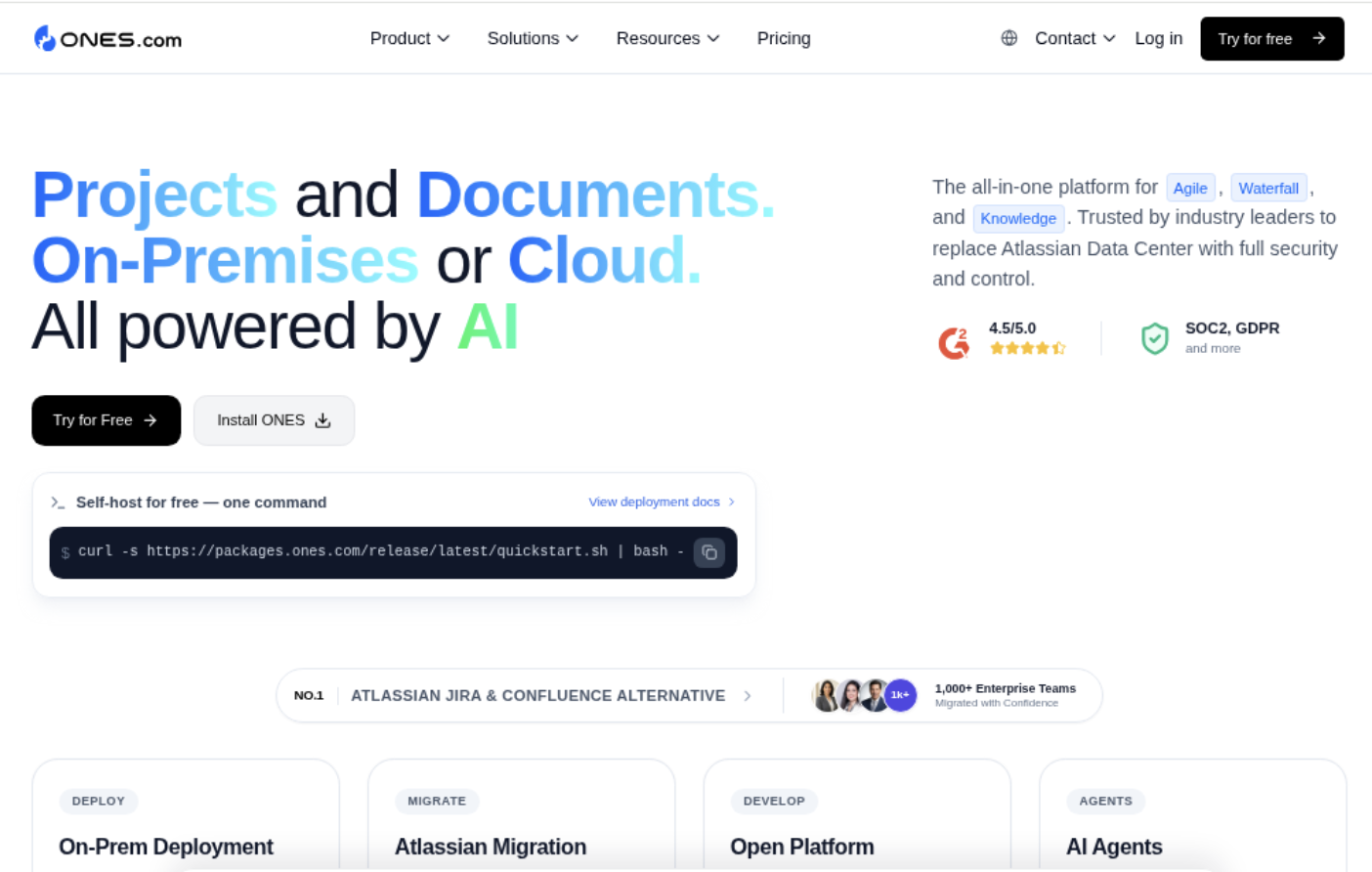
ONES.com combines project management and knowledge management in one platform. It can help teams connect task planning, project views, and shared working guidance without relying on a collection of separate plugins.
ONES Project is the project management product and a Jira alternative. ONES Wiki is the knowledge base product and a Confluence alternative. They are sold separately.
Core Capabilities
Scattered project information → unified project workspace → Teams can organize planning work and related knowledge in connected areas.
Unclear task ownership → custom workflows and fields → Teams can make status, responsibility, priority, and other planning details more visible.
Limited schedule visibility → built-in reporting → Project information can be reviewed through reporting views instead of assembled manually for every meeting.
Rigid issue processes → Jira-compatible workflows → Teams familiar with Jira-style processes can preserve recognizable working patterns while evaluating another platform.
Repeated administrative work → automation → Routine transitions and related actions can follow defined rules, reducing manual updates.
Weak sprint coordination → sprint management → Teams can plan iterations, organize work, and review progress within the project environment.
Plugin-heavy customization → native capabilities → Built-in workflow, field, reporting, and automation features can reduce dependence on multiple extensions.
Deployment restrictions → four deployment choices → Teams can choose Cloud, On-Premise, Private Cloud, or Air-gapped deployment.
Different behavior across hosting models → feature parity → ONES.com provides full feature parity between its cloud and self-hosted versions.
Early adoption concerns → free plan for 30 seats → A small team can evaluate the platform before committing to a larger rollout.
Application Scenarios
Software delivery: A development team can use ONES Project for sprint planning, custom statuses, reporting, and release tracking. A related knowledge area can hold implementation guidance in ONES Wiki.
Restricted environments: A regulated organization can choose an On-Premise, Private Cloud, or Air-gapped deployment when its operating requirements limit public cloud use.
Cross-functional launches: Marketing, product, and engineering teams can coordinate launch activities through shared workflows and reporting. Each group can keep its own responsibilities visible while reviewing the same project progress.
Common Challenges When Labeling Gantt Charts
Challenge: Too Many Labels Make the Chart Crowded
Solution: Label summary tasks, milestones, and active work first. Keep the full task-name column available for detailed review.
Challenge: Names Do Not Fit Inside Bars
Solution: Move labels to the right or use shorter action-oriented names. Inside-bar labels work best only when the activity lasts long enough.
Challenge: Labels Change After Applying a View
Solution: Review the selected view’s Bar Styles rules. A custom view or bar category may override your previous formatting.
Challenge: The Printed Chart Looks Different
Solution: Use print preview, landscape orientation, and a wider timeline. Test the page before sending the schedule to stakeholders.
Challenge: Stakeholders Need Different Levels of Detail
Solution: Create separate views. Use detailed labels for the delivery team and summary labels for leadership updates.
FAQs About Task Names on Gantt Charts
Can I put task names directly inside Gantt bars?
Yes. Open the Gantt Chart view, select Format, open Bar Styles, and use the Text tab. Assign Task Name to the Inside position for the relevant bar category. This works best for longer bars with enough room for readable text. Short activities may need labels on the left, right, top, or bottom instead.
Why do task names appear for some bars but not others?
Different bars may use different style categories. Normal tasks, summary tasks, milestones, critical tasks, and manually scheduled tasks can have separate formatting rules. Open Bar Styles and check each applicable row. Assign Task Name to the desired position for every category that needs a label.
How can I show task names without overlapping them?
Use a dedicated Task Name column, move labels outside the bars, or display names only for major activities. You can also shorten long names and adjust the timescale. A monthly view may work for leadership, while a weekly view provides better detail for the project team.
Can I add resource names instead of task names?
Yes. The text positions in Bar Styles can display other fields, including Resource Names, Start, Finish, and custom fields. Select the field that matches your communication goal. For example, Resource Names can help during capacity reviews, while Task Name is usually better for schedule presentations.
What is the cleanest approach for an executive Gantt chart?
Use summary task names and milestone labels rather than labeling every activity. Executives usually need phase timing, major decisions, and delivery points. Keep detailed task names in a separate team view. This creates a report that communicates progress quickly without turning the timeline into a wall of text.
Conclusion
Adding task names to a Gantt chart in Microsoft Project is usually a quick formatting change. Use Bar Styles when you want consistent labels, edit one bar when you need selective emphasis, or add a Task Name column when the timeline feels crowded.
The strongest result comes from matching labels to the audience. Use concise action names, separate summary and milestone formatting, and check print layout before sharing the schedule.
Remember the original problem: unlabeled bars force people to guess what each activity represents. That confusion can slow meetings and hide important work. A clear task label gives every bar meaning and makes the schedule easier to review.
For broader project coordination, ONES.com offers ONES Project as a Jira alternative, with workflow, reporting, sprint, automation, and deployment options for different team environments.