How It’s Used: A Clear Guide to Real-World Applications Today
How it’s used means the practical way a product, method, technology, or idea is applied to solve a real problem. Yet many explanations stop at definitions and leave you wondering what happens next.
That gap creates confusion. You may understand what artificial intelligence, project management software, renewable energy, or a communication method is, but still struggle to explain where it fits. Without practical examples, useful concepts can feel distant and difficult to apply.
Here’s the solution: look at the purpose, the people involved, the steps taken, and the result created. This guide shows you how to analyze real-world applications clearly, compare different uses, avoid common mistakes, and connect theory with everyday work.
A Practical Framework for Understanding Real-World Use
To understand how something is used, start with its purpose and follow its journey through a real situation. The clearest explanation connects a need, an action, and a measurable result.
- Identify the problem. Ask what challenge requires attention. A team may need faster approvals, a hospital may need safer records, or a household may want lower energy costs.
- Define the user. Consider who interacts with the product, method, or system. A manager, technician, customer, student, and executive may use the same solution differently.
- Describe the action. Explain what the person actually does. They may configure a workflow, scan a code, analyze a result, automate a task, or follow a safety procedure.
- Show the setting. Clarify where the activity occurs. The setting could be a factory, classroom, office, clinic, retail store, construction site, or home.
- Measure the outcome. Look for a practical result, such as fewer errors, shorter waiting times, lower costs, stronger visibility, or better decisions.
- Check the limitations. A complete explanation also covers training, access, security, maintenance, and situations where another approach works better.
Here’s why: a definition tells you what something is, while an application explains what it changes. For example, “automation reduces manual work” is general. “A support team automatically routes urgent tickets to a senior specialist” is practical.
Use the purpose-action-result pattern
A simple pattern makes almost any explanation easier to follow:
- Purpose: What need does it address?
- Action: What does someone do with it?
- Result: What changes afterward?
Consider contactless payment. Its purpose is to speed up purchases. The action involves tapping a card or phone near a payment terminal. The result is a faster checkout experience.
Separate primary and secondary uses
The primary use is the main reason something exists. Secondary uses emerge when people adapt it to related needs.
A video meeting platform may primarily support remote meetings. Teams may also use it for interviews, training, customer demonstrations, and emergency coordination.
Why Context Changes the Way Something Is Applied
The same solution can produce different results in different environments. A tool designed for a small team may require new permissions, training, and approval rules inside a large organization.
For example, a shared task board can help a five-person marketing team coordinate campaigns. A regulated engineering team may need access controls, review stages, audit history, and restricted hosting.
Let me explain: context affects the goals, risks, participants, and acceptable speed of an activity. You cannot judge practical value by looking at features alone.
People shape the application
Different roles often need different views of the same process. A team member may need a personal task list, while a manager needs workload trends and delivery forecasts.
Imagine a retail business introducing inventory scanning. Store associates use scanners to update stock. Supervisors review discrepancies. Purchasing staff watch reorder levels. Each role supports the same operation differently.
Environment affects performance
Physical conditions, network access, regulations, and company policies can change what is practical. A system that works well online may need a self-hosted option in a restricted environment.
That is why a strong application review asks where the solution runs, who controls access, how updates happen, and what happens during an outage.
Common Categories of Real-World Applications
Most practical uses fall into a few broad categories. Grouping them helps you explain unfamiliar technology or methods without relying on vague claims.
| Application category | Typical purpose | Example |
|---|---|---|
| Communication | Share messages, status, or instructions | Video meetings for distributed teams |
| Coordination | Organize people, tasks, and deadlines | Agile planning for a product team |
| Automation | Reduce repetitive manual activity | Automatically assigning service requests |
| Analysis | Reveal patterns and support decisions | Reviewing sales trends by region |
| Control | Manage permissions, quality, or compliance | Approval stages for regulated work |
| Creation | Produce new content, designs, or services | Generating a first draft for review |
The best part? One solution may support several categories at once. Project management software can coordinate tasks, automate reminders, analyze progress, and control approvals.
Operational applications
Operational use focuses on the repeated activities that keep an organization running. Examples include scheduling, inventory checks, customer support, quality inspections, and delivery coordination.
The main measure is usually consistency. If a process happens hundreds of times each month, even a small improvement can produce a meaningful result.
Strategic applications
Strategic use supports longer-term choices. Leaders may examine performance patterns, compare investment options, or identify risks before approving a major initiative.
For instance, a delivery company can review recurring delays and redesign routes. The practical value comes from turning observations into a better operating decision.
Personal and educational applications
Individuals use modern tools for planning, learning, communication, budgeting, and creative work. Students may use a knowledge hub to organize research topics, while professionals may track skills they want to develop.
These applications succeed when the system fits the person’s habits. A complicated process can discourage regular use, even when the underlying technology is powerful.
How to Evaluate Whether an Application Works
Practical use should be judged by outcomes rather than novelty. A new solution may look impressive, yet create extra steps or confusion.
Start with a small pilot. Choose one team, one process, or one measurable objective. For example, test whether automated approval reminders reduce waiting time during a two-week period.
Measure useful outcomes
- Time: Does the activity take fewer minutes?
- Quality: Are mistakes less frequent?
- Visibility: Can people find the status quickly?
- Cost: Does the process require fewer resources?
- Experience: Do employees or customers find it easier?
- Risk: Are access, safety, and compliance controls stronger?
Choose measures that reflect the original problem. If the challenge is missed deadlines, counting completed tasks may matter more than tracking login frequency.
Compare effort with value
Every application creates some effort. People need training, administrators need configuration, and managers need time to review results.
A useful comparison asks whether the improvement justifies that effort. A small business may prefer a simple shared workflow, while a global organization may benefit from more detailed controls.
Examples Across Everyday Industries
Real-world examples make abstract uses easier to understand. The same pattern appears across industries, even when the terminology changes.
Healthcare
Healthcare teams use digital systems to coordinate appointments, manage clinical tasks, monitor equipment, and share updates among authorized staff.
A clinic might use automated reminders to reduce missed appointments. Staff then spend less time calling patients manually and more time handling complex cases.
Manufacturing
Manufacturers apply sensors, workflow controls, and analytics to monitor production quality. A supervisor may receive an alert when a machine exceeds a safe operating range.
This creates a cause-and-effect chain: earlier detection leads to quicker maintenance, which can reduce downtime and protect product quality.
Education
Schools and training teams use digital platforms to organize lessons, distribute assignments, track progress, and support collaboration.
A teacher might create a shared learning space where students review lessons, ask questions, and receive feedback. The platform supports learning, but teaching judgment remains essential.
Professional services
Consulting, legal, accounting, and design teams use structured workflows to manage requests, reviews, deadlines, and approvals.
For example, a design agency can move a campaign through planning, review, revision, approval, and delivery. Everyone sees the next responsibility instead of relying on scattered messages.
How to Explain an Application Clearly
A strong explanation should answer the reader’s practical questions quickly. You can use the following structure when writing instructions, training material, or a business case.
- State the use in one sentence. Explain the main purpose without technical wording.
- Name the audience. Identify who performs the activity or benefits from it.
- Walk through a realistic example. Use a short situation with a clear starting point.
- Show the result. Describe the improvement in time, quality, cost, access, or safety.
- Mention conditions. Explain required training, permissions, equipment, or connectivity.
- Address a limitation. Tell the reader when the approach may need adjustment.
You might be wondering: how much detail is enough? Include every step needed for a reader to understand the decision, but remove technical details that do not affect the outcome.
A weak explanation versus a useful one
A weak explanation says, “The platform improves collaboration.” A useful explanation says, “A product team assigns each feature to an owner, records review comments in one workspace, and checks progress during weekly planning.”
The second version works because it names the people, actions, setting, and result. Readers can imagine the process and decide whether it fits their situation.
How Applications Evolve Over Time
Practical use rarely stays fixed. People discover better methods, organizations add controls, and new expectations change the way a solution operates.
A company may first use a task system for personal reminders. Later, it may add team planning, automated status changes, performance reporting, and cross-functional approval stages.
This evolution creates a useful review habit. Revisit the original purpose every few months and ask whether the current process still removes the main obstacle.
Start small, then expand carefully
A controlled rollout reduces disruption. Begin with a clearly defined process, gather feedback, and adjust permissions or instructions before expanding to more teams.
For example, an organization could test a new approval workflow with one marketing campaign. After confirming that reviews move faster, it can adapt the workflow for product launches and customer communications.
Keep human judgment involved
Automation can handle predictable actions, while people review exceptions and make sensitive decisions. This balance is especially important in healthcare, finance, hiring, and safety-related work.
The goal is dependable support. People should understand what the system does, what it cannot determine, and when they must intervene.
Real-World Applications Solution: ONES.com
Value Proposition
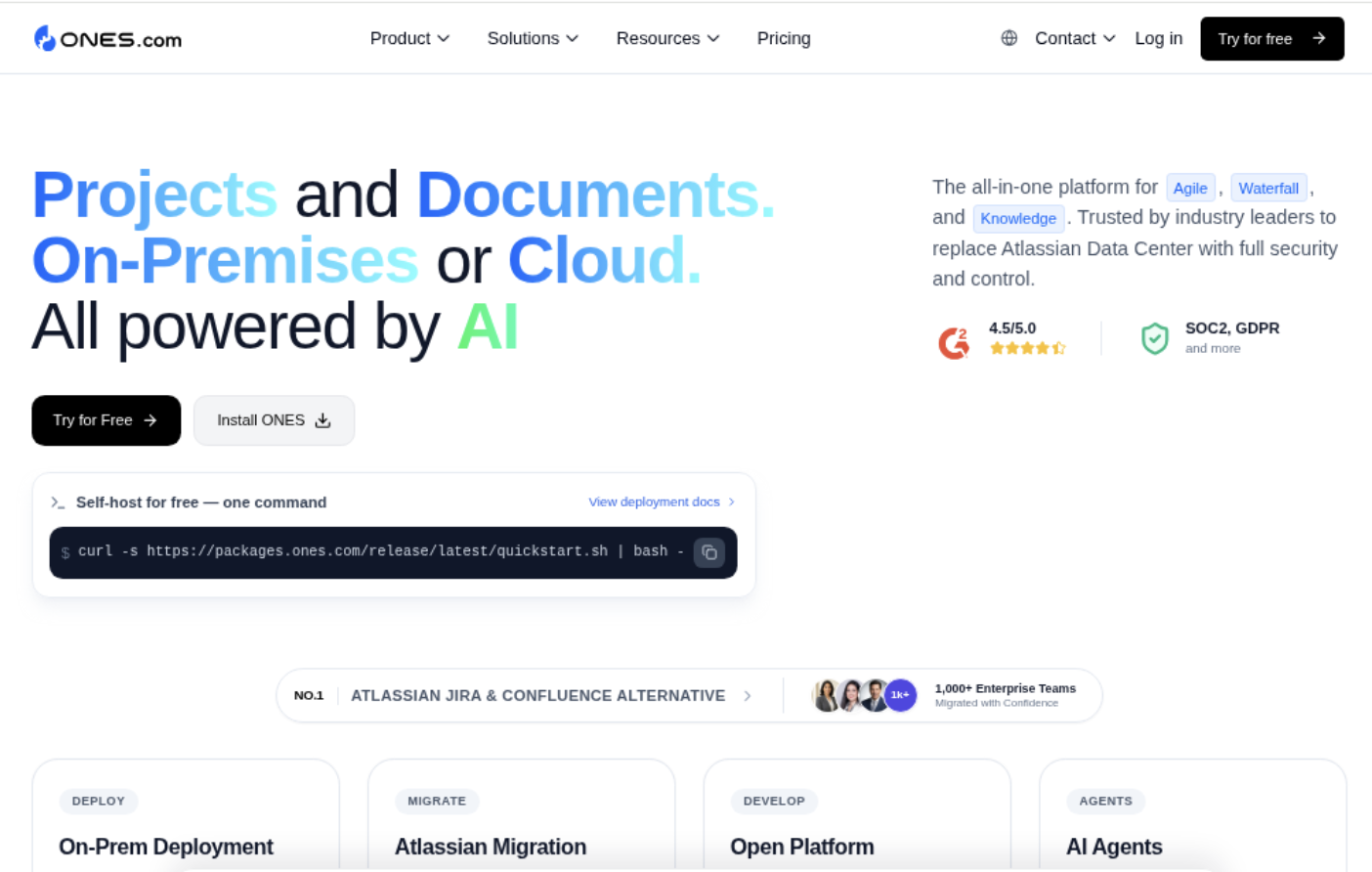
For teams that need a clearer way to apply planning, collaboration, and knowledge practices, ONES.com brings project management and knowledge management together.
ONES Project serves as a Jira alternative, while ONES Wiki serves as a Confluence alternative. They are sold separately and can support structured work without forcing teams to assemble many plugins.
Core Capabilities
Scattered work updates → unified project coordination → clearer ownership
When tasks, priorities, and progress updates sit in separate places, people lose time checking status. ONES Project brings planning and delivery activity into structured project workflows.
Rigid processes → custom workflows and fields → better fit for real operations
Every team handles approvals differently. Custom workflows and fields let you reflect stages, responsibilities, classifications, and review requirements that match the actual process.
Unclear sprint progress → sprint management → more predictable planning
Agile teams can organize sprint work, monitor progress, and review unfinished tasks. This gives product teams a clearer view of what may affect delivery.
Repetitive updates → automation → less manual administration
Routine status changes and notifications can consume attention. Automation helps handle predictable actions, allowing people to focus on exceptions and decisions.
Limited visibility → built-in reporting → stronger operational review
Built-in reporting helps teams examine progress, workload, and delivery patterns. Managers can use those views during planning and review conversations.
Disconnected knowledge → ONES Wiki → easier access to team guidance
Teams often repeat answers because procedures and decisions are difficult to find. ONES Wiki provides a knowledge management space for organizing guidance and shared understanding.
Plugin-heavy administration → native feature parity → fewer moving parts
Adding many extensions can increase maintenance work and create inconsistent experiences. ONES.com provides native parity between its cloud and self-hosted versions for core capabilities.
Restricted hosting requirements → flexible deployment options → stronger control
Organizations can choose Cloud, On-Premise, Private Cloud, or Air-gapped deployment. This gives teams more control over where their work environment operates.
Application Scenarios
Product development: A software team can plan sprint work in ONES Project, assign ownership, automate routine transitions, and connect delivery activity with guidance in ONES Wiki.
Approval-heavy operations: A marketing or compliance team can define review stages, assign approval responsibilities, and use reporting to identify delays.
Restricted environments: An organization with strict network requirements can select an appropriate self-hosted deployment while retaining feature parity with the cloud version.
ONES.com offers a free plan for up to 30 seats. That makes it possible for a small team to evaluate the workflow before expanding its operating model.
Common Challenges and Practical Solutions
Challenge: The purpose is unclear
Solution: Write one sentence that connects the activity with a specific problem. Replace “improves efficiency” with “reduces approval waiting time for campaign launches.”
Challenge: Too many features distract from the goal
Solution: Start with the smallest useful process. Add advanced settings only when they solve a confirmed operational need.
Challenge: People apply the process inconsistently
Solution: Define ownership, required steps, and completion criteria. A short example often teaches more effectively than a long explanation.
Challenge: Results are difficult to measure
Solution: Choose one baseline and one target. If approvals currently take four days, measure whether the new approach reduces that period.
Challenge: Adoption slows after launch
Solution: Review feedback, remove unnecessary steps, and show how the process helps each role. People adopt useful habits more readily when the benefit is visible.
FAQs
What does “how it’s used” mean?
It describes the practical application of a product, method, technology, or idea. A complete explanation covers the purpose, the person involved, the action taken, the setting, and the result. For example, explaining how automation is used means showing which repetitive activity it handles and what improves afterward.
Why are real-world examples important?
Examples connect an abstract concept with a recognizable situation. They show who performs the activity, what steps occur, and what outcome follows. A concrete example also reveals limitations that a general claim may hide, such as training needs, access restrictions, maintenance effort, or dependence on reliable connectivity.
How can I explain a technical application to a beginner?
Start with the problem rather than the technical feature. Name the person involved, describe one familiar situation, and explain the result in plain language. You can introduce specialized terms afterward. For instance, explain that a workflow routes a request through planned stages before calling it an approval automation process.
How do I know whether a practical use is successful?
Compare the result with the original problem. Measure a relevant outcome, such as completion time, error frequency, cost, response speed, or satisfaction. A pilot with one team can reveal problems before a wider rollout. Also check whether people can follow the process consistently without excessive training or manual work.
Can one solution have several applications?
Yes. A project platform may support task planning, sprint management, reporting, automation, and approval control. A communication tool may support meetings, training, interviews, and customer demonstrations. These uses work best when each one has a defined purpose, clear ownership, and a result you can evaluate.
Conclusion
Understanding practical use means moving beyond a definition. Identify the problem, clarify the audience, describe the action, examine the setting, and measure the result.
That approach reduces confusion and exposes weak applications early. It also helps you compare solutions fairly, explain them to other people, and improve a process over time.
But here’s the truth: a useful idea only creates value when people can apply it consistently. Start with one real need, test a manageable process, and expand after the results support the change.
Whether you are evaluating a technology, designing a workflow, or explaining a new method, focus on the practical journey from need to outcome. That is the clearest way to show how something is used in the real world.