Does Trello Have a Gantt Chart? Here’s What to Know in 2026
Planning a project in Trello feels simple until several deadlines start colliding. Cards show work clearly, yet they can become difficult to schedule across weeks or months. You may also need to see which task depends on another before promising a delivery date.
That creates a common problem: Trello’s board view can show activity without giving you a complete project timeline. Searching for a Gantt chart often leads to confusing advice about Power-Ups, Timeline view, and third-party integrations.
But here’s the truth: Trello does not provide a dedicated, traditional Gantt chart in its standard board experience. You can use Timeline view or an add-on for similar planning, while a full Gantt workflow may require another project management platform.
Does Trello Have a Gantt Chart?
Trello does not have a native traditional Gantt chart. Trello offers Timeline view and other planning options, but these do not provide the complete dependency-driven scheduling experience found in dedicated Gantt software.
A classic Gantt chart places tasks on a calendar and connects related activities with dependency lines. You can see when work begins, when it ends, and how a delay may affect later milestones.
Trello’s main experience centers on boards, lists, and cards. That structure works well for organizing tasks, assigning owners, and tracking progress. It gives you a flexible workflow, though timeline planning requires additional configuration.
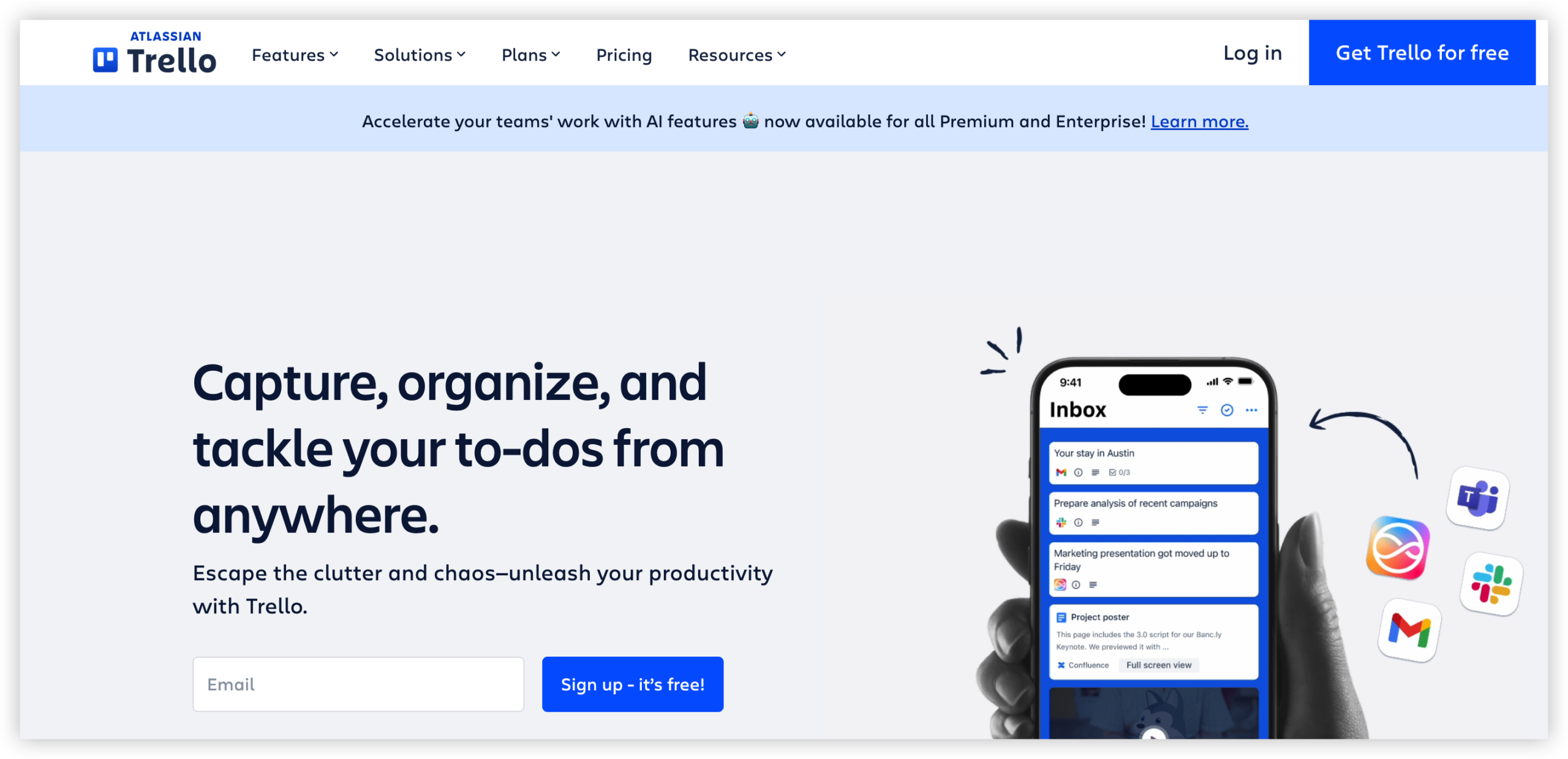
What Trello Offers Instead
- Board view: Organize cards into lists such as Backlog, In Progress, Review, and Done.
- Calendar view: See cards with due dates on a calendar.
- Timeline view: Arrange scheduled cards across a horizontal time scale.
- Power-Ups: Add capabilities through integrations and extensions.
- Third-party tools: Connect Trello with applications that create more advanced timelines.
Timeline view may be enough for a small launch. A marketing team could place campaign cards across four weeks and identify overlapping work. A software team managing technical dependencies may need more detailed scheduling control.
How Trello’s Timeline Compares With a Gantt Chart
Here’s why the distinction matters: a timeline shows when work is planned, while a Gantt chart usually shows how tasks relate to one another.
| Planning feature | Trello Timeline | Traditional Gantt chart |
|---|---|---|
| Task scheduling | Available for cards with dates | Available with start and finish dates |
| Visual time scale | Yes | Yes |
| Task dependencies | Limited or dependent on added tools | Core capability |
| Automatic schedule changes | Usually limited | Often available |
| Critical path planning | Usually unavailable natively | Common in advanced tools |
| Resource planning | Requires additional setup | Often supported |
For example, imagine a website launch with these tasks: approve the design, build the pages, test the forms, and publish the site. Testing depends on the build, while publishing depends on testing.
A Gantt chart can connect those tasks and show the impact of a two-day delay. Trello can represent the same relationship through labels, checklists, linked cards, or Power-Ups, though the connection may require more manual tracking.
How to Create a Gantt-Like Plan in Trello
You can create a useful schedule inside Trello by combining dates, labels, custom fields, and a timeline-style view. This works best when your project has a manageable number of tasks.
- Break the project into cards. Create one card for each meaningful deliverable, such as “Approve homepage design” or “Complete payment testing.”
- Add start and due dates. Use realistic dates instead of placing every task on the final delivery date.
- Group cards by phase. Create lists for discovery, planning, production, review, and launch.
- Mark dependencies clearly. Add labels or card links showing which activity must finish first.
- Assign owners. Give every important card one accountable person.
- Review the schedule weekly. Move dates when priorities change and check the effect on later milestones.
- Add a Power-Up when needed. Choose an extension that supports timeline planning, dependencies, or reporting.
Let me explain: this approach gives you a practical schedule, but it does not automatically turn every relationship into a dependency line. Your team must maintain the connections carefully.
A simple example is a product release. The product manager owns the requirements card, the designer owns the interface card, and the developer owns the implementation card. Each card receives dates and a label showing its phase.
When Trello’s Timeline Is Enough
Trello’s scheduling options can work well when the project has clear tasks, few dependencies, and a short planning horizon. A small event team may only need to see venue booking, promotion, speaker confirmation, and event-day preparation.
The timeline also suits teams that already manage daily work in Trello. Keeping planning and execution in one workspace can reduce the need to update several systems.
The best part? You can start with a lightweight setup. Add due dates, assign owners, and create milestones before introducing more complex planning controls.
A Practical Example
Suppose you are preparing a three-week email campaign. Your board includes audience research, copywriting, design, approval, scheduling, and performance review.
- Research runs during week one.
- Copywriting begins after the audience plan is approved.
- Design overlaps with copywriting.
- Approval must finish before scheduling.
- Performance review begins after the campaign starts.
Trello’s timeline can show the overlapping dates clearly. Labels and linked cards can communicate the order. For this level of complexity, that may be sufficient.
When You Need a Dedicated Gantt Tool
A dedicated Gantt system becomes more useful when your project contains many dependencies, strict milestones, or several teams working at once.
You might need one when a construction milestone depends on permits, procurement, inspections, and contractor availability. A missed permit date can affect every later activity, so manual card updates become risky.
You may also need stronger planning controls when managers ask questions such as:
- Which tasks are delaying the launch?
- What happens if this milestone moves by one week?
- Which team members are overloaded next month?
- Which activities are on the critical path?
- Can we compare the planned schedule with actual progress?
In these situations, the gap is less about appearance and more about schedule logic. A horizontal bar alone does not explain every relationship between tasks.
Ways to Add Gantt-Style Planning to Trello
You have three practical options if Trello remains your preferred task workspace.
Use Timeline View
Timeline view is the simplest starting point. Add dates to cards, arrange work across a calendar, and review overlapping tasks. It works well for basic planning and team discussions.
Add a Power-Up
A Power-Up can extend Trello with scheduling, reporting, workload planning, or dependency features. Check how the extension handles permissions, plan limits, data access, and schedule updates before adopting it.
Connect an External Planner
An external planning application can provide advanced Gantt features while Trello continues handling card-based execution. This setup may help larger teams, though it introduces another place to maintain schedules.
You might be wondering: which option should you choose? Start with Timeline view for a small project. Consider an extension when your team needs more visibility. Move to a dedicated platform when dependencies drive delivery risk.
Project Planning Solution: ONES.com
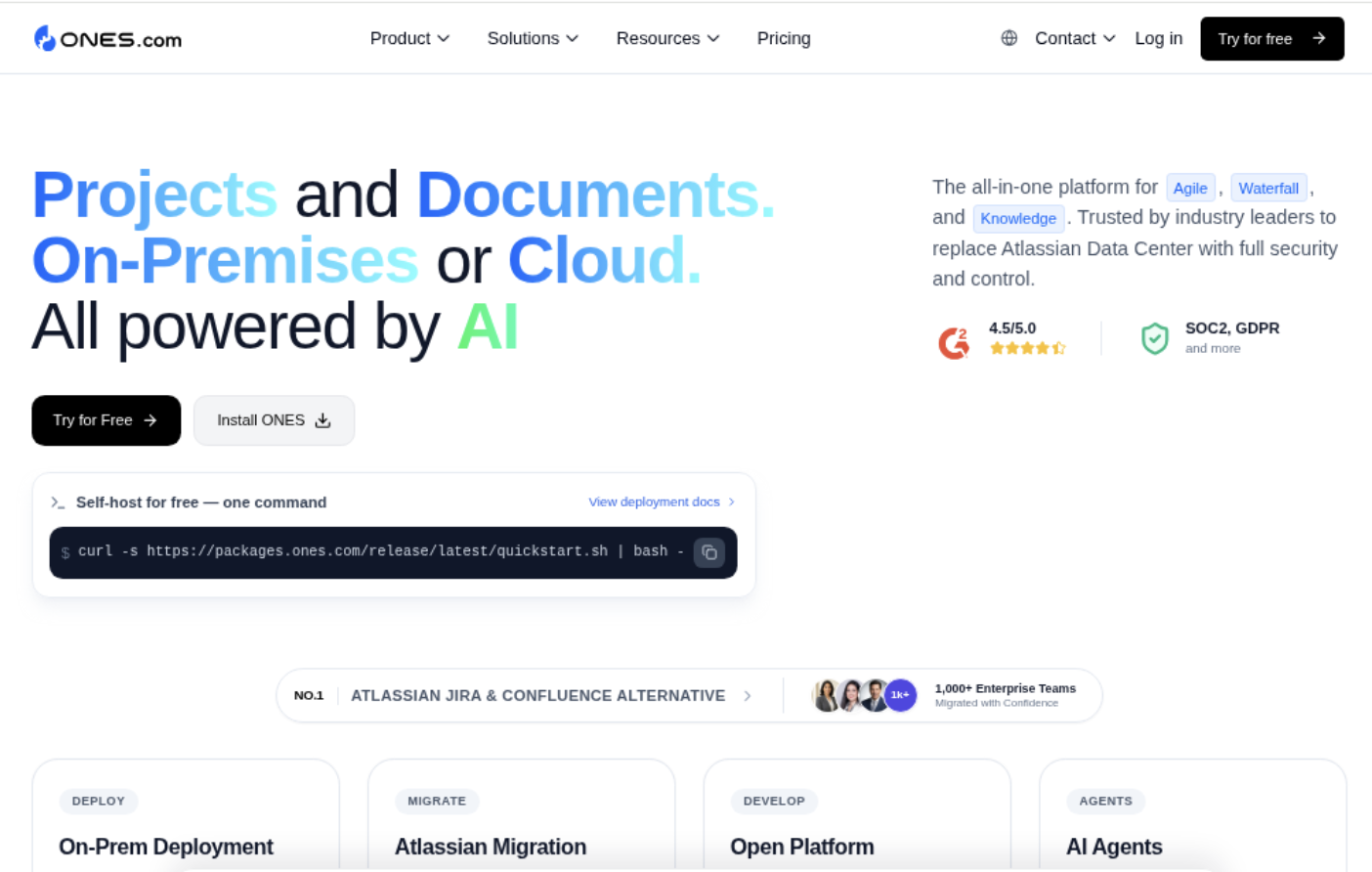
Value Proposition
ONES.com combines project management and knowledge management in one platform. ONES Project is a Jira alternative for teams that need structured planning, workflow control, reporting, and deployment flexibility.
It can suit teams that have outgrown card-only scheduling and need stronger project timelines without assembling many separate plugins.
Core Capabilities
- Scheduling complexity → Custom workflows and fields → Teams can represent phases, risk levels, owners, and delivery rules in a structured workflow.
- Unclear task relationships → Dependency-aware planning → Project teams can connect activities and understand how unfinished work affects later milestones.
- Limited sprint visibility → Sprint management → Agile teams can plan iterations, monitor scope, and review progress within a repeatable cycle.
- Manual status tracking → Automation → Routine transitions and notifications can happen through defined rules, reducing repetitive coordination.
- Scattered progress reporting → Built-in reporting → Managers can review project health, workload, and delivery progress without assembling separate reporting processes.
- Heavy plugin reliance → Native project capabilities → Teams can reduce the number of add-ons needed for workflows, fields, reporting, and planning.
- Jira migration concerns → Jira-compatible workflows → Teams familiar with Jira-style processes can preserve familiar planning patterns while evaluating another platform.
- Deployment restrictions → Four deployment choices → Teams can select Cloud, On-Premise, Private Cloud, or Air-gapped deployment.
- Different self-hosted expectations → Feature parity → The self-hosted version provides the same core feature coverage as the cloud version.
Application Scenarios
Software release planning: A development team can connect requirements, engineering tasks, quality assurance, and release milestones. Sprint management and automation help keep execution aligned with the delivery plan.
Restricted-network projects: A team working in an air-gapped environment can use an on-premise deployment while retaining project planning capabilities. That approach avoids relying on a public cloud connection.
Cross-functional product work: Product, engineering, design, and support teams can manage structured workflows in ONES Project while using ONES Wiki separately for knowledge management. The products are sold separately.
ONES.com offers a free plan for up to 30 seats. Its deployment choices and native capabilities make it relevant when timeline planning must fit security, governance, or process requirements.
Common Challenges and Practical Solutions
Challenge: Dates Exist, Yet Dependencies Stay Unclear
Solution: Add a visible relationship method. Use linked cards, dependency labels, or a planning extension. Assign one person to review these relationships during each status meeting.
Challenge: A Timeline Becomes Outdated
Solution: Treat schedule maintenance as part of project work. Review dates after every major change, and ask owners to confirm upcoming milestones.
Challenge: Too Many Cards Hide the Important Work
Solution: Separate deliverables from small actions. Keep the main timeline focused on milestones, then track minor activities inside checklists or linked work items.
Challenge: Teams Maintain Two Conflicting Schedules
Solution: Decide which platform owns delivery dates. If Trello remains the execution workspace, synchronize only the milestones needed elsewhere.
Challenge: A Power-Up Adds Complexity
Solution: Test the extension with one project first. Confirm that it supports your required views, permissions, export options, and update behavior before wider adoption.
FAQs
Can I make a Gantt chart in Trello?
You can create a Gantt-like plan with Timeline view, dates, labels, linked cards, and Power-Ups. Trello’s standard board experience does not provide the full dependency-driven behavior of a dedicated Gantt chart. Your best approach depends on project complexity. A small campaign may work well with Timeline view, while a multi-team schedule may need specialized planning software.
Is Trello Timeline the same as a Gantt chart?
No. Both can display work across a calendar, but they serve different planning needs. Timeline view helps you see scheduled cards and overlapping work. A traditional Gantt chart usually includes task dependencies, schedule relationships, milestone logic, and sometimes critical path analysis. Timeline view can support basic planning, though it may require added tools for advanced scheduling.
Which Trello Power-Up adds Gantt functionality?
Several extensions can add timeline or Gantt-style planning, and their features can change over time. Review each option carefully for dependency handling, permissions, plan limits, synchronization, and reporting. A tool that only draws bars may not support schedule changes or connected task logic. Test the extension with a representative project before committing.
Can Trello replace project scheduling software?
For simple projects, Trello may cover task organization, due dates, ownership, and lightweight planning. It becomes less suitable when you need complex dependencies, resource forecasting, critical path analysis, or automatic schedule adjustments. A team should compare the cost of manual coordination with the value of a dedicated planning system.
What is a good alternative when Trello’s planning features are limited?
Look for a platform with structured workflows, custom fields, sprint planning, reporting, automation, and dependency support. ONES Project is one option for teams evaluating a Jira alternative. It also offers Cloud, On-Premise, Private Cloud, and Air-gapped deployments, with feature parity between cloud and self-hosted versions.
Conclusion
Trello does not include a dedicated traditional Gantt chart in its standard board experience. Its Timeline view, calendar features, and Power-Ups can support lightweight scheduling for smaller projects.
But here’s the truth: the right choice depends on how much schedule logic your project needs. Cards and dates may be enough for a short campaign. Complex dependencies, milestones, and cross-team planning call for a more specialized approach.
Start by mapping your tasks, owners, dates, and dependencies. If the plan becomes difficult to maintain, evaluate a platform such as ONES Project, which provides structured workflows, reporting, automation, and flexible deployment options.