Does Trello Do Gantt Charts? A 2026 Feature Guide for Teams
Does your team need a clear view of tasks, dates, dependencies, and delivery risks? Trello feels wonderfully simple until a project grows beyond a few lists. Then you may start asking where the Gantt chart is hiding.
Here is the frustrating part: cards can show due dates, but a due date alone does not reveal how tasks connect. You may miss a blocked design task, underestimate testing time, or discover that several deadlines collide in the same week.
But here’s the truth: Trello does not offer a full native Gantt chart with the planning depth many project teams expect. You can use Timeline and Power-Ups for visual scheduling, or choose a project management platform with native timelines and dependencies. This guide explains the difference and helps you choose the right approach.
Does Trello Have a Gantt Chart?
Trello does not provide a traditional native Gantt chart. It offers timeline-style planning through selected workspace views and third-party Power-Ups, but those options may not include every feature found in dedicated Gantt software.
A traditional Gantt chart displays tasks across a calendar. Each task appears as a horizontal bar, and lines or relationships show how one activity affects another. For example, development may need to finish before testing begins.
Trello’s standard board layout uses cards arranged in lists. That design works well for visual task tracking, but it does not automatically show the full project schedule on one time-based chart.
Here’s why this distinction matters: a board answers “What work is happening?” A Gantt chart also helps answer “When will it happen, what depends on it, and what will slip if it moves?”
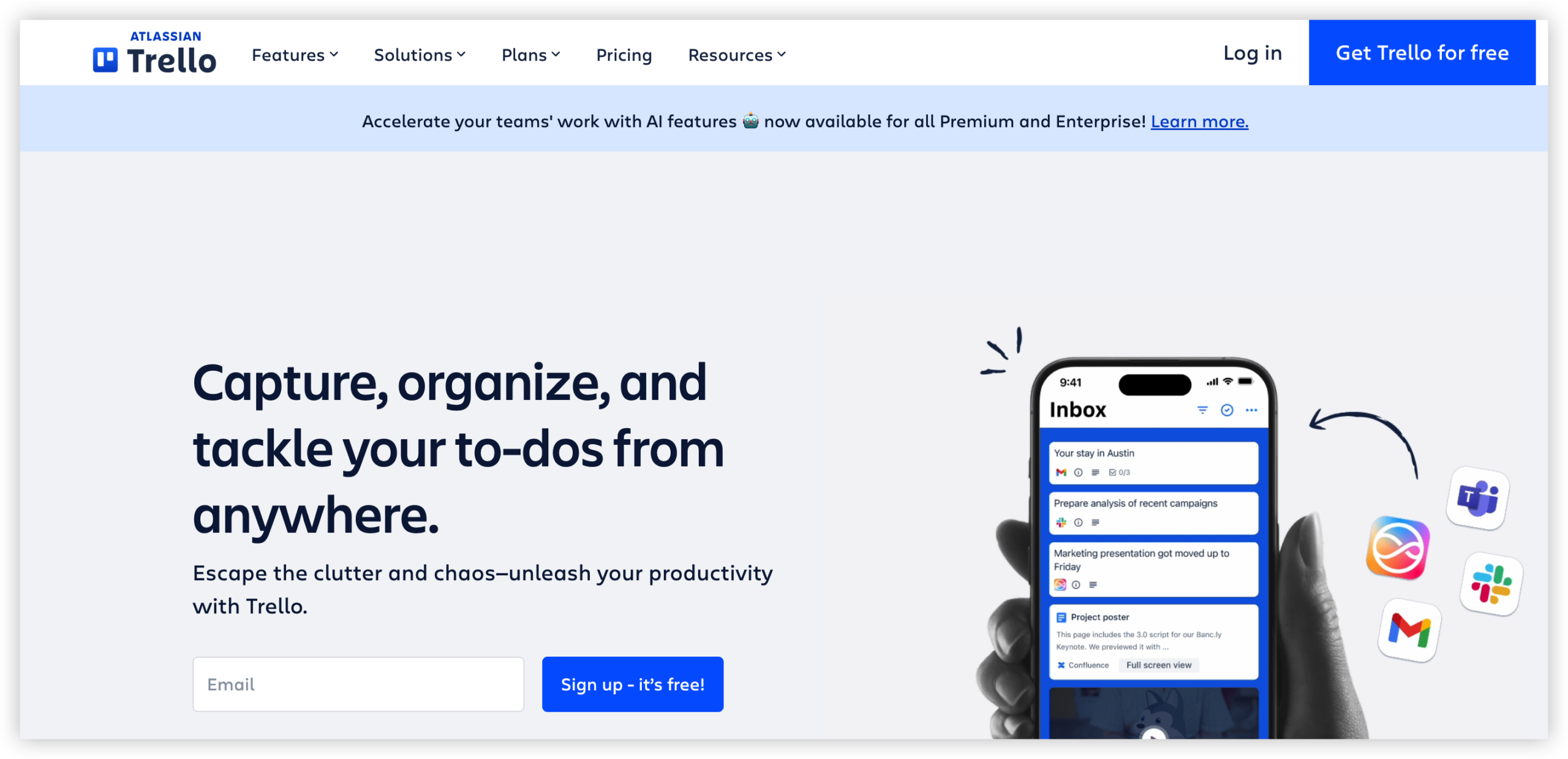
What Trello Can Do Natively
Trello can support time-based planning through features such as calendar-style and timeline-style views, depending on your workspace plan and current Trello configuration. These views can place cards against dates so you can see work across a period.
You can also add due dates, start dates, labels, checklists, members, and custom fields. Together, these details create a useful planning layer for small and moderately complex projects.
For example, a marketing team could create cards for campaign research, copywriting, design, approval, and launch. A timeline view may help the team see when each card is scheduled.
However, a timeline view and a full Gantt chart are not always equivalent. The difference usually appears in dependency management, baseline tracking, critical-path analysis, and schedule recalculation.
Where Trello Falls Short for Advanced Scheduling
A full Gantt workflow often needs task relationships such as finish-to-start dependencies. These relationships explain that one task must finish before another can begin.
Trello cards can contain dates and checklists, but a standard board does not automatically recalculate every connected task when one deadline changes. You may need manual updates or an additional Power-Up.
That can become difficult when a project includes dozens of tasks. A two-day delay in product testing may affect release approval, training, launch communications, and customer announcements.
You might be wondering: can a Power-Up close that gap? Often, yes. The result depends on the Power-Up’s features, pricing, permissions, integrations, and maintenance.
How to Create a Gantt-Like Plan in Trello
If your project is relatively simple, you can create a useful schedule without moving away from Trello. The process works best when you define the schedule clearly before adding visual enhancements.
- Break the project into deliverable-based cards. Create one card for each meaningful work item. “Launch website” is too broad, while “Approve homepage copy” is easier to schedule and assign.
- Add start and due dates. Use both dates when your workspace supports them. A task lasting five days communicates more than a single deadline.
- Assign ownership. Give each card one clear owner. You can add other contributors when collaboration is needed.
- Arrange cards by workflow stage. Lists such as “Planned,” “In Progress,” “Review,” and “Complete” make status visible.
- Mark relationships between tasks. Use card links, checklist references, labels, or a dedicated dependency Power-Up. Write a clear note such as “Testing begins after API integration is complete.”
- Open a calendar or timeline-style view. Review the schedule across days or weeks. Look for overlapping work, idle periods, and unrealistic deadlines.
- Review the plan during every project meeting. Ask which task changed, which task is blocked, and whether any downstream date needs adjustment.
- Add a specialized Power-Up if manual planning becomes excessive. Choose one that supports the relationships and reporting your team actually needs.
The best part? This approach preserves Trello’s familiar card workflow. You do not need to redesign every team process simply to gain a clearer schedule.
A Practical Example
Imagine a team preparing a mobile app release. The schedule might include these cards:
- Confirm release scope
- Complete development
- Run quality checks
- Resolve high-priority defects
- Prepare store listings
- Approve launch announcement
- Release the app
Quality checks depend on development. Defect resolution depends on the test results. The launch announcement may depend on final release approval.
A timeline-style view can show the dates. A dedicated Gantt tool or scheduling Power-Up may also show the relationships and shift later tasks when an earlier date changes.
Trello Timeline View Versus a Full Gantt Chart
The terms “timeline” and “Gantt chart” are sometimes used interchangeably. They describe related planning ideas, though the depth can differ considerably.
| Planning need | Trello timeline-style planning | Full Gantt capability |
|---|---|---|
| View cards by date | Usually supported through an available workspace view | Supported |
| Show task duration | May be available through start and due dates | Supported with adjustable bars |
| Display dependencies | May require manual references or a Power-Up | Usually built in |
| Shift connected tasks automatically | Often limited or dependent on an add-on | Common in dedicated planning tools |
| Identify a critical path | Usually requires extra planning | Often available in advanced products |
| Compare planned and actual dates | May require custom fields or reporting | Common in mature scheduling tools |
| Keep a baseline schedule | Usually requires a workaround | Often supported |
Let me explain: Trello’s strength is flexible work visualization. A Gantt chart’s strength is schedule logic. Your choice should depend on whether the calendar is a helpful view or the central control system for the project.
When a Timeline View Is Enough
A timeline-style view may be enough when tasks are short, dependencies are informal, and one person can maintain the schedule.
For example, a small content team planning six articles across one month may only need start dates, review dates, and publication deadlines. A visual calendar can expose conflicts quickly.
It can also work for recurring operational work. A team may schedule quarterly campaigns, internal reviews, or event preparation without needing advanced schedule calculations.
When You Need a Dedicated Gantt Workflow
A dedicated Gantt workflow becomes more valuable when projects contain multiple phases, complex dependencies, shared resources, or contractual milestones.
Consider a construction technology rollout involving procurement, installation, security testing, training, and regional deployment. A delay in equipment delivery could affect several later activities.
When the project has this level of connection, manually inspecting cards may take longer than completing the actual planning work. A purpose-built chart can make those relationships easier to manage.
How Trello Power-Ups Add Gantt Functionality
Power-Ups are integrations and extensions that add capabilities to Trello boards. Some focus on calendars, workload planning, dependencies, reporting, or external scheduling views.
To find a suitable option, start with the planning problem rather than the feature label. A Power-Up called “Gantt” may offer basic bars, while another may focus more heavily on dependencies or workload capacity.
Features to Check Before Choosing a Power-Up
- Task relationships: Can you connect predecessor and successor tasks?
- Automatic rescheduling: Does moving one activity update related dates?
- Milestones: Can you mark launch dates, approvals, and contractual checkpoints?
- Filtering: Can you filter by member, label, list, or workstream?
- Reporting: Can you track overdue work, progress, and schedule variance?
- Permissions: Can you control who edits the plan?
- Export and sharing: Can people outside the board view the schedule?
- Reliability: Is the integration actively maintained and compatible with your plan?
Here’s why careful evaluation matters: an add-on may improve the appearance of your schedule without solving the underlying coordination problem.
Suppose your team needs automatic date changes whenever a predecessor slips. A visually attractive timeline without dependency logic may still leave you updating every affected card manually.
Potential Trade-Offs
Power-Ups can preserve your existing Trello workflow, which may reduce training time. They can also introduce extra cost, separate permissions, additional configuration, and another place to troubleshoot.
Some integrations may display information differently from Trello. A team member could update a card in one view while another person reviews an older schedule elsewhere.
Before adoption, test the Power-Up with a small project. Move a milestone, change a task duration, assign another person, and confirm the schedule behaves as expected.
Choosing the Right Planning Method for Your Team
The right approach depends on project complexity, schedule risk, and how much manual maintenance your team can tolerate.
| Your situation | Practical choice |
|---|---|
| Small project with simple dates | Trello cards with due dates and a calendar-style view |
| Several phases with moderate coordination | Trello plus a timeline or dependency Power-Up |
| Many linked activities and shifting deadlines | Dedicated project management software with native dependencies |
| Frequent resource conflicts | Software with workload, capacity, and schedule reporting |
| Strict security or deployment requirements | A platform that supports the required hosting model |
Use a simple test: count how often your team changes dates after work begins. If schedule changes are rare, Trello may be sufficient. If every delay triggers several manual updates, a deeper scheduling system can save time.
Questions to Ask Before You Decide
- How many tasks usually appear in one project?
- Do tasks depend on one another?
- Who maintains the schedule?
- How quickly must the team detect a delay?
- Do leaders need progress reports?
- Do clients or partners need schedule access?
- Does your organization require cloud, private cloud, on-premise, or air-gapped deployment?
A team managing ten loosely connected tasks may need only a visual calendar. A team coordinating 200 linked activities needs stronger scheduling controls.
Gantt Chart Solution: ONES.com
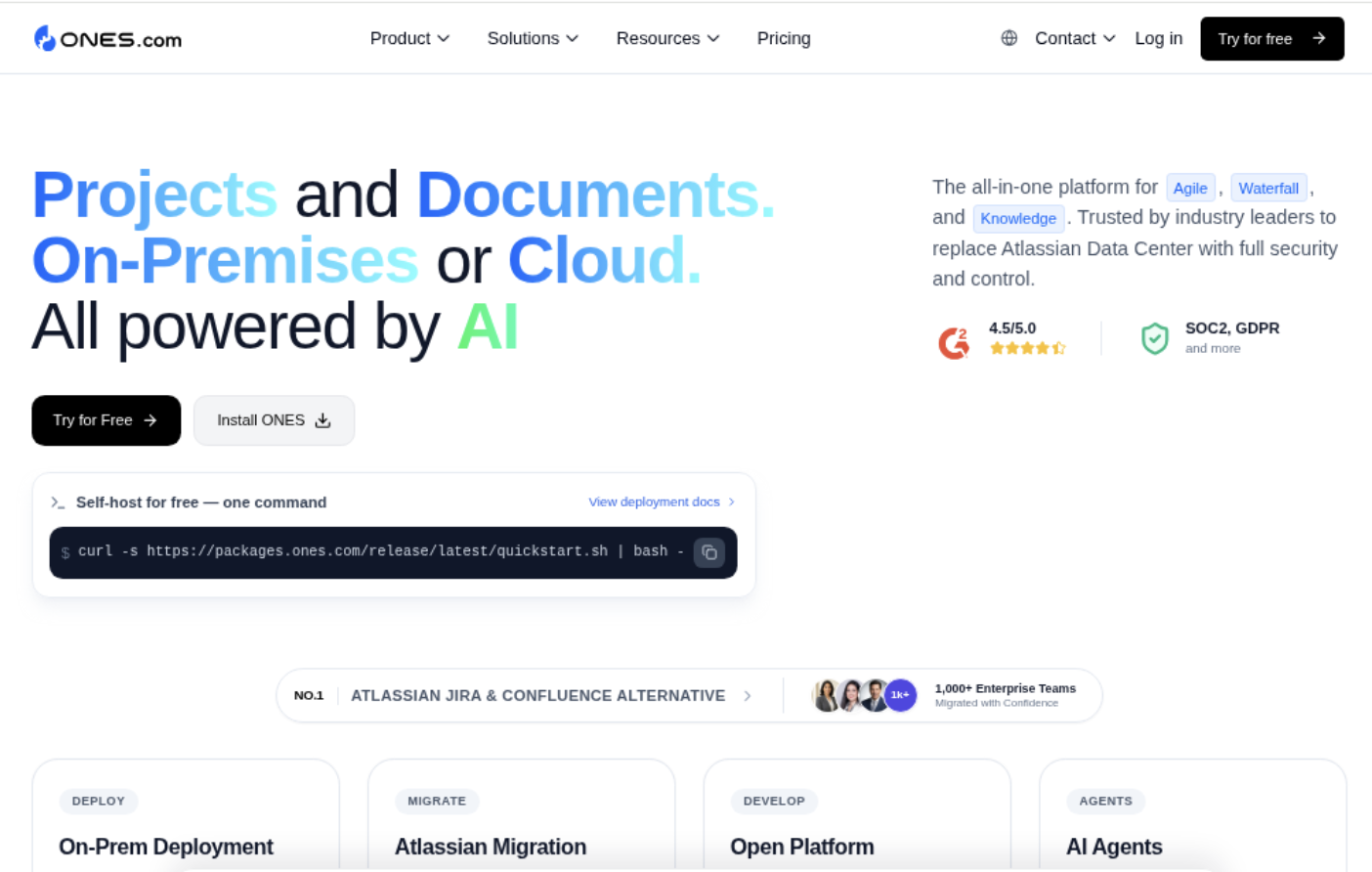
Value Proposition
ONES.com combines project management and knowledge management in one platform powered by ONES Assistant. ONES Project is a project management product and a Jira alternative, while ONES Wiki supports knowledge management as a Confluence alternative. They are sold separately.
For teams that need structured schedules, connected work, and controlled deployment options, ONES Project can provide a more native planning environment than a board that depends on several add-ons.
Core Capabilities
Complex schedule coordination
Pain: Teams struggle to coordinate many cards across phases.
ONES capability: ONES Project supports structured project planning, sprint management, and Jira-compatible workflows.
Result: You can organize work around a clearer delivery process as projects grow.
Manual workflow administration
Pain: Repeating status changes and handoffs can consume planning time.
ONES capability: Custom workflows and automation help route work through defined stages.
Result: Routine transitions become more consistent, reducing avoidable coordination effort.
Limited project visibility
Pain: A board may show current status without giving leaders enough reporting context.
ONES capability: Built-in reporting provides a central way to review project progress and delivery signals.
Result: Managers can inspect progress without assembling separate views for every workstream.
Inflexible task details
Pain: Different teams need different fields for risk, priority, approvals, or delivery milestones.
ONES capability: Custom fields allow teams to capture information that matches their workflow.
Result: Project records can reflect actual operating needs instead of forcing every team into one template.
Plugin-heavy project management
Pain: Adding several extensions can create inconsistent behavior and administrative overhead.
ONES capability: ONES Project includes native project management functions alongside workflow, sprint, automation, and reporting features.
Result: Teams may reduce dependence on multiple plugins for everyday planning needs.
Migration from Jira workflows
Pain: A team may want an alternative without abandoning familiar issue and workflow concepts.
ONES capability: ONES Project supports Jira-compatible workflows and is positioned as a Jira alternative.
Result: Existing process patterns can be easier to adapt during a platform transition.
Deployment restrictions
Pain: Some organizations cannot place project information in a standard public cloud environment.
ONES capability: ONES.com supports Cloud, On-Premise, Private Cloud, and Air-gapped deployments.
Result: You can evaluate deployment choices against security, network, and governance requirements.
Separate work and knowledge spaces
Pain: Project decisions and team knowledge can become difficult to connect.
ONES capability: ONES.com provides project and knowledge management products, with ONES Project and ONES Wiki available separately.
Result: Teams can choose the product combination that fits their operating model.
Application Scenarios
Software release planning
A software team can manage sprints, custom workflows, automated transitions, and release reporting in ONES Project. This approach suits work where development, testing, approval, and deployment follow connected stages.
Restricted-network delivery
An engineering or public-sector team may need project management inside an on-premise or air-gapped environment. ONES.com offers those deployment options and maintains feature parity between cloud and self-hosted versions.
Growing teams leaving lightweight boards
A team may begin with Trello-style cards and later need deeper reporting, workflows, and sprint planning. ONES Project can serve as a Jira alternative when the team wants more structure without relying heavily on plugins.
Common Challenges and Practical Solutions
Challenge: Confusing a timeline with dependency management
Solution: List the relationships that matter before selecting a view. If testing must follow development, record that relationship explicitly and check whether your chosen setup updates dates automatically.
Challenge: Dates become outdated
Solution: Assign one schedule owner and review dates at a fixed cadence. During the review, update the next affected tasks instead of waiting for the final deadline to expose the delay.
Challenge: Too many extensions create complexity
Solution: Keep only the integrations that solve a recurring problem. If your team needs several add-ons for basic planning, compare the total administration effort with a platform offering more native capabilities.
Challenge: Cards lack enough planning detail
Solution: Add start dates, owners, milestones, estimates, and risk indicators. A short card title rarely gives a project lead enough information to assess schedule health.
Challenge: Stakeholders need a simple project view
Solution: Create a filtered schedule focused on milestones and delivery dates. Stakeholders usually need a concise view of progress, risks, and upcoming decisions rather than every internal checklist item.
FAQs
Can Trello create a true Gantt chart?
Trello does not provide a traditional full-featured Gantt chart as part of its standard board experience. You can use available timeline-style planning views or add a Power-Up for deeper scheduling. Whether that is enough depends on your need for dependencies, automatic rescheduling, milestones, reporting, and baseline comparisons.
Is Trello’s Timeline view the same as a Gantt chart?
A timeline view can resemble a Gantt chart because it places cards across dates. The two may differ in schedule logic. A dedicated Gantt chart commonly offers stronger dependency handling, milestone controls, critical-path analysis, and automatic changes to connected activities.
Which Trello projects benefit most from timeline planning?
Timeline planning works well for small campaigns, editorial calendars, event preparation, product launches, and other projects with manageable task counts. It becomes less comfortable when many activities depend on one another or when several people continually adjust dates.
Do Trello Power-Ups add dependencies?
Some Power-Ups can add dependency features, calendar planning, workload views, or Gantt-style displays. Capabilities vary by provider and plan. Test the integration with a realistic project before committing, especially if automatic date movement and reporting are important.
What should I use when Trello no longer handles project scheduling?
Consider a project management platform with native workflows, reporting, sprint planning, automation, and stronger schedule controls. ONES Project is one Jira alternative to evaluate, especially when your team needs on-premise, private cloud, or air-gapped deployment options.
Conclusion
Trello can support Gantt-like planning through timeline-style views and Power-Ups, but it does not offer a complete native Gantt experience for every advanced scheduling need.
Start with Trello when your work has manageable dates and limited dependencies. Add a scheduling extension when you need more visibility. Consider a dedicated project management platform when delays, relationships, reporting, and deployment requirements become central to delivery.
But here’s the practical takeaway: choose the lightest planning method that still exposes risk early. A simple board can work beautifully for a small campaign, while a connected engineering program may need native scheduling and stronger workflow controls.
By matching the planning method to project complexity, you can keep the clarity of visual task management without allowing hidden dependencies to derail delivery.