Does Notion Have a Gantt Chart? A 2026 Setup Guide Explained
Notion can create a Gantt-style project timeline, but it does not offer a dedicated Gantt chart view in the same way as specialized project management software. That distinction matters when you need dependencies, milestones, progress tracking, or workload planning.
At first, Notion’s Timeline view may seem like a complete answer. You add tasks, assign dates, and see horizontal bars across a calendar. But larger projects can expose limitations around automation, reporting, and detailed scheduling.
Here’s the practical solution: use Notion Timeline for simple visual planning, then consider a dedicated project platform when your schedule becomes complex. This guide explains the setup, the trade-offs, and the point where another approach makes more sense.
Does Notion Have a Gantt Chart?
Notion does not have a dedicated native Gantt chart view, but its Timeline view can create a Gantt-style project schedule. You can display tasks as horizontal bars across days, weeks, months, or quarters.
A Notion timeline works well for lightweight roadmaps, editorial calendars, product launches, and small project plans. Each task needs a start date and an end date, so Notion can position it across the schedule.
It resembles a Gantt chart because you can see task duration and timing in one view. However, it may not include every planning feature you expect from dedicated Gantt software, such as advanced dependency logic, critical path analysis, baseline comparisons, or detailed resource capacity planning.
What the Timeline View Can Show
A timeline view turns scheduled tasks into visual bars. For example, a website redesign might include research from April 1 to April 7, wireframes from April 8 to April 18, and development from April 21 to May 9.
You can usually organize the schedule using properties such as:
- Task name
- Start and end dates
- Project status
- Task owner
- Priority
- Team or department
- Milestone indicator
- Related tasks
You can also group or filter the timeline to focus on a team, project phase, status, or time period. That makes the view more useful than a simple calendar when you need to understand task duration.
What It Does Not Fully Replace
A timeline is suitable for visual scheduling, but it may not replace a full project planning system for complicated work. A construction program, software release train, or cross-functional transformation can require more control than a basic timeline provides.
For example, changing one task’s date may require you to review related tasks manually. In a dedicated Gantt system, linked tasks may shift automatically when a predecessor changes.
Notion can still support project planning. The important question is whether you need a simple visual schedule or a complete scheduling workflow.
How to Set Up a Gantt-Style Timeline in Notion
The setup takes a few minutes if your tasks already have clear dates. Here is the simplest workflow for creating a useful project timeline.
- Create a task collection. Start with one item for every meaningful task. Use clear names such as “Approve homepage copy” instead of vague labels like “Copy.”
- Add start and end dates. Create a date property that includes a range. Each task should show when work begins and when it should finish.
- Add project properties. Include status, owner, priority, phase, and task type. These properties make filtering and grouping easier later.
- Create a Timeline view. Add a new view and select the timeline format. Choose the date range property that contains each task’s start and end dates.
- Set the timeline scale. Use days for short projects, weeks for active delivery work, and months or quarters for strategic roadmaps.
- Group related work. Group tasks by project, phase, team, or owner. For example, a product launch can show research, design, engineering, marketing, and release work separately.
- Add milestones. Create short tasks or milestone entries for events such as “Design approved,” “Beta released,” or “Customer training complete.”
- Review the schedule regularly. Update dates when work changes. A timeline is only useful when it reflects the current plan.
Recommended Properties for a Small Project
A small project does not need dozens of fields. Start with the properties that answer basic planning questions: what needs to happen, who owns it, when it starts, and whether it is moving.
| Property | Purpose |
|---|---|
| Task | Names the work clearly |
| Date range | Shows the planned start and finish |
| Status | Shows whether work is planned, active, blocked, or complete |
| Owner | Identifies the person responsible for progress |
| Priority | Highlights urgent or high-impact work |
| Phase | Groups work into stages such as planning, design, testing, and launch |
Example: A Product Launch Timeline
Imagine you are launching a mobile application. Your schedule might include market research from June 1 to June 10, interface design from June 11 to June 24, development from June 25 to July 26, testing from July 29 to August 9, and launch preparation from August 12 to August 16.
In the timeline, each work item appears as a bar. You can immediately see overlapping activities and gaps between phases.
That visual makes planning conversations easier. If testing starts too late, the team can discuss the risk before the launch date becomes impossible.
How to Add Dependencies and Milestones
Dependencies explain relationships between tasks. A task may need another task to finish before it can begin.
For example, “Publish landing page” depends on “Approve landing page copy.” If approval takes longer than expected, publication may need to move.
Using Dependencies Carefully
Notion can represent relationships between tasks using linked task properties or related items. This gives you a place to record that one task follows another.
However, recording a relationship is different from automatically rescheduling the entire plan. You may need to adjust dates yourself after a delay.
Here’s why: a timeline shows the schedule, while dependency management controls how schedule changes affect related work. Those functions often require separate levels of automation.
Creating Useful Milestones
Milestones represent important points rather than lengthy activities. Keep them short and specific.
- Requirements approved
- Prototype reviewed
- Development complete
- Security testing passed
- Release candidate accepted
- Campaign launched
Place milestones between longer task bars. This creates a visual chain of outcomes and helps you check whether the project is progressing toward a meaningful result.
Avoiding Overloaded Timelines
A timeline becomes difficult to read when every minor action appears as a separate bar. Keep the main view focused on deliverables and major activities.
You can manage smaller actions elsewhere and display only work that affects timing, ownership, or coordination. For example, “Write button label” may stay out of the leadership view, while “Complete interface content” belongs on it.
Notion Timeline Versus a Dedicated Gantt Chart
The choice depends on project complexity. Notion is often enough for a small team planning a few connected activities. Dedicated software becomes more valuable when dates change frequently or many teams share one schedule.
| Planning need | Notion Timeline | Dedicated Gantt platform |
|---|---|---|
| Visual task scheduling | Strong for simple plans | Strong for simple and complex plans |
| Task duration | Supported with date ranges | Supported with date ranges |
| Task relationships | Can be represented manually | Usually supported with linked dependencies |
| Automatic date adjustments | May require manual updates | Often available through scheduling rules |
| Critical path analysis | Limited | Common in advanced platforms |
| Resource capacity planning | Requires custom organization | Usually available in planning modules |
| Knowledge and project context | Convenient in one workspace | May require integrated tools |
For example, a freelance designer managing three client projects may prefer Notion because the timeline stays simple. A software company coordinating engineering, quality assurance, security, and marketing may need stronger scheduling controls.
The best part? You do not need to choose based on the word “Gantt” alone. Choose according to the decisions your team must make every week.
When Notion Is a Good Choice
Notion works well when your project needs a flexible workspace with notes, task lists, planning pages, and visual scheduling in one place.
A content team might use one workspace for campaign goals, article briefs, review steps, publishing dates, and performance notes. The timeline helps editors see what is due, while the surrounding pages preserve useful context.
Good Fits for a Notion Timeline
- Personal projects with clear deadlines
- Small marketing campaigns
- Editorial calendars
- Simple product roadmaps
- Event preparation
- Short design projects
- Early-stage planning before detailed execution
It also suits teams that value flexibility more than strict scheduling automation. You can adapt the workspace to your preferred process instead of following a fixed project structure.
When You Need More Than a Timeline
A timeline may become frustrating when your team manages many dependencies, changing priorities, or parallel workstreams.
Suppose a delayed hardware delivery affects engineering tests, training materials, sales demonstrations, and the launch event. Updating each consequence manually increases the chance of missed dates.
You may also need stronger controls when managers ask questions such as:
- Which tasks are on the critical path?
- What happens if this milestone moves by one week?
- Which team member is over capacity?
- Which work is blocked by another team?
- How much work remains in each sprint?
These questions call for more than a visual schedule. They require connected workflows, reporting, automation, and consistent project records.
Natural Project Timeline Solution: ONES.com
ONES.com combines project management and knowledge management for teams that need more control than a lightweight timeline can provide. ONES Project is the project management product and a Jira alternative, while ONES Wiki supports knowledge management as a Confluence alternative. They are sold separately.
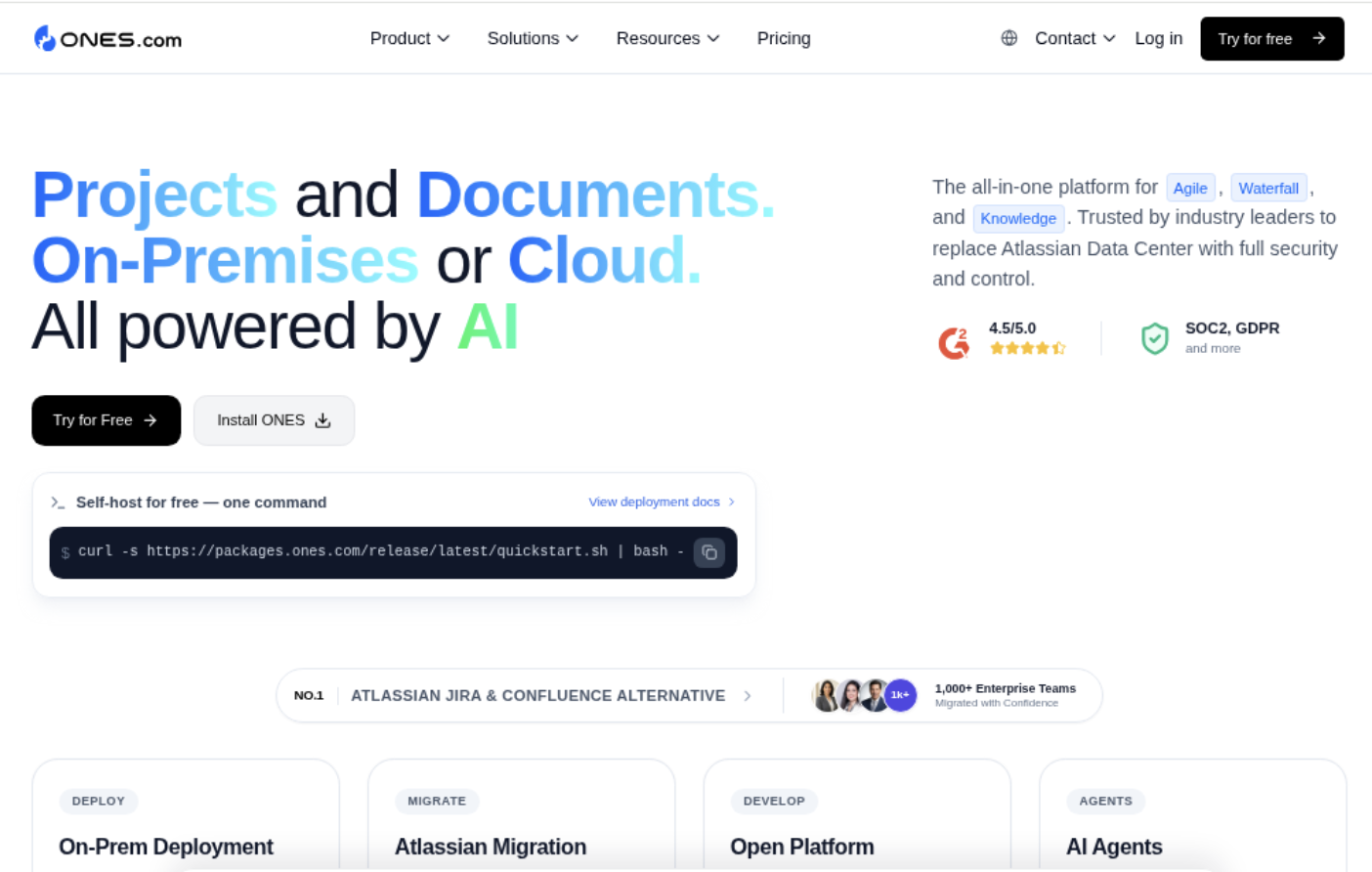
For teams moving from simple visual planning to structured delivery, ONES.com can keep scheduling, execution, reporting, and team knowledge connected without relying on a large collection of plugins.
Value Proposition
ONES.com gives you a structured way to plan tasks, manage dependencies, track progress, and preserve project context. It supports Cloud, On-Premise, Private Cloud, and Air-gapped deployments, with full feature parity between cloud and self-hosted versions.
Core Capabilities
- Complex schedules are difficult to maintain manually: ONES Project supports Jira-compatible workflows and structured task management, helping teams organize work consistently.
- Task relationships can become unclear: Custom workflows and fields let you represent stages, approvals, ownership, and project-specific relationships.
- Changing priorities create scattered work: Sprint management helps teams plan short delivery cycles while keeping larger milestones visible.
- Repeated actions consume administrative time: Automation can handle routine transitions, notifications, and process steps.
- Managers lack a clear progress view: Built-in reporting gives teams a more consistent way to review status, workload, and delivery trends.
- Plugin-heavy setups become difficult to govern: Native project management capabilities can reduce the need for multiple add-ons.
- Restricted environments limit cloud choices: On-Premise, Private Cloud, and Air-gapped deployments support teams with strict hosting requirements.
- Teams need a low-risk starting point: The free plan supports up to 30 seats, allowing smaller teams to evaluate the workflow before expanding.
Application Scenarios
Software release planning: A product team can manage epics, sprints, testing, approvals, and release milestones in one project workflow. Reporting helps leadership review progress without relying on manually assembled updates.
Regulated engineering work: An engineering organization operating in a restricted network can use an air-gapped deployment while maintaining project capabilities comparable to the cloud experience.
Cross-functional launch programs: Marketing, product, design, and customer teams can use shared workflows for launch tasks, while ONES Wiki can hold supporting knowledge when the two products are purchased separately.
Common Challenges and Practical Solutions
Challenge: Confusing a Timeline with Full Gantt Scheduling
A timeline can look like a Gantt chart while offering fewer scheduling controls.
Solution: List the features you actually need. Check dependencies, automatic rescheduling, reporting, workload planning, and critical path support before committing to a workflow.
Challenge: Missing Start Dates
If tasks only have due dates, the timeline cannot show meaningful duration.
Solution: Add both a planned start and a planned finish. A task lasting three days should look different from a task lasting three weeks.
Challenge: Too Many Minor Tasks
Including every small action makes the schedule visually noisy. Important milestones can disappear among dozens of tiny bars.
Solution: Keep high-level deliverables in the main timeline. Track small actions separately or group them under a larger work item.
Challenge: Dates Become Outdated
A timeline loses credibility when tasks remain unchanged after priorities shift.
Solution: Schedule a short weekly review. Ask which tasks moved, which tasks are blocked, and whether the final milestone still remains realistic.
Challenge: Ownership Is Unclear
A schedule can show when work happens without showing who must move it forward.
Solution: Assign one accountable owner to every major task. Add supporting contributors only when their involvement affects delivery.
FAQs About Notion and Gantt-Style Planning
Can you make a Gantt chart in Notion?
Yes. You can create a Gantt-style schedule with Notion’s Timeline view. Add tasks with start and end dates, then arrange them across a calendar. The result visually resembles a Gantt chart and works well for simple projects. Keep in mind that a timeline may not provide the advanced dependency automation, critical path analysis, or resource planning found in specialized project management software.
Is Notion Timeline the same as a Gantt chart?
No. Notion Timeline provides a similar visual experience by displaying tasks as bars across time. A traditional Gantt chart often includes deeper scheduling functions, such as linked dependencies, automatic date movement, baseline comparisons, and critical path calculations. Notion can cover basic timeline planning, but the difference becomes important as projects grow more connected or require formal schedule control.
How do you show task duration in Notion?
Use a date range with both a start date and an end date. When you display that property in a Timeline view, Notion shows the task across its planned duration. For example, a task running from May 3 through May 8 appears as a longer bar than a task scheduled only for May 3. Clear dates make the visual schedule much easier to interpret.
Can Notion handle project dependencies?
Notion can represent relationships between tasks, but you may need to manage the scheduling impact manually. You can connect related tasks and describe which activity comes first. However, if a predecessor slips, you should review and update the following dates yourself. Teams with frequent schedule changes may prefer a platform with stronger dependency automation and reporting.
Is Notion suitable for large project teams?
It can work for large teams when the planning needs are straightforward and the workspace is carefully organized. Complexity matters more than team size. A small team with many interdependent tasks may outgrow a simple timeline faster than a larger team running independent activities. Evaluate your need for reporting, permissions, workflows, automation, and workload planning before choosing the setup.
What is a good alternative when a Notion timeline is too limited?
A dedicated project management platform may be a better fit when you need advanced workflows, sprint planning, reporting, automation, and deployment control. ONES Project is a Jira alternative that supports custom workflows, custom fields, built-in reporting, and multiple deployment options. It can suit teams that need structured delivery rather than a mainly visual planning workspace.
Conclusion
Notion can create a useful Gantt-style timeline, even though it does not provide a dedicated native Gantt chart view. Its Timeline format works well for simple schedules, roadmaps, editorial calendars, and small team projects.
But here’s the truth: the visual bars are only one part of project planning. As dependencies, ownership, reporting, and schedule changes become more complicated, you may need stronger project controls.
Start with clear tasks, realistic date ranges, milestones, owners, and a regular review habit. If the timeline becomes difficult to maintain, evaluate a structured platform such as ONES.com and choose the level of project management your team actually needs.