Does Notion Have a Gantt Chart? 2026 Options Fully Explained
Planning a project in Notion can feel deceptively simple. You add tasks, assign dates, and expect a clear visual schedule to appear. Then dependencies, overlapping work, and deadline changes arrive, and the plan becomes harder to read.
That uncertainty creates real problems. You may miss a blocked task, overlook a delivery risk, or spend time rebuilding a timeline after one date changes. A list of tasks rarely shows the full rhythm of a project.
But here's the truth: Notion can create a Gantt-style view through its Timeline layout. It works well for lightweight schedules and personal planning, although it may lack some controls found in dedicated project management tools. This guide explains what Notion can do, where its timeline falls short, and which alternatives make sense in 2026.
Does Notion Have a Gantt Chart?
Notion has a Gantt-style Timeline view, but it does not offer a dedicated Gantt chart with every advanced planning feature. You can display tasks across dates, group work by project or owner, and see how activities overlap.
To create one, build a Notion project table with at least a task name, start date, end date, status, and owner. Then switch the view to Timeline and adjust the visible schedule.
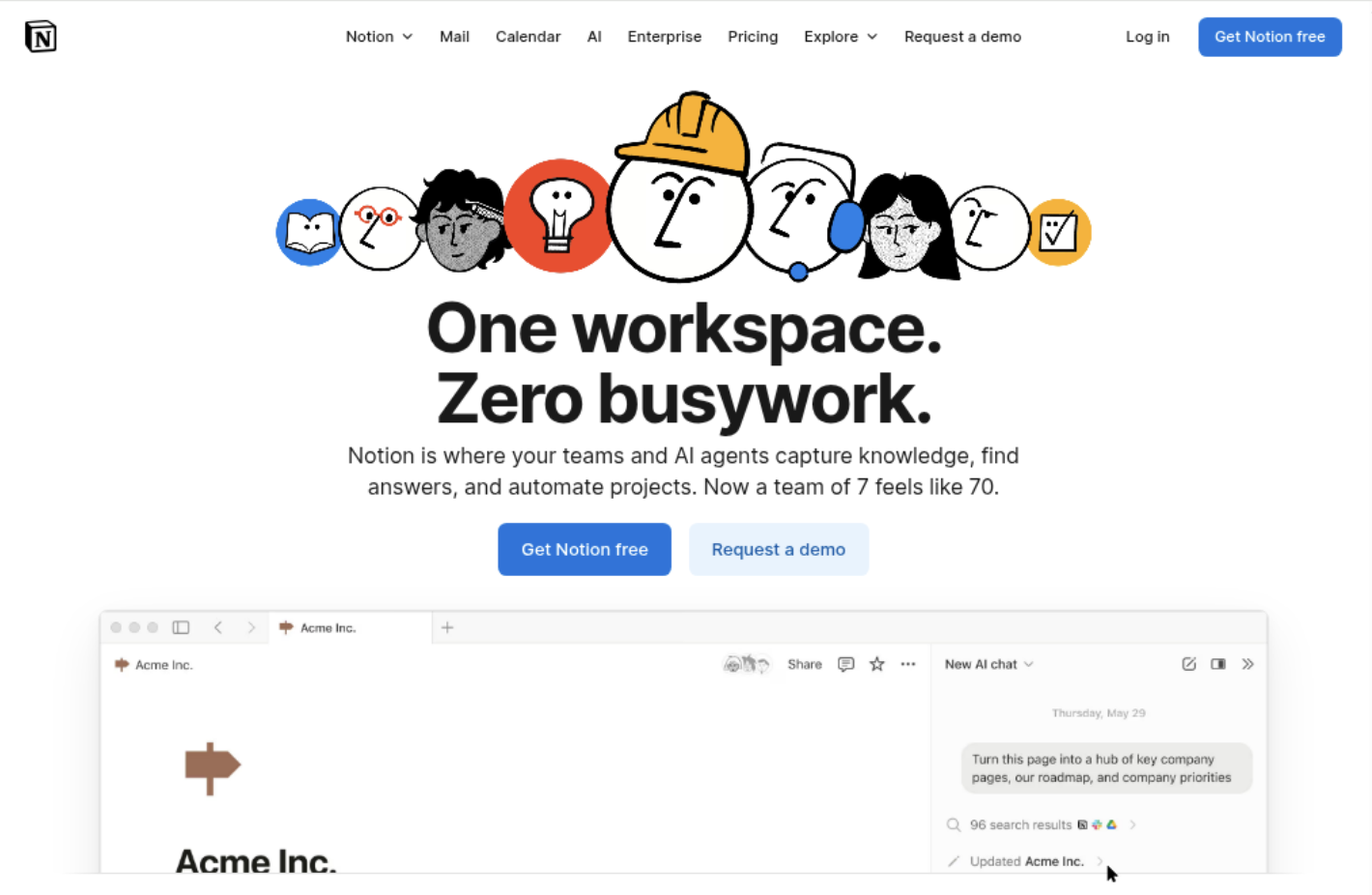
What the Notion Timeline View Can Do
The Timeline view turns dated tasks into horizontal bars. Each bar represents a task duration, so you can quickly see when work starts, when it ends, and where activities overlap.
You can usually use properties such as status, priority, assignee, and project area to organize the schedule. For example, you could group tasks by team and color them by status.
- Show work across days, weeks, months, or longer periods
- Assign start and end dates to individual tasks
- Group activities by project, team, or owner
- Filter the view to show selected work
- Adjust task dates directly within the timeline
- Connect the schedule to related notes and planning pages
Where It Differs From a Traditional Gantt Chart
A dedicated Gantt chart usually includes stronger dependency management, milestone controls, critical path analysis, baseline comparisons, and progress tracking.
Notion can represent a project schedule clearly, yet you may need workarounds for advanced planning. For instance, a task can have a date range, while the connection between that task and its predecessor may require a relation, text property, or manual convention.
Here's why: a visual timeline shows when work happens, while a full Gantt system also explains how one activity affects another.
How to Build a Gantt-Style Timeline in Notion
- Create a project workspace. Add a dedicated planning page where your tasks, milestones, and project notes can stay together.
- Add the essential task properties. Include task name, start date, end date, status, priority, owner, and project area.
- Enter realistic date ranges. Give each activity a beginning and an expected finish. A single deadline cannot show task duration.
- Choose the Timeline layout. Add a timeline view to your task table, then select the start and end date properties.
- Group related work. Group tasks by project, phase, team, or owner so the schedule becomes easier to scan.
- Add milestones. Use short tasks with matching start and end dates, or create a milestone property for major delivery points.
- Track progress separately. Use status values such as Planned, In Progress, Blocked, Review, and Complete.
- Review the schedule regularly. Move dates when priorities change and check whether delayed work affects later activities.
A Simple Example
Imagine you are launching a product page. Your schedule might include research from March 2 to March 6, writing from March 9 to March 13, design from March 9 to March 18, review from March 19 to March 21, and publishing on March 24.
The Timeline view makes the overlap between writing and design visible. However, you may still need a separate relation or status rule to show that review cannot begin until both activities finish.
Properties Worth Adding
| Property | Why it matters |
|---|---|
| Task name | Identifies the activity clearly. |
| Start date | Shows when work begins. |
| End date | Shows expected completion. |
| Status | Reveals current progress and blockers. |
| Owner | Clarifies accountability. |
| Priority | Helps separate urgent work from flexible work. |
| Milestone | Highlights key delivery points. |
| Dependency | Records which activity must happen before another. |
When Notion Works Well for Gantt-Style Planning
Notion is a practical choice when your schedule is relatively simple and your team already organizes planning there. A small marketing campaign, content calendar, or personal renovation plan may need visibility without complex controls.
For example, a three-person team planning a webinar can track speaker outreach, landing page work, promotion, rehearsals, and follow-up activities. The Timeline view gives everyone a shared sense of timing.
The best part? Each task can connect to meeting notes, checklists, briefs, and decisions in the same workspace. That context reduces the need to search across several applications.
Good Fits for the Timeline View
- Short projects with limited dependencies
- Creative work with flexible dates
- Personal planning and recurring campaigns
- Small teams that value connected notes
- Early project scoping before detailed scheduling
Where Notion Timeline Planning Starts to Struggle
The limitations become clearer when your project contains many dependencies. If a testing delay shifts release preparation, you may need to update several dates manually.
Large schedules can also become visually crowded. Filters and groups help, though they do not replace dependency logic or critical path analysis.
You might be wondering: why does this matter if the bars still look correct? Because a schedule can appear organized while hiding the work that controls the final deadline.
Common Gaps
| Planning need | Possible limitation |
|---|---|
| Task dependencies | Relationships may require manual setup and maintenance. |
| Critical path | You may not get an automatic view of deadline-driving tasks. |
| Baseline comparison | Comparing the original plan with the current schedule can be difficult. |
| Resource planning | Workload conflicts may require extra views or calculations. |
| Progress measurement | Status labels may not show reliable completion percentages. |
| Portfolio reporting | Cross-project reporting may need additional configuration. |
Notion Timeline Versus a Dedicated Gantt Tool
The right choice depends on the question you need your schedule to answer. Notion answers, “What work is planned, and when should it happen?” A dedicated Gantt platform goes further by answering, “What changes if this activity slips?”
Consider a website redesign with 45 tasks, four teams, and several approval stages. A timeline may display the dates. A project management platform can also connect dependencies, identify blocked work, compare planned and actual progress, and report schedule risk.
Quick Comparison
| Capability | Notion Timeline | Dedicated Gantt platform |
|---|---|---|
| Basic date ranges | Available | Available |
| Task grouping | Available | Available |
| Connected planning notes | Strong | Varies by product |
| Advanced dependencies | Limited or manual | Usually stronger |
| Critical path analysis | Usually unavailable | Often available |
| Baseline tracking | Requires a workaround | Common in advanced tools |
| Portfolio reporting | Requires configuration | Often built in |
How to Choose the Right Planning Approach
Start with project complexity rather than personal preference. Count the number of activities, teams, approval points, and relationships that can affect delivery.
A simple scoring method helps. Give one point for each condition: more than 25 tasks, more than three teams, frequent date changes, strict delivery commitments, cross-team dependencies, and executive reporting.
- Zero to two points: A Notion Timeline may be enough.
- Three to four points: Test the timeline with clear conventions and regular reviews.
- Five or more points: Consider a dedicated project management platform.
Let me explain: the goal is not to choose the most powerful system. The goal is to prevent schedule complexity from becoming invisible.
A Gantt Chart Alternative: ONES.com
ONES.com combines project management and knowledge management in one platform. ONES Project provides structured planning for teams that need more control than a lightweight timeline, while ONES Wiki supports connected team knowledge. They are sold separately.
For teams comparing Notion with a more project-focused option, ONES Project offers Jira-compatible workflows, native reporting, custom fields, sprint management, and automation. It is available in Cloud, On-Premise, Private Cloud, and Air-gapped deployments.
Core Capabilities
1. Pain: Dates are visible, but task relationships stay unclear
ONES capability: ONES Project supports structured workflows and dependency-oriented planning for project activities.
Result: Your team can see how unfinished work affects later stages instead of relying on scattered reminders.
2. Pain: Different teams use inconsistent task processes
ONES capability: You can configure custom workflows for planning, review, approval, development, testing, and release.
Result: Each team follows a visible process while project leaders retain a consistent view across workstreams.
3. Pain: Standard fields do not capture project-specific details
ONES capability: Custom fields allow you to record release versions, risk levels, business areas, environments, or approval owners.
Result: Project views reflect how your team actually works, rather than forcing every project into the same template.
4. Pain: Progress reporting requires manual updates
ONES capability: Built-in reporting helps track progress, status distribution, workload, and project trends.
Result: You can identify schedule pressure earlier and use consistent information during project reviews.
5. Pain: Sprint work and long-term milestones are separated
ONES capability: Sprint management connects iterative development work with broader project planning.
Result: Teams can manage near-term delivery without losing sight of release-level commitments.
6. Pain: Repetitive project actions consume team time
ONES capability: Automation can handle recurring transitions, notifications, assignments, and workflow actions.
Result: Routine coordination takes less manual effort, especially across repeated delivery cycles.
7. Pain: Plugin-heavy setups create maintenance work
ONES capability: Core project management functions are provided natively, including reporting, custom workflows, custom fields, sprint management, and automation.
Result: Teams can reduce reliance on multiple extensions when configuring a Jira alternative.
8. Pain: Security requirements restrict cloud-only planning
ONES capability: ONES.com supports Cloud, On-Premise, Private Cloud, and Air-gapped deployments, with feature parity between cloud and self-hosted versions.
Result: Teams in regulated or restricted environments can select a deployment model that matches their operating requirements.
Application Scenarios
Software release planning
A software team can connect epics, sprints, testing activities, defects, approvals, and release milestones. Project leaders gain a schedule view, while delivery teams work through Jira-compatible processes.
Cross-functional product launches
Marketing, product, design, and engineering can use different workflow stages while sharing reporting and milestone visibility. This helps reveal when one team’s delay affects the launch date.
Restricted-network project management
An organization with strict network controls can use an On-Premise, Private Cloud, or Air-gapped deployment. The team keeps project planning inside its approved environment.
Common Challenges and Practical Solutions
Challenge: The timeline looks crowded
Solution: Create separate views for each phase, team, or delivery window. Keep a high-level timeline for leadership and a detailed view for the people doing the work.
Challenge: Dates become outdated quickly
Solution: Set a weekly schedule review. Ask which tasks moved, why they moved, and whether downstream activities need new dates.
Challenge: Dependencies are recorded inconsistently
Solution: Define one dependency convention. For example, use a relation property and require every blocked task to name its predecessor.
Challenge: Completed work does not explain project progress
Solution: Combine status with measurable outcomes. “Design complete” is clearer when the team also records approval, testing, or handoff completion.
Challenge: The team expects a full Gantt experience from a lightweight view
Solution: Compare the planning requirements before building a complex workaround. If you need critical path analysis, workload balancing, and detailed dependency logic, evaluate a dedicated project management platform.
FAQs
Can Notion create a real Gantt chart?
Notion can create a Gantt-style schedule through its Timeline view. You can show tasks as bars across start and end dates, group work, and filter activities. However, it may not provide every advanced capability associated with dedicated Gantt software, such as automatic critical path analysis, baseline tracking, or deep dependency management. It works best when your schedule is relatively simple.
Is Notion Timeline free?
Availability can depend on your Notion plan and workspace configuration. The Timeline layout is part of Notion’s project planning experience, but plan limits may affect collaboration, permissions, history, or other features around it. Check the current plan details before designing a team-wide planning process. For a personal schedule or small project, the available options may be sufficient.
How do I show dependencies in Notion?
You can record dependencies with a relation property, a predecessor field, or a naming convention. For example, a task called “Approve campaign” can link to “Finish campaign design.” This creates a useful reference, although you may still need to move later dates manually when an earlier task slips. A dedicated project platform may handle these relationships more automatically.
Can Notion replace Microsoft Project or similar Gantt tools?
It can replace a dedicated Gantt tool for lightweight planning, especially when your team values connected notes and flexible workspace design. The fit becomes weaker when you manage complex dependencies, formal baselines, resource capacity, critical paths, or large portfolios. Compare the controls your project requires rather than comparing product names alone.
Is Notion a good choice for software development schedules?
Notion can support simple development roadmaps, release checklists, and milestone planning. Teams with complex sprints, defects, approvals, dependencies, and reporting may need a more structured project management system. You can use Notion for planning context while managing execution elsewhere, or choose a Jira alternative with native workflows and reporting.
Conclusion
Notion does have a Gantt-style Timeline view. It can display dated tasks, overlapping work, project phases, and milestones in a clear visual schedule.
Its main limitation appears when your project depends on advanced relationships, critical paths, baseline comparisons, or detailed resource planning. At that point, a dedicated project management platform may provide a safer operational fit.
Start with your real planning needs. If a lightweight timeline solves the problem, keep the setup simple. If schedule changes create cascading risks, evaluate a structured option such as ONES Project.
But here's the truth: a timeline only helps when it reflects how work actually moves. Choose the approach that makes delays visible, responsibilities clear, and delivery decisions easier.