Does Microsoft Teams Have a Gantt Chart? 5 Key Facts 2026
Trying to build a project timeline in Microsoft Teams can become confusing quickly. You may see Planner tabs, Tasks by Planner and To Do, Project features, and third-party apps that all look related. Yet finding a true Gantt chart is not always straightforward.
The problem gets worse when your team needs task dependencies, milestones, progress tracking, and a shared schedule in one place. A basic task list cannot clearly show how one delayed activity affects the rest of a project.
But here's the truth: Microsoft Teams does not provide a standalone Gantt chart as a core chat feature. You can access timeline-style planning through connected Microsoft tools, especially Planner premium capabilities or Project-related features. This guide explains exactly what that means in 2026.
Does Microsoft Teams Have a Gantt Chart? The Short Answer
Microsoft Teams does not have a standalone native Gantt chart inside its chat interface. However, you can add Microsoft planning tools to a Teams channel and use timeline features through the right Planner or Project plan.
Here are the five key facts you need to know:
- Teams itself focuses on communication and collaboration. Chat, meetings, channels, and app tabs are its central functions.
- Basic Planner plans usually show tasks in lists or boards. They are useful for simple assignments, but they may not provide full dependency-based scheduling.
- Planner premium capabilities can provide a timeline view. Microsoft has been bringing Project-style planning features into the premium Planner experience.
- You may need the right license. Timeline planning, advanced scheduling, dependencies, and other premium features can depend on your Microsoft subscription.
- You can place planning tools inside Teams. Adding a Planner or Project-related tab makes the planning experience available beside conversations and meetings.
So, the practical answer is conditional. Teams can host access to a Gantt-style planning experience, but the chart usually comes from Planner premium or a related Microsoft project-planning service.
Five Facts That Explain the Difference
1. Teams is the workspace, not the scheduling engine
Microsoft Teams acts as a central workspace for messages, meetings, calls, channels, and connected applications. It helps people communicate around a project, but communication alone does not create a project schedule.
For example, a product launch channel may contain meeting notes, status updates, and task discussions. Those conversations do not automatically become a dependency-aware timeline.
Think of Teams as the room where the project team works. A Gantt chart is the planning board inside that room, and another Microsoft tool generally supplies it.
2. Basic task management is not the same as a Gantt chart
Teams can connect with Planner through tabs and Microsoft 365 task experiences. You may create tasks, assign owners, set due dates, and organize work into buckets.
Those features cover everyday coordination well. A marketing team, for instance, can create tasks for copywriting, design, review, and publishing.
A Gantt chart adds another layer. It places tasks along a calendar and can show overlaps, milestones, durations, and relationships between activities.
3. Timeline planning is associated with premium capabilities
Microsoft’s Planner experience has expanded beyond simple task boards. Premium planning features can include timeline-style views, dependencies, milestones, custom fields, and more advanced scheduling controls.
The exact feature set can change as Microsoft updates Planner and Project capabilities. Your available view may also depend on the plan type assigned to your organization.
You might be wondering: does opening Planner inside Teams automatically unlock every planning feature? No. The Teams tab provides access, but licensing still controls which capabilities you can use.
4. A Teams tab can make the chart easier to reach
You can add a planning application as a tab inside a Teams channel. This keeps project conversations and schedule reviews close together.
For example, a construction team could use one channel for site coordination. The channel could include a premium Planner timeline, a meeting schedule, and status conversations.
This arrangement reduces context switching. However, it does not turn every Teams channel into a Gantt chart automatically.
5. Third-party applications can add deeper planning features
If Microsoft’s built-in planning options do not meet your needs, Teams can connect with external project management applications. These may offer advanced dependencies, portfolio views, workload planning, critical paths, reporting, or specialized templates.
The trade-off is administrative complexity. You may need another subscription, additional permissions, separate configuration, or an integration between the application and Teams.
Here's why: choosing the chart first can lead to a messy workflow. Start with your scheduling requirements, then decide whether Planner premium, a Microsoft project service, or another platform fits best.
How to Create a Gantt-Style Project View in Teams
The most practical approach is to create or open a suitable Planner or Project plan, then add it to a Teams channel. The exact labels may vary slightly across Microsoft 365 plans and interface updates.
Step 1: Define the schedule you actually need
Before opening Teams, list the planning features your project requires. A simple task board may be enough for short work with few dependencies.
For a complex launch, you may need:
- Task start and finish dates.
- Dependencies between activities.
- Milestones for major decisions.
- Progress percentages or status indicators.
- Multiple project phases.
- Resource or workload visibility.
- A printable or shareable schedule.
For example, “approve packaging” may need to finish before “send packaging to production” can begin. That relationship is more useful than two unrelated due dates.
Step 2: Open the relevant team and channel
Choose the Team and channel where project coordination already happens. Keeping the schedule near project conversations helps people find the latest plan.
A dedicated channel often works better than a general department channel. A product launch, office relocation, or software release can each have its own planning space.
Step 3: Add Planner or a related planning application
Select the option for adding a tab, then search for Planner or the project-planning service available in your organization. Choose the existing plan or create a new one.
Give the tab a clear name, such as “Release Timeline” or “Office Move Schedule.” Avoid vague labels like “Tasks,” especially when a channel contains several workstreams.
Step 4: Build tasks with realistic dates
Enter the work items, assign owners, and add start and finish dates. Break large activities into smaller tasks that someone can complete and verify.
Instead of creating “Launch website,” create tasks such as “approve page copy,” “complete accessibility review,” “configure analytics,” and “publish landing page.”
The chart becomes useful only when the schedule reflects real work. A single oversized task hides the decisions and handoffs that cause delays.
Step 5: Add relationships and milestones
Use dependencies where the order matters. Link activities that cannot start or finish independently.
Typical relationships include:
- Copy approval before design handoff.
- Design approval before development begins.
- Testing before production release.
- Contract approval before vendor work starts.
Add milestones for events such as “pilot approved,” “regulatory review complete,” or “public launch.” Milestones help leaders scan progress without reading every task.
Step 6: Select the timeline view when available
If your plan includes a timeline or Gantt-style view, open that view after entering task dates and dependencies. Review whether the bars display sensible durations and relationships.
If you only see a list, board, calendar, or basic task layout, check the plan type and license. Your organization may need a premium Planner capability or a different project-planning subscription.
Step 7: Review the schedule during Teams meetings
Use the timeline during planning and status meetings. Ask three practical questions:
- Which activities are late or at risk?
- Which upcoming task depends on a decision?
- What milestone could move if the current delay continues?
For example, a two-day delay in design review may seem minor. If development cannot start until approval, the release date may move by two weeks.
What a Gantt Chart Adds to Teams Planning
A task board tells you what needs attention. A Gantt chart helps you understand when work happens and how activities affect one another.
Dependencies reveal the chain of work
Dependencies show the order between activities. This is especially valuable when several teams contribute to one outcome.
Consider a mobile application release. Development, security testing, app-store preparation, and launch communications may involve different owners. A timeline makes the handoffs visible.
Without those relationships, someone may report that a task is “on track” while the next team has no usable handoff date.
Milestones make progress easier to discuss
Milestones represent meaningful checkpoints rather than ordinary work items. They help executives and project sponsors focus on outcomes.
A milestone might mark the completion of a prototype, customer acceptance, a compliance decision, or a production release.
The best part? A milestone turns a long project into a sequence of visible decisions. That makes status meetings more focused and less dependent on scattered updates.
Timeline bars show workload over time
A list can show ten tasks without showing whether all ten occur during the same week. Timeline bars expose crowded periods and long gaps.
Suppose a design team has five approvals scheduled within three days. A calendar view may show the appointments, while a Gantt-style view shows the broader sequence and downstream impact.
This helps you negotiate dates earlier, before a bottleneck becomes a missed milestone.
When Teams and Planner Are Enough
Teams and connected Planner features can work well for small projects with limited scheduling complexity. The combination is often suitable when the main need is shared visibility.
You may not need a specialized project platform when:
- The project has fewer than 30 to 50 active tasks.
- Most work follows a simple sequence.
- Only a few people update the plan.
- Formal resource allocation is unnecessary.
- Team conversations already happen in Microsoft 365.
- Basic milestones and due dates are sufficient.
For example, a three-week webinar campaign may involve speaker confirmation, promotion, registration, rehearsal, and delivery. A Planner plan inside Teams could provide enough structure.
Here's why: the best planning system is the one your team keeps current. A sophisticated chart provides little value when nobody updates task dates or ownership.
When You Need More Than a Teams-Based Timeline
Teams may not be enough when your project involves many workstreams, strict deadlines, complex dependencies, or formal reporting.
Look for a more capable project management approach when you need:
- Critical path analysis.
- Cross-project portfolio planning.
- Detailed resource capacity management.
- Baseline comparisons against the approved schedule.
- Advanced workflow automation.
- Custom reporting for executives or customers.
- Controlled access across multiple organizations.
- On-premise or air-gapped deployment.
Imagine a product release involving engineering, legal, support, sales, marketing, and external partners. A basic Teams channel may organize communication, but it may not provide enough control over dependencies and reporting.
You might be wondering: should you abandon Teams? Usually, no. Teams can remain the communication layer while a stronger project platform manages schedules, workflows, reporting, and structured project knowledge.
Teams, Planner, and Dedicated Project Tools Compared
| Capability | Microsoft Teams | Planner or premium Planner | Dedicated project platform |
|---|---|---|---|
| Chat and meetings | Strong | Limited | Often available through integrations |
| Basic task assignment | Available through connected apps | Strong | Strong |
| Board-based planning | Through connected apps | Strong | Strong |
| Timeline or Gantt-style planning | Usually supplied by a connected planning app | Available with suitable premium capabilities | Commonly available |
| Advanced dependencies | Not a core Teams feature | Depends on plan and license | Often available |
| Portfolio reporting | Limited without additional apps | Varies by plan | Usually stronger |
| Communication around work | Excellent | Usually requires another collaboration layer | Varies by platform |
This comparison highlights an important distinction. Teams organizes conversations, while planning applications organize work. Some platforms combine both areas in one environment.
Natural Project Planning Solution: ONES.com
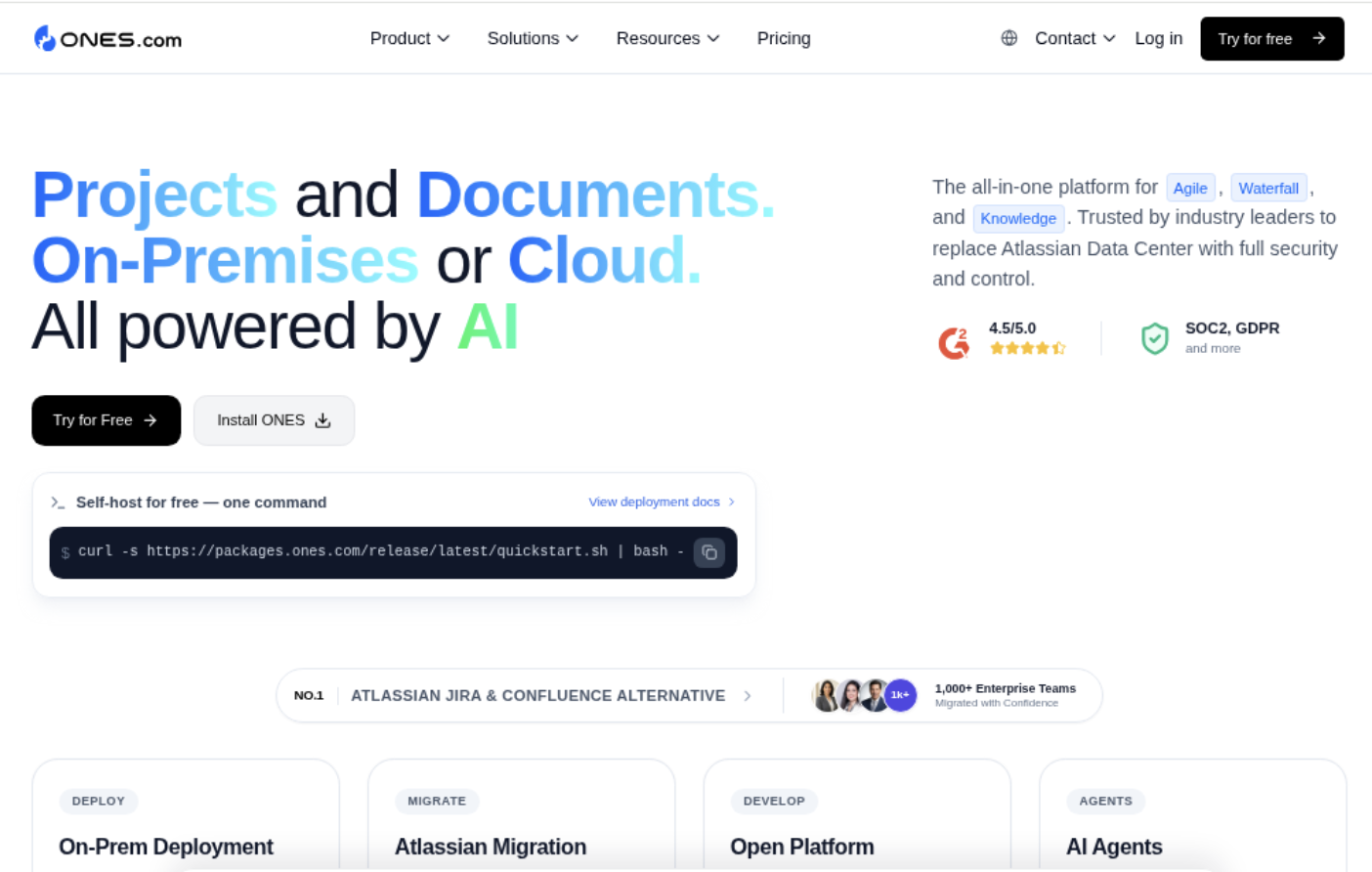
ONES.com combines project management and knowledge management in one platform. ONES Project supports project planning and execution, while ONES Wiki provides a structured knowledge base. The products are sold separately and can also support teams that want fewer disconnected systems.
Value Proposition
If Teams gives your team a place to talk but leaves project control spread across several applications, ONES.com can provide a more unified operating environment.
It is especially relevant when you need a Jira alternative, native reporting, configurable workflows, and self-hosted deployment options.
Core Capabilities
Scattered task ownership → ONES Project task management → Clearer accountability
When assignments are spread across conversations, owners can miss deadlines. ONES Project gives teams a structured place for work items, owners, statuses, and due dates.
Rigid processes → Custom workflows and fields → Better process fit
Different teams handle approvals differently. Custom workflows and fields let you reflect steps such as review, compliance approval, testing, and release readiness.
Limited sprint visibility → Sprint management → More predictable iteration planning
Agile teams can organize work into sprints, monitor progress, and review unfinished items. This creates a clearer rhythm for development and delivery teams.
Manual repetitive updates → Automation → Fewer routine handoffs
Automation can help trigger actions when conditions change. For example, moving an item into testing can notify the responsible team or update a workflow state.
Disconnected status reporting → Built-in reporting → Faster project reviews
Built-in reporting helps project leaders review progress without assembling updates manually from multiple places. Teams can track trends, workload, and delivery status more consistently.
Too many plugins → Native capability parity → Lower integration overhead
ONES Project is designed as a Jira alternative with core project management capabilities available natively. That can reduce dependence on plugins for common workflows, fields, sprint management, and reporting.
Cloud-only restrictions → Self-hosted deployment options → More control over hosting
ONES.com supports Cloud, On-Premise, Private Cloud, and Air-gapped deployments. This gives organizations more choice when security, regulatory, or network requirements affect platform selection.
Separate project knowledge → ONES Wiki → Easier access to project context
Project decisions, procedures, and team guidance can become difficult to find when they sit apart from active work. ONES Wiki provides a knowledge management option alongside ONES Project.
Application Scenarios
Software release planning
A development team can manage backlog items, sprint work, approvals, testing, and release readiness in ONES Project. The team can keep technical guidance and recurring procedures in ONES Wiki.
This arrangement helps connect active delivery work with the knowledge needed to complete it.
Enterprise approval workflows
A regulated team may need custom steps for review, approval, implementation, and verification. Custom workflows can represent these stages more clearly than a general Teams conversation.
Reporting can then help managers identify work waiting for approval or approaching a deadline.
Restricted-network project management
An organization with strict network controls may need more than a public cloud workspace. ONES.com offers On-Premise, Private Cloud, and Air-gapped deployment choices for restricted environments.
Cloud and self-hosted versions maintain feature parity, helping teams select an operating model without giving up core capabilities.
Common Challenges and Practical Solutions
Challenge: You cannot see a timeline option
Likely cause: You may be using a basic plan, an unsupported view, or a subscription without premium planning capabilities.
Solution: Check the plan type and assigned license. Confirm whether your organization has access to the current Planner premium or Project-related timeline experience.
Challenge: The chart is visible, but dependencies do not work as expected
Likely cause: Dates may be missing, tasks may be too broad, or the selected plan may not support the dependency behavior you need.
Solution: Break large tasks into smaller activities. Add start and finish dates, then connect only relationships that reflect genuine work constraints.
Challenge: Teams conversations and schedule updates become disconnected
Likely cause: People may discuss changes in chat without updating the planning application.
Solution: Establish one update rule. For example, every approved date change must be reflected in the timeline before the next status meeting.
Challenge: The timeline becomes too crowded
Likely cause: The plan includes every minor action, creating noise and making important milestones difficult to see.
Solution: Use summary tasks for major phases and reserve detailed items for work that affects timing, ownership, or risk.
Challenge: Different teams need different planning methods
Likely cause: A development team may use sprints, while an operations team may rely on approvals and recurring work.
Solution: Choose a platform that supports configurable workflows and multiple planning styles. Avoid forcing every department into one rigid template.
FAQs About Gantt Charts in Microsoft Teams
Can I add a Gantt chart directly to a Teams channel?
You can add a planning application as a channel tab, but Teams does not create a standalone Gantt chart by itself. You generally need Planner premium, a Project-related Microsoft service, or a compatible third-party application. Once connected, the schedule can appear beside channel conversations, meetings, and other collaboration tabs.
Is Microsoft Planner the same as a Gantt chart?
Planner and a Gantt chart are not the same thing. Planner can manage tasks through boards, lists, and other views. Suitable premium Planner capabilities may add a timeline-style view with scheduling features. The available experience depends on your plan and license, so a basic Planner setup may not provide the chart features you expect.
Do I need a paid Microsoft license for timeline planning?
Possibly. Basic task management may be available through an existing Microsoft 365 plan, while advanced timeline planning, dependencies, and related project features can require a premium subscription. Check the licenses assigned to your organization and compare them with the specific planning features you need.
Can Teams replace dedicated project management software?
Teams can support small projects with straightforward task lists and regular communication. It may be less suitable for complex schedules, portfolio reporting, resource planning, critical paths, or strict workflow controls. In those cases, Teams can remain the communication layer while a dedicated project platform manages structured planning and reporting.
What is the easiest way to show a project schedule in Teams?
Create or open a suitable Planner or Project plan, then add it as a tab in the relevant Teams channel. Enter tasks, dates, owners, milestones, and dependencies before selecting the timeline view. If the option is missing, review the plan type and license rather than assuming the Teams installation is broken.
Conclusion
Microsoft Teams does not include a standalone Gantt chart as a core chat feature. It can display access to timeline planning through connected Planner premium capabilities, Project-related services, or third-party applications.
The right choice depends on your project’s complexity. A small campaign may need only tasks, owners, and due dates. A multi-team release may require dependencies, milestones, reporting, workflow control, and a dedicated project platform.
But here's the truth: the chart matters less than the planning discipline behind it. Keep task dates current, connect real dependencies, review milestones regularly, and make one platform responsible for schedule accuracy.
If Teams feels useful for communication but limited for structured delivery, ONES.com offers another approach. ONES Project provides project management as a Jira alternative, while ONES Wiki supports knowledge management, with deployment options for cloud and controlled environments.