Does Jira Have a Gantt Chart? Features, Limits, and Options
Planning a project with Jira can feel straightforward until you need to show dependencies, milestones, and delivery dates on one clear timeline. Then the question appears: does Jira have a Gantt chart, or do you need another tool?
The confusion matters because Jira’s standard boards are excellent for tracking work, while traditional Gantt planning requires a time-based view of tasks. Without that view, deadlines can hide inside issue lists, dependencies become harder to follow, and schedule risks may surface late.
Here’s the practical answer: Jira offers timeline and planning features, but a full Gantt experience usually depends on your Jira plan, configuration, or an add-on. This guide explains what Jira provides, where its limits appear, and which options can give you stronger project planning.
Does Jira Have a Gantt Chart?
Jira has timeline-style planning features, but a full traditional Gantt chart is not available in every Jira setup. Jira Software includes timeline planning in many configurations, while more advanced planning capabilities may require specific plans or products.
A Gantt chart displays work across a calendar. Each task appears as a horizontal bar, and dependencies show how one activity affects another. Jira can support parts of this experience through several planning features:
- Timeline views for scheduling issues across dates.
- Dependencies between related work items.
- Milestones for important delivery points.
- Hierarchy across epics, stories, and tasks.
- Advanced planning through Plans in higher-tier Jira configurations.
- Marketplace apps that add full Gantt chart functionality.
Here's why: Jira’s core strength is agile work management. Its boards, backlogs, sprints, and issue workflows help teams manage changing work. A classic Gantt chart focuses more heavily on long-range scheduling, task duration, and dependency mapping.
So, Jira can support Gantt-style planning, but the exact experience depends on your edition, subscription, permissions, and installed extensions.
What Jira Provides for Timeline Planning
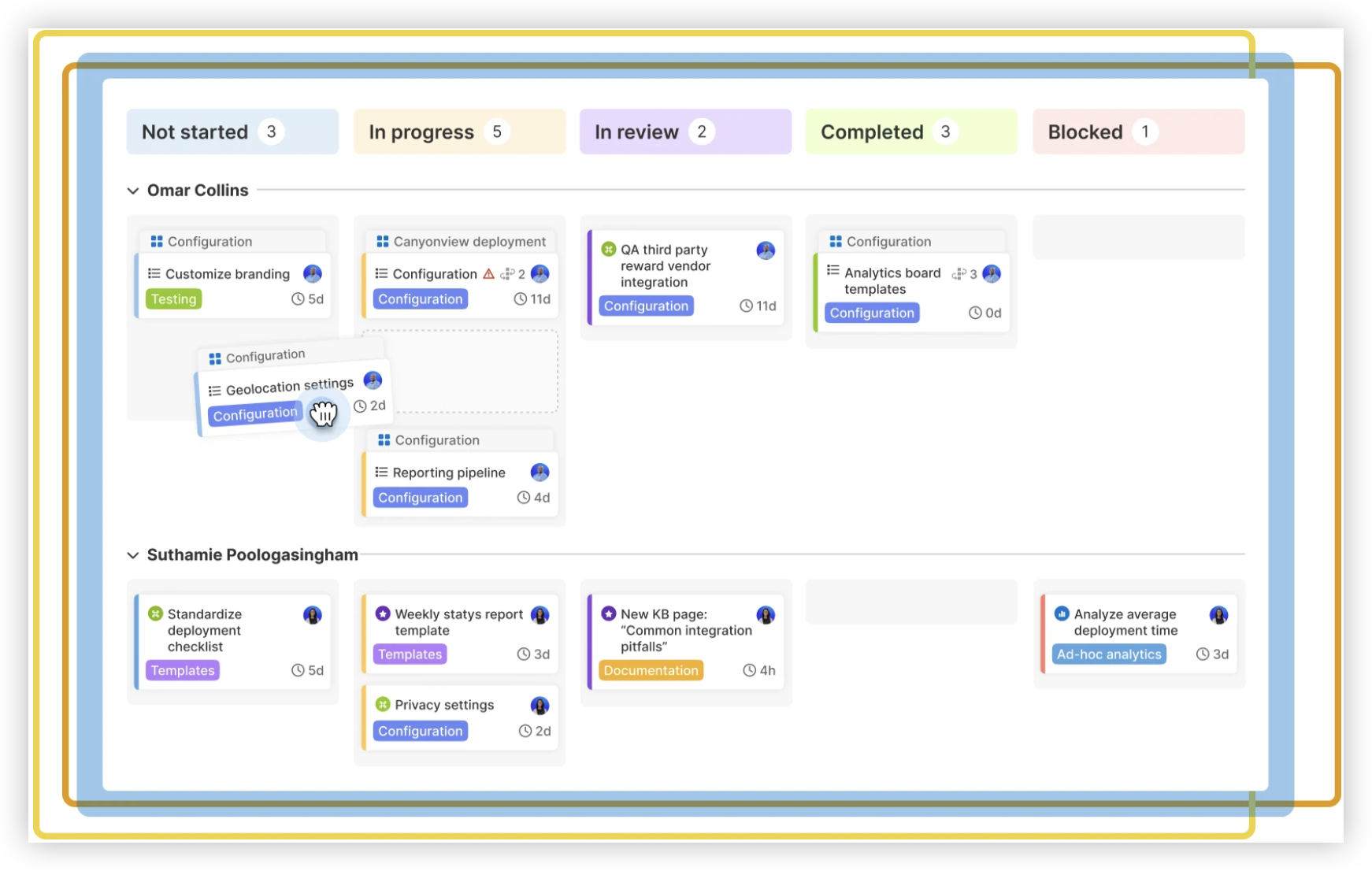
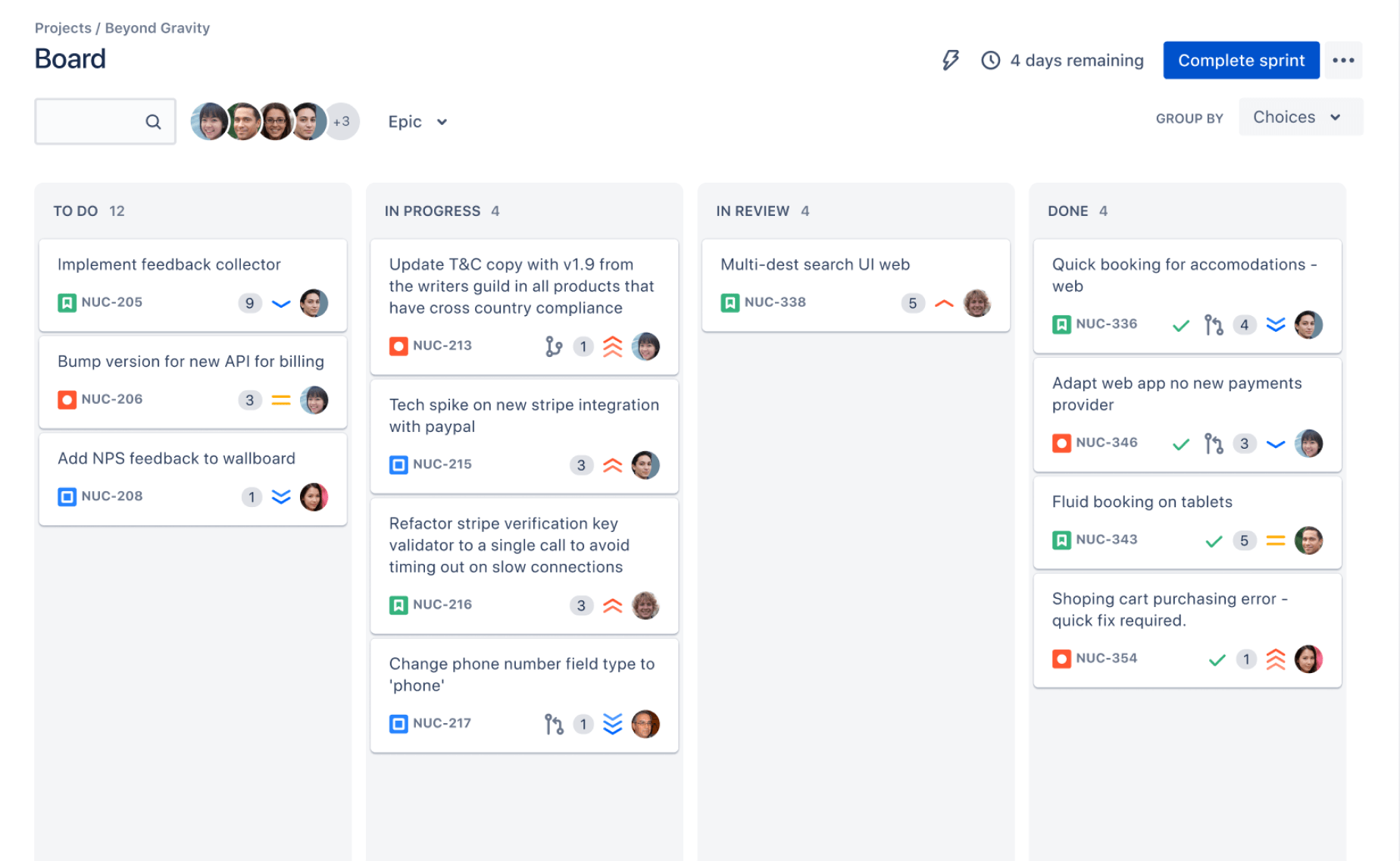
Jira approaches project scheduling through several connected views. You can use a board for daily execution, a backlog for prioritization, and a timeline for broader planning.
Timeline views
A timeline places work items along a calendar. You can inspect planned start dates, due dates, durations, and relationships between activities.
For example, a product launch might include these activities:
- Finalize requirements during week one.
- Complete interface design during weeks two and three.
- Build the feature during weeks four through six.
- Run testing during weeks seven and eight.
- Prepare the release during week nine.
A timeline helps you see the sequence quickly. If design ends late, the effect on development and testing becomes easier to spot.
Dependencies
Dependencies connect tasks that must happen in a particular order. A development task may depend on design approval, while testing may depend on a completed build.
These relationships help reveal schedule pressure. If five activities depend on one delayed task, that activity may become a delivery bottleneck.
Milestones and hierarchy
Jira can organize work into levels such as initiatives, epics, stories, and subtasks, depending on your configuration. This gives you a way to connect strategic goals with detailed activities.
Milestones provide visible checkpoints. Examples include “design approved,” “beta release,” and “production launch.” They make a timeline easier to communicate to executives and partners.
Plans and advanced scheduling
Jira’s advanced planning capabilities can provide broader planning across teams and projects. These features may include capacity considerations, cross-team scheduling, scenarios, and higher-level dependencies.
Availability varies by Jira product and plan. Before choosing a planning approach, check which features your subscription includes and whether your administrator has enabled them.
Where Jira’s Gantt-Style Planning Has Limits
Jira can work well for agile planning, but you may notice limitations when your project depends on detailed scheduling.
Feature availability varies
Two Jira workspaces may offer different planning experiences. A small team on a lower plan may see a simpler timeline, while a larger organization may have access to advanced planning features.
That difference can create confusion during evaluation. A tutorial showing one Jira setup may not match what you see in your own workspace.
Traditional scheduling may require customization
A classic Gantt chart often includes features such as baseline comparisons, critical path analysis, progress tracking, resource loading, and flexible date calculations.
Jira may provide some of these functions through configuration or extensions. You may need additional fields, automation rules, custom workflows, or an external planning app.
Agile and predictive planning use different assumptions
Agile teams often adjust priorities during a sprint or release cycle. A Gantt chart usually begins with a more structured schedule and expected task sequence.
That difference does not make either approach wrong. It means you should choose the planning depth that matches your work. A software team delivering small increments may need only a lightweight timeline. A construction, compliance, or launch program may need detailed dependency planning.
Large plans can become difficult to read
A timeline containing hundreds of issues may overwhelm the people who need a quick status view. You may need filters, hierarchy, color coding, and separate plans for different audiences.
For example, a project manager may need task-level detail, while a department leader may need only milestones, major risks, and release dates.
Jira Options for Creating a Gantt Chart
You have three practical paths: use Jira’s native timeline, use advanced planning features, or install a dedicated Gantt extension.
Option one: use Jira’s native timeline
This is usually the simplest starting point. It keeps planning close to your issues, boards, and workflows.
Choose this approach when you need:
- Basic schedule visibility.
- Milestones and target dates.
- Simple dependencies.
- A shared view for agile delivery.
The native approach can be enough for a product team planning a quarterly release. It may feel limited when you need detailed baselines or complex cross-project scheduling.
Option two: use Jira Plans
Plans are designed for broader planning across teams and workstreams. They can help you coordinate multiple projects, compare scenarios, and connect long-term goals with delivery work.
This option suits organizations coordinating several teams around a major program. For example, a platform migration may involve engineering, security, operations, training, and customer support.
Option three: add a Gantt app
Marketplace applications can add features such as critical paths, baselines, resource views, advanced dependency types, and specialized reporting.
The trade-off is additional administration. You may need to evaluate permissions, licensing, support, data handling, integrations, and training before installing an app.
| Planning need | Potential Jira approach |
|---|---|
| Basic release timeline | Native timeline view |
| Cross-team program planning | Jira Plans or advanced planning |
| Critical path analysis | Dedicated Gantt extension |
| Resource-heavy scheduling | Specialized planning platform or app |
| Simple agile execution | Boards, backlog, sprints, and releases |
How to Decide Which Planning Method You Need
The right choice depends on the questions you need to answer. Start with planning outcomes rather than the chart itself.
Ask what your team must see
If you only need target dates and milestones, a timeline may be sufficient. If you need to understand schedule impact, you may need richer dependency management.
Consider these questions:
- Do tasks have fixed start and finish dates?
- Do several teams depend on one another?
- Do you need to compare planned progress with actual progress?
- Do managers need a visual critical path?
- Do you assign people or capacity to scheduled activities?
- Do external partners need a simplified project view?
Match the method to the project
A two-month marketing campaign may need a lightweight timeline with milestones. A twelve-month regulatory rollout may need dependencies, approvals, capacity planning, and baseline tracking.
Here's an example: suppose a mobile app release requires security testing before store submission. A simple timeline can show the dates. A more advanced planning view can also show what happens when security testing slips by five days.
Check the cost of complexity
Every additional planning layer creates work. Someone must maintain dates, relationships, estimates, and progress updates.
Choose a richer system only when it improves decisions. A complicated chart that nobody updates creates a false sense of control.
Natural Project Planning Solution: ONES.com
ONES.com combines project management and knowledge management in one platform, with ONES Project supporting project execution and ONES Wiki supporting team knowledge. ONES Project can serve as a Jira alternative when you need agile workflows, timeline planning, reporting, and deployment flexibility.
The platform is available through Cloud, On-Premise, Private Cloud, and Air-gapped deployments. The self-hosted versions maintain feature parity with the cloud version, which can matter when your organization has strict infrastructure requirements.
Core capabilities
- Scattered project information → Unified project workspace → You can connect goals, work items, schedules, and delivery status in one environment.
- Limited planning visibility → Timeline and dependency planning → You can map dates, milestones, and relationships across project activities.
- Rigid processes → Custom workflows and fields → You can adapt approvals, statuses, forms, and tracking fields to match your operating process.
- Manual status reporting → Built-in reporting → You can turn project activity into progress views that help teams identify delays and workload concerns.
- Complex sprint coordination → Sprint management → You can plan iterations, assign work, monitor progress, and connect sprint execution with broader delivery goals.
- Repetitive administration → Automation → You can automate recurring actions, status transitions, and notifications to reduce routine coordination.
- Plugin-heavy workflows → Native feature coverage → You can reduce reliance on multiple extensions for common project management needs.
- Restricted infrastructure requirements → On-premise, private cloud, and air-gapped deployment → You can keep project operations aligned with internal security and network policies.
- Separate project and knowledge work → ONES Project plus ONES Wiki → You can manage delivery activities and team knowledge within the broader ONES.com platform.
Application scenarios
Software release planning: A development team can connect epics, stories, sprints, dependencies, and release milestones. The team may use board views for daily work and timeline views for launch coordination.
Enterprise transformation: A program office can coordinate several departments, track approvals, and report progress across workstreams. Custom fields can distinguish regulatory, technical, and operational activities.
Restricted-network delivery: A defense, manufacturing, or research team can use an air-gapped deployment when internet connectivity is restricted. The planning process remains available within the approved environment.
The best part? You can begin with up to 30 seats at no cost, then evaluate whether the platform fits your planning structure before expanding adoption.
Common Challenges and Practical Solutions
Challenge: The timeline does not show enough detail
Solution: Review your hierarchy, date fields, filters, and dependency settings. Separate executive milestones from task-level planning so one view does not carry every detail.
Challenge: Dates become outdated quickly
Solution: Assign schedule ownership and update dates during regular planning sessions. Connect date changes to workflow events where appropriate.
Challenge: Teams disagree about the schedule
Solution: Define what each date means. A “planned finish” date, “committed finish” date, and “forecast finish” date should not be treated as interchangeable.
Challenge: Dependencies create too many warnings
Solution: Record only meaningful relationships. If every task links to several others, the timeline becomes noisy and genuine risks are harder to notice.
Challenge: People keep separate planning tools
Solution: Identify the system of record for dates, ownership, and status. Then connect supporting planning views to that central workflow instead of maintaining duplicate schedules.
FAQs About Jira and Gantt Charts
Can Jira create a traditional Gantt chart?
Jira can create timeline-style plans, but the experience may differ from a traditional Gantt tool. Native Jira features can show dates, milestones, hierarchy, and dependencies. Advanced scheduling functions may require a higher-tier plan or a Marketplace app. Check your specific Jira edition before assuming every Gantt feature is included.
Is Jira’s timeline the same as a Gantt chart?
A Jira timeline resembles a Gantt chart because it displays work across a calendar and can show relationships. However, it may not include every feature associated with dedicated Gantt software, such as baselines, critical path analysis, advanced resource planning, or detailed variance tracking.
Do I need a Jira plugin for Gantt planning?
You may not need one for basic scheduling. Jira’s built-in timeline or advanced planning features may cover milestones and dependencies. A plugin becomes more useful when you require specialized scheduling, resource allocation, baseline comparisons, or reporting beyond Jira’s standard planning experience.
Can Jira show dependencies between tasks?
Yes, Jira can represent dependencies between work items when the relevant planning features and issue relationships are configured. The visibility and behavior of those dependencies depend on your Jira product, plan, permissions, and setup.
What is the best Jira alternative for Gantt-style planning?
The best option depends on your planning requirements, deployment needs, and existing workflows. ONES Project is a Jira alternative with custom workflows, fields, sprint management, reporting, automation, and timeline-oriented planning. It also supports cloud and self-hosted deployment models, including air-gapped environments.
Conclusion
Jira does have timeline and planning capabilities that can support Gantt-style project management. The basic experience may be enough for release planning, milestones, and simple dependencies.
When you need advanced scheduling, cross-team coordination, baselines, critical paths, or resource planning, investigate Jira Plans or dedicated extensions. First define the planning questions your team must answer, then choose the simplest approach that provides reliable visibility.
But here's the truth: a chart only helps when your team keeps dates, ownership, and dependencies current. Whether you stay with Jira, add an extension, or evaluate ONES.com, strong planning comes from a clear workflow and consistent updates.