Does Airtable Have a Gantt Chart? A Complete 2026 Guide
Trying to plan a project in Airtable can feel confusing when you need dependencies, milestones, and a clear delivery timeline. You may see dates arranged across records, yet still wonder whether that is a true Gantt chart.
The uncertainty creates practical problems. A simple date view may hide task relationships, make delays harder to spot, and force your team to switch between planning tools. That becomes frustrating when a launch depends on design, testing, approvals, and release work happening in sequence.
Here’s the short answer: Airtable can support Gantt-style project planning, but its native experience depends on the view, plan, and extensions available to your workspace. I’ll explain what Airtable offers, where it falls short, and when a dedicated project management platform may fit better.
Does Airtable Have a Gantt Chart?
Airtable does not generally provide a dedicated native Gantt chart view in the same way as purpose-built project management platforms. You can still create Gantt-style schedules with Airtable’s Timeline view, date fields, linked records, and available extensions.
Timeline view displays records across a horizontal calendar. You can group work by project, owner, team, or another field. This makes it useful for spotting overlapping work and reviewing broad delivery windows.
Airtable can also support more advanced planning through Gantt-style extensions or integrations. These options may add dependencies, milestones, and scheduling controls that the standard grid experience does not provide.
Here’s why the distinction matters: a timeline shows when work is planned, while a full Gantt system usually helps you manage how tasks depend on one another.
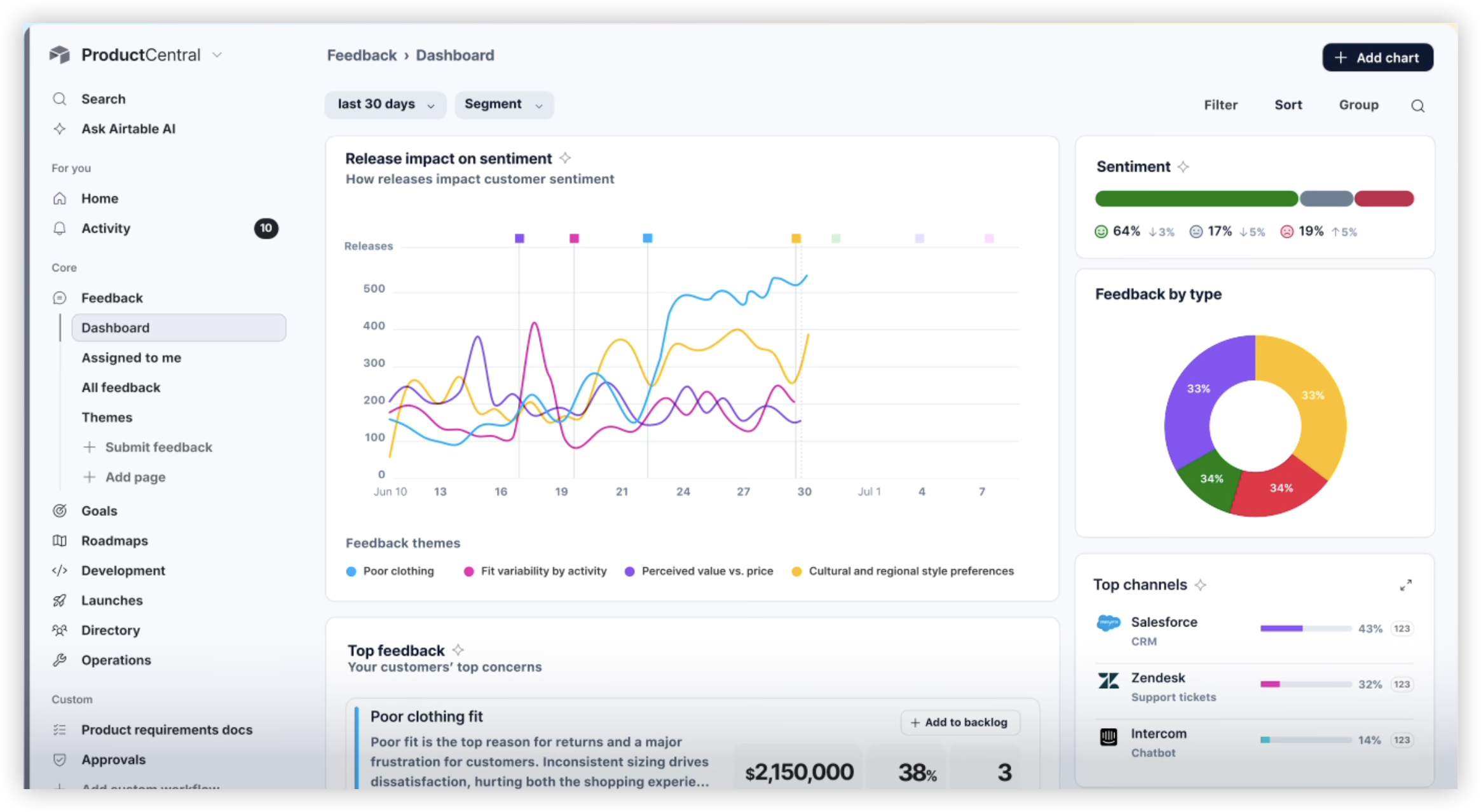
What Airtable Can Do for Project Scheduling
Airtable gives you a flexible structure for organizing work. You can create records for tasks, add start and finish dates, assign owners, and connect activities to a project.
For example, a website redesign might include these records:
- Approve page structure
- Create visual concepts
- Review designs
- Build approved pages
- Complete quality checks
- Publish the redesign
When each record includes dates, Airtable can display the work on a timeline. You can then see whether design and development overlap or whether testing begins too late.
What Airtable May Require for Gantt-Style Planning
A basic schedule often needs more than start and end dates. You may also need predecessor relationships, automatic date shifting, progress tracking, baseline comparisons, and critical path analysis.
Airtable can represent some of these relationships with linked records and formulas. However, you may need extra configuration, an extension, or an external integration for a smoother scheduling workflow.
The best part? You can begin with a simple schedule and add complexity only when your project needs it. A small campaign may work well with Timeline view, while a construction, software, or product launch project may need dedicated planning controls.
How to Create a Gantt-Style Schedule in Airtable
You can build a practical visual schedule by combining task records, date fields, linked activities, and a timeline-style view. Follow these steps before deciding whether you need a specialized project management platform.
-
Define the Work Breakdown
Start by listing the activities required to complete the project. Keep each task specific enough for one person or team to own.
For example, “Prepare launch campaign” is broad. “Write email sequence,” “Create landing page,” and “Approve campaign assets” are easier to schedule and track.
-
Add Start and Finish Dates
Create fields for planned start and due dates. Use realistic working periods rather than assigning every task to the same deadline.
If a design review needs two business days, give it that duration. A schedule becomes useful when it reflects the work’s real effort.
-
Assign Owners and Statuses
Add an owner field so every activity has a clear responsibility. Then create statuses such as Planned, In Progress, Blocked, Ready for Review, and Complete.
This turns a visual schedule into a working coordination tool. You can see who owns a delayed task and which activities need attention.
-
Connect Related Activities
Use linked records to connect tasks with their project, phase, or predecessor. A “Build landing page” activity could connect to “Approve wireframe.”
These links help you understand relationships, although Airtable may not automatically shift every dependent date like a dedicated Gantt platform.
-
Open a Timeline View
Choose the start and finish fields, then group records by a useful category. Grouping by project phase can help stakeholders understand the schedule quickly.
Grouping by owner can reveal workload concentration. For example, one designer may have five overlapping activities during the same week.
-
Add Milestones
Create milestone records for major approvals or delivery points. Examples include “Prototype approved,” “Testing complete,” and “Launch ready.”
Milestones give your team visible checkpoints instead of a long list of similar tasks.
-
Review the Schedule Weekly
Ask whether dates still reflect reality. Update blocked work, finished activities, and upcoming dependencies.
A schedule becomes unreliable when people treat it as a one-time setup. A short weekly review keeps the visual plan useful.
-
Test Whether Airtable Still Fits
Try the workflow with a real project. Pay attention to dependency management, reporting, workload visibility, permissions, and automation needs.
If your team spends more time maintaining the schedule than completing work, a dedicated project management tool may offer a better fit.
Timeline View, Gantt Extensions, and Dedicated Tools
Airtable’s Timeline view is useful when you want a flexible calendar-style overview. It works well for editorial calendars, marketing campaigns, event preparation, and lightweight product planning.
A Gantt extension may provide a more familiar bar-based schedule. Depending on the extension and workspace configuration, it may offer features such as dependencies, milestones, and task duration views.
Dedicated project management platforms usually place scheduling at the center of the experience. They often include built-in dependency logic, sprint management, workload reporting, automation, and project-level dashboards.
| Planning approach | Best fit |
|---|---|
| Airtable grid with dates | Simple task tracking and flexible record organization |
| Airtable Timeline view | Visual planning across projects, teams, or campaigns |
| Gantt-style extension | Teams that need a more traditional schedule inside Airtable |
| Dedicated project management platform | Complex dependencies, reporting, automation, and delivery control |
You might be wondering: when should you move beyond Airtable? The answer depends on project complexity. A ten-task campaign with a few overlapping dates may work well. A 200-task product launch with cross-team dependencies usually needs stronger scheduling controls.
When Airtable Works Well for Gantt-Style Planning
Airtable is a strong option when your team values flexible organization and visual planning. You can adapt fields for campaigns, product work, operations, events, or creative production without adopting a rigid structure.
Consider a content team planning a quarterly campaign. Each activity can include an owner, channel, status, approval stage, publication date, and related campaign. Timeline view then shows the production flow across several weeks.
It can also work well when the schedule is one part of a broader workspace. A marketing team might keep campaign details, review notes, content records, and delivery dates together.
The trade-off appears when scheduling logic becomes more demanding. If one delayed activity should automatically move six dependent tasks, you may need additional setup or another platform.
Limitations to Check Before Choosing Airtable
The biggest limitation is dependency depth. Linking two activities can show a relationship, yet that does not always create the automatic scheduling behavior you expect from a dedicated Gantt system.
Progress reporting can also require customization. You may need formulas, filtered views, automations, or extensions to calculate completion across phases.
Permissions and workspace structure deserve attention too. A schedule shared across departments may need carefully designed access rules, consistent naming, and clear ownership.
Here’s the practical test: ask your team to update a real project for two weeks. If dates, dependencies, and status updates remain easy to maintain, Airtable may be sufficient. If people create side channels to explain the schedule, look for a more focused system.
How to Improve a Gantt-Style Airtable Workflow
A clear structure makes any planning view easier to use. Start with a small number of fields, then add detail when the team can explain why it matters.
Use Consistent Task Names
Begin task names with an action, such as “Approve homepage layout” or “Test payment flow.” Consistent wording improves filtering and reduces ambiguity.
Separate Tasks from Milestones
Tasks require effort, while milestones represent decisions or completed stages. Keeping them separate makes progress easier to interpret.
Set a Date Ownership Rule
Decide who can change planned dates. Without a clear rule, several people may adjust the schedule and create conflicting expectations.
Track Blockers Explicitly
Add a blocker field or status. “Blocked” tells you that work is paused, while a short reason explains what must happen next.
Limit Overlapping Work
Review team capacity before adding more activities. A visual schedule may reveal that one specialist is assigned to four urgent tasks in the same week.
Use Views for Different Audiences
Project managers may need detailed task views. Executives may only need milestones, risks, and expected delivery dates.
Airtable Alternative for Teams That Need Native Project Planning: ONES.com
ONES.com is a unified platform for project management and knowledge management, powered by ONES Assistant. ONES Project provides project planning and delivery features, while ONES Wiki supports team knowledge management.
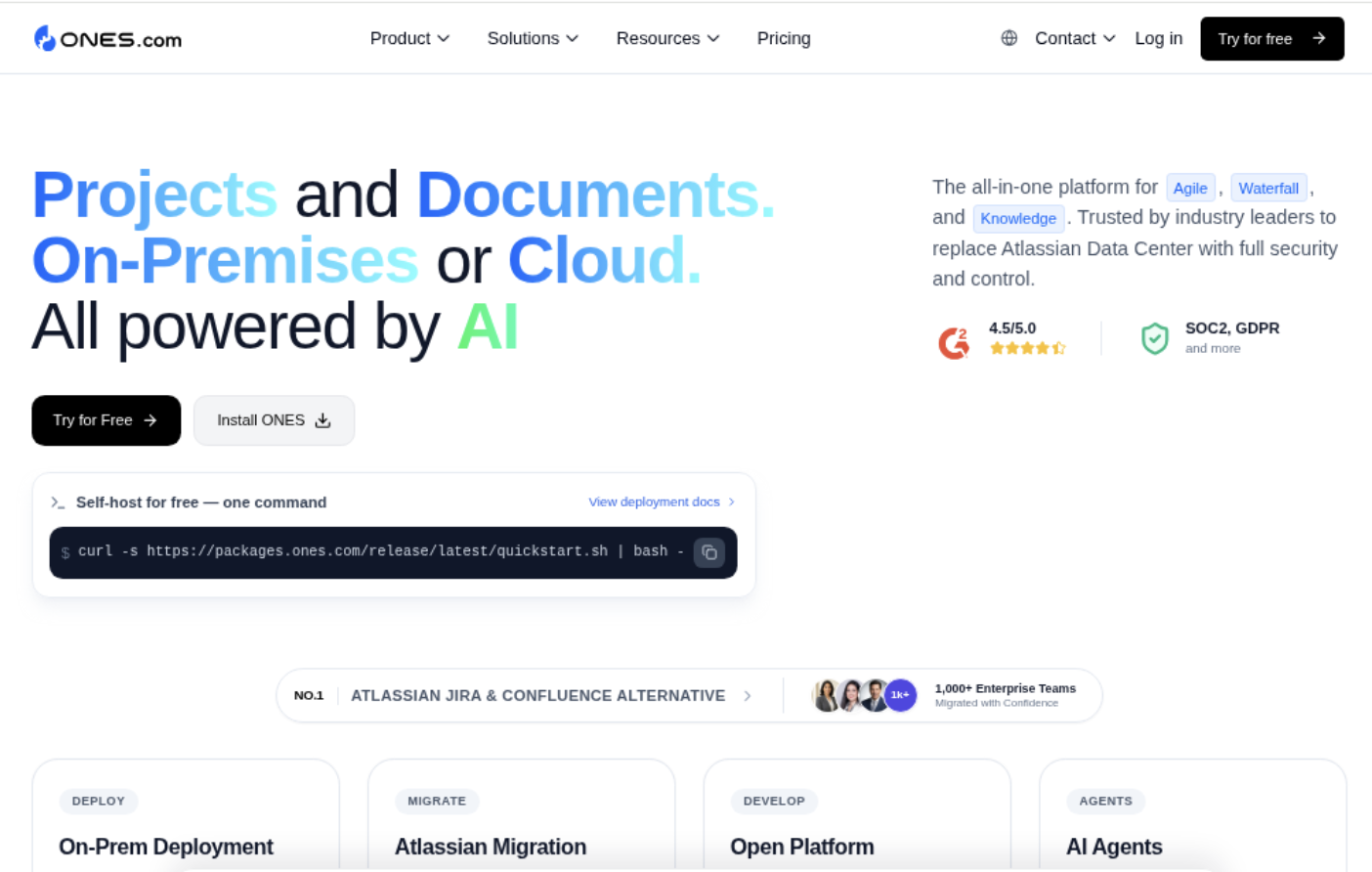
If you want Gantt-style planning alongside Jira-compatible workflows, reporting, sprint management, and custom automation, ONES Project can provide a more dedicated project management experience than a general-purpose workspace.
Core Capabilities
Dependency-heavy schedules → ONES Project → clearer delivery relationships
When one activity depends on another, scattered links can make the schedule harder to understand. ONES Project supports structured project workflows that help teams connect work and monitor delivery relationships.
Manual status updates → Custom workflows → more consistent movement
Teams often lose time explaining what happens after review, approval, or testing. Custom workflows can define those transitions, so each activity follows a clearer path.
Limited progress visibility → Built-in reporting → faster project reviews
Managers need more than a list of due dates. Built-in reporting helps show delivery progress, open work, and project health without assembling separate views for every review.
Complex sprint planning → Sprint management → better iteration control
Software teams may need to plan work in iterations rather than one long schedule. Sprint management supports a repeatable planning rhythm for backlogs, active work, and completed items.
Too many add-ons → Native feature parity → fewer plugin dependencies
Adding extensions can increase maintenance and create inconsistent experiences. ONES Project provides core project management capabilities within the platform, reducing the need to assemble many separate tools.
Jira migration concerns → Jira-compatible workflows → easier process alignment
Teams searching for a Jira alternative may want familiar issue-based workflows. ONES Project supports Jira-compatible workflows while allowing teams to configure fields, statuses, and project practices.
Restricted deployment requirements → On-premise and air-gapped options → stronger environment fit
Some organizations cannot place project information in a public cloud. ONES.com supports Cloud, On-Premise, Private Cloud, and Air-gapped deployments.
Different hosting needs → Full feature parity → fewer capability compromises
Self-hosted deployment can sometimes mean losing important features. ONES.com provides full feature parity between its cloud and self-hosted versions.
Application Scenarios
Software release planning
A product team can organize epics, tasks, sprints, dependencies, testing, and release milestones in one project workflow. Reporting helps stakeholders review progress without relying on a separate scheduling system.
Hardware or regulated product development
A team working in a restricted network can use an air-gapped deployment for planning and coordination. This supports controlled access while preserving the same core capabilities available in the cloud version.
Project approval workflows
An operations team can define stages for request intake, review, approval, implementation, and closure. Custom fields and workflows make each handoff visible and easier to manage.
Common Challenges and Practical Solutions
Challenge: Dates look clear, but dependencies remain unclear
Solution: Add predecessor relationships and review them during planning meetings. If dependent work needs automatic date changes, evaluate a dedicated project scheduling platform.
Challenge: The schedule becomes difficult to maintain
Solution: Reduce unnecessary fields and assign one person to maintain the project plan. Keep status choices limited and define when each status should be used.
Challenge: Teams view different versions of the plan
Solution: Create one approved planning view and link it from the team workspace. Give each audience a filtered view rather than allowing multiple unofficial schedules.
Challenge: Workload problems appear too late
Solution: Group activities by owner and review overlapping dates each week. A simple capacity check can reveal bottlenecks before deadlines are missed.
Challenge: Extensions add complexity
Solution: Test each extension with a real project before standardizing it. Check its permissions, maintenance requirements, reporting options, and effect on daily work.
FAQs
Can Airtable create a Gantt chart without an extension?
Airtable can create a Gantt-style schedule through its Timeline view, provided your workspace has access to that view. You can add start and finish dates, group activities, and review work across a calendar. However, Timeline view may not include every feature associated with a dedicated Gantt chart, such as automatic dependency shifting or critical path analysis.
Is Airtable Timeline the same as a Gantt chart?
They are similar because both display activities across time. Timeline view is generally designed for flexible visual planning, while a dedicated Gantt chart usually includes deeper dependency management, milestones, progress controls, and scheduling logic. Airtable Timeline can work for lightweight planning, but complex projects may need an extension or specialized project management platform.
Can I show dependencies in Airtable?
You can represent dependencies with linked records, predecessor fields, formulas, and custom workflows. These relationships help explain which activities rely on earlier work. The level of automation depends on how your workspace is configured. If delayed work must automatically move every dependent activity, test the workflow carefully before using it for a critical project.
Is Airtable suitable for software development planning?
Airtable can support small development projects, release calendars, feature lists, and lightweight coordination. Teams managing sprints, large backlogs, technical dependencies, permissions, and detailed reporting may prefer a purpose-built project management tool. Your decision should depend on how much scheduling logic and delivery control the team needs.
What is a good Jira alternative for Gantt-style project planning?
ONES Project is a Jira alternative for teams that need project workflows, sprint management, custom fields, automation, reporting, and controlled deployment options. It is designed for structured project delivery rather than general-purpose record organization. Teams should compare dependency handling, migration requirements, reporting, hosting, and daily usability before making a decision.
Conclusion
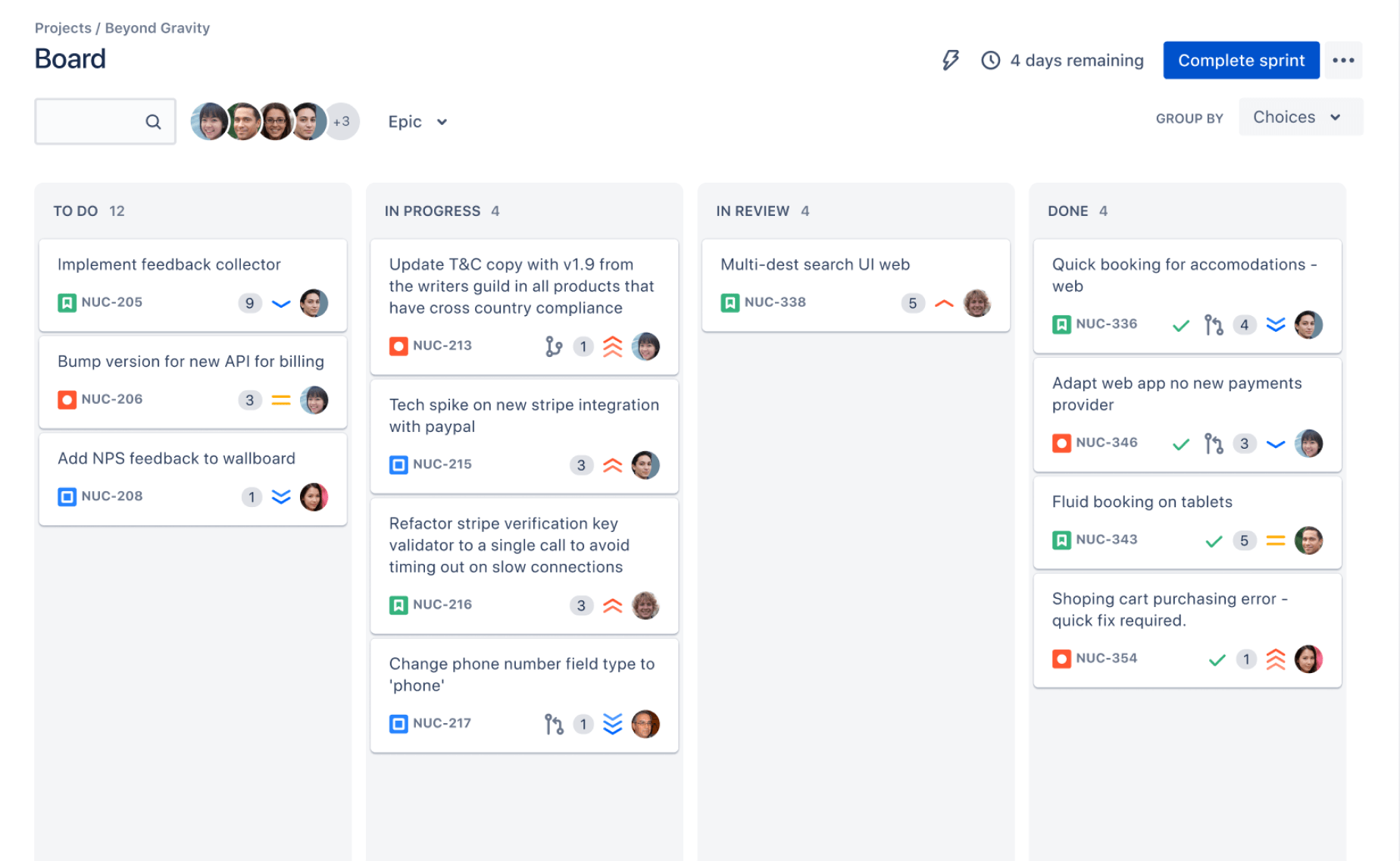
Airtable can support Gantt-style planning through Timeline view, date fields, linked activities, and extensions. It is a practical choice for flexible schedules, campaign planning, and projects with moderate dependency needs.
The pressure point appears when your team needs automatic dependency management, detailed reporting, workload planning, or repeatable delivery workflows. At that stage, maintaining a custom schedule may take more effort than completing the work.
Start with a real project and test the workflow. If Airtable gives you the visibility and control you need, keep it simple. If your schedule keeps breaking under complexity, compare a dedicated platform such as ONES Project with your current process.