Can You Create a Gantt Chart in Jira? A 2026 Setup Guide
Jira can support Gantt-style planning, but the exact setup depends on your Jira edition, project type, and required detail. A basic timeline may cover simple release planning, while dependency-heavy programs often need Plans or a marketplace app.
That uncertainty creates problems quickly. You may spend hours configuring dates, only to discover that dependencies, baselines, milestones, or cross-team views are unavailable in your plan. A weak setup can also make a polished chart unreliable.
But here's the truth: you can create a useful Gantt-style view in Jira when you match the method to your planning needs. This guide explains the available approaches, setup steps, limitations, and a practical Jira alternative for teams that need deeper project control.
Can You Create a Gantt Chart in Jira?
Yes, you can create a Gantt-style project view in Jira. Jira may provide timeline planning, advanced planning, or Gantt functionality through specific plans, features, or marketplace apps. The exact options depend on your Jira product and subscription.
Jira does not always present a classic Gantt chart in every project by default. A simple Jira timeline can show work across dates, while advanced planning can add hierarchy, dependencies, capacity considerations, and cross-team scheduling.
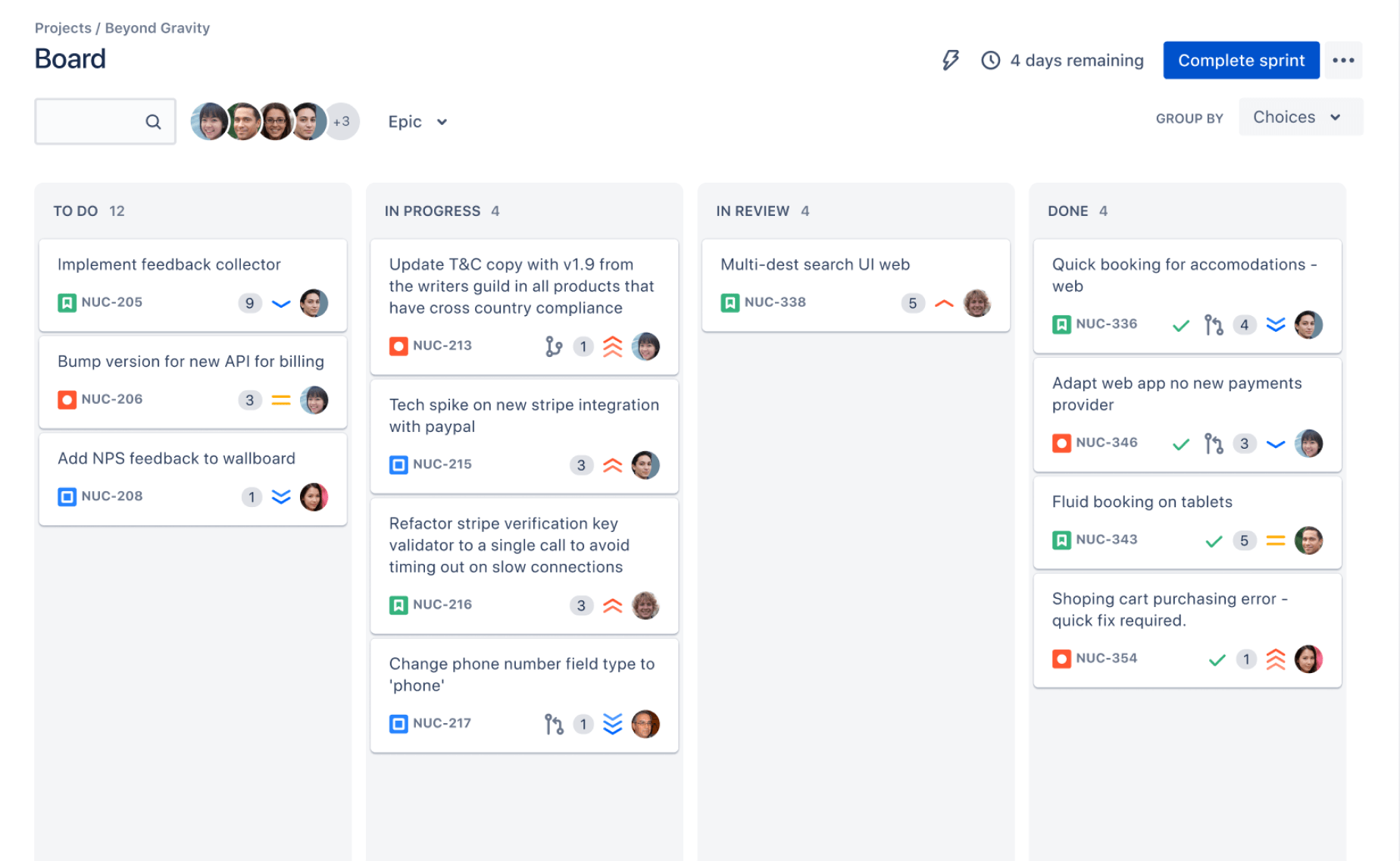
What a Jira Gantt-style view can show
A useful chart connects work items to time. Each issue appears as a horizontal bar, allowing you to see duration, sequencing, overlap, and delivery risk.
- Task start and due dates
- Epics, stories, tasks, and subtasks
- Milestones and release targets
- Dependencies between work items
- Progress and status changes
- Assignees, teams, or project ownership
- Planned versus actual timing
- Potential schedule conflicts
For example, a product launch might include research, design, development, testing, compliance review, and release preparation. A timeline helps you see how a delay in design affects development and testing.
Which Jira options are available?
You generally have three routes. The first is Jira’s native timeline for straightforward planning. The second is advanced planning through Jira Plans, typically associated with higher-tier Jira capabilities. The third is a dedicated Gantt app installed through the Atlassian Marketplace.
| Approach | Best for | Typical limitation |
|---|---|---|
| Jira timeline | Small teams and basic delivery planning | May lack advanced dependencies and portfolio controls |
| Jira Plans | Large programs and cross-team planning | Availability depends on Jira plan and configuration |
| Marketplace app | Specialized Gantt workflows | Additional cost, administration, and maintenance |
How to Set Up a Gantt Chart in Jira
You can build a reliable Jira schedule by preparing issue data first, then configuring the planning view. The steps below work as a practical framework, even when menu names differ across Jira editions.
- Choose the planning scope. Decide whether the chart covers one project, a release, a product area, or several teams. A launch schedule may need one view, while a company program may require multiple projects.
- Confirm your Jira capabilities. Check whether your plan includes a timeline, Plans, or another planning feature. If the required view is unavailable, evaluate a marketplace app before building the workflow around unsupported features.
- Create the work hierarchy. Use epics for major outcomes, stories or tasks for deliverables, and subtasks for smaller actions. Keep the hierarchy meaningful. Ten layers of nesting usually make planning harder.
- Add start and target dates. Enter dates for work that has a genuine schedule commitment. Avoid filling every issue with invented precision. A task planned for the second half of June does not always need a fixed day-one start.
- Connect dependencies. Link work items with relationships such as blocks, is blocked by, or relates to. For example, “security review” may block “production release.”
- Add milestones. Use releases, versions, or milestone conventions to mark events such as beta launch, regulatory approval, or customer handoff.
- Open the timeline or planning view. Review the issue hierarchy, dates, links, and ownership in one visual schedule. Expand only the levels needed for the current planning conversation.
- Adjust the schedule. Move dates when constraints change, then inspect downstream work. A two-day delay in an upstream task should trigger a review of every linked activity.
- Validate the chart with the team. Ask owners whether the dates, dependencies, and assumptions reflect reality. A chart becomes useful when people trust it enough to update it.
- Set a review rhythm. Revisit the schedule weekly for active delivery work. Use shorter review cycles when the project has external deadlines or many linked teams.
How to prepare Jira issues before building the view
A timeline cannot repair unclear work. Start by checking whether each major item has a clear outcome, an owner, a status, and a reasonable completion condition.
Suppose an epic called “Improve onboarding” contains only vague tasks. The chart may look complete, yet no one can tell whether research, interface design, engineering, and validation are finished. Break the outcome into deliverables before arranging dates.
How to model dependencies correctly
Use dependencies to express real constraints, not every preferred sequence. Development may begin before all design work is complete, while production deployment may genuinely wait for security approval.
Be specific about the relationship. “Blocks” communicates a scheduling constraint. “Relates to” communicates context without telling Jira to calculate a sequence.
Jira Timeline vs. a Traditional Gantt Chart
Jira’s timeline and a traditional Gantt chart overlap, but they are not always identical. A timeline may provide visual scheduling for Jira issues, while a full Gantt system often includes richer dependency logic, baselines, critical paths, workload planning, and reporting.
Here's why: the right choice depends on the question you need to answer. If you need to see whether a release fits into the next six weeks, a timeline may be enough. If you need to understand how five teams affect a contractual milestone, you may need advanced planning.
| Planning question | Suitable Jira approach |
|---|---|
| What is each team delivering this month? | Native timeline or project board |
| Which task is delaying the release? | Timeline with dependencies |
| How do several projects affect one program? | Plans or a cross-project planning app |
| What changed compared with the approved schedule? | Gantt tool with baseline capability |
| Are teams overloaded next quarter? | Capacity-aware planning features |
When Jira’s native planning may be enough
Native planning often works for software teams with a manageable number of epics, regular sprint delivery, and limited cross-project coordination. For example, a six-person team launching one feature set may only need dates, ownership, dependencies, and release markers.
The best part? You can keep planning close to the work. When a developer updates an issue, the schedule can reflect that change without requiring a separate planning ritual.
When a dedicated Gantt capability becomes useful
A specialized view becomes more valuable when your plan includes long-running activities, external milestones, multiple departments, or formal schedule comparison. Construction technology, hardware development, compliance programs, and enterprise migrations often need this extra control.
Consider a cloud migration with infrastructure, security, legal, training, and customer communications. A simple timeline may display dates, but program leaders may also need dependencies, milestones, progress tracking, and a clear view of schedule exposure.
Common Jira Gantt Chart Limitations
Jira can centralize delivery work, yet several limitations can affect planning quality. Some capabilities depend on your subscription, project configuration, or installed applications.
Plan and project differences
Jira features can vary between company-managed and team-managed projects. Premium planning features may also require a particular Jira edition. Before designing a process, confirm what your account can access.
You might be wondering: why does this matter? A team may build its planning habit around a feature that another project cannot use. That creates inconsistent reporting and extra administration.
Dependency depth
Basic views may show linked issues without delivering the full scheduling behavior you expect. If you need automatic date movement, critical path analysis, or advanced dependency handling, test the feature with realistic work before committing to it.
Baseline and historical comparison
Many teams want to compare the current schedule with the original commitment. A basic timeline may show today’s plan without preserving every earlier version. If schedule variance matters, define how you will capture approved milestones and changes.
Cross-project visibility
A project-level timeline may be useful for one delivery team but insufficient for a program manager. Cross-project plans can help, though they may require additional configuration and careful permission management.
Maintenance effort
A Gantt view becomes stale when dates, owners, or links are not maintained. Set clear ownership for schedule updates. A short weekly review often prevents a large clean-up later.
How to Make a Jira Schedule Reliable
A visually attractive chart can still mislead you. Reliability comes from clear ownership, consistent issue practices, and regular review.
Use dates for commitments and forecasts
Separate firm deadlines from working estimates. A regulatory submission date is a commitment. A developer’s estimated completion date may change after technical discovery.
Use labels, custom fields, or conventions to distinguish these meanings. Otherwise, stakeholders may treat every date as equally certain.
Keep the hierarchy readable
Use an epic for a meaningful outcome, then add delivery items beneath it. For example, “Mobile checkout” may contain payment integration, interface updates, analytics, accessibility testing, and release preparation.
Do not put every conversation or minor action on the executive view. Keep detailed subtasks available for delivery teams while showing major work at the program level.
Review the critical path
The critical path is the chain of activities that determines the earliest possible finish. If one activity slips, the final milestone may slip too.
For a website relaunch, content approval, accessibility testing, and deployment readiness may form the critical chain. Extra effort on unrelated tasks will not protect the launch date if that chain remains blocked.
Connect schedule changes to communication
When a date moves, record the reason and communicate the impact. A short note such as “security review moved three days because test evidence was incomplete” gives stakeholders useful context.
Jira Gantt Chart Solution: ONES.com
ONES.com is a unified platform for project management and knowledge management, powered by ONES Assistant. ONES Project is the project management product and can serve as a Jira alternative for teams that need structured planning, custom workflows, reporting, and deployment flexibility.

The platform is available in Cloud, On-Premise, Private Cloud, and Air-gapped deployments. ONES Project and ONES Wiki are sold separately, and the self-hosted version maintains feature parity with the cloud version.
Value Proposition
ONES.com gives teams a central way to plan work, connect dependencies, manage delivery, and preserve project knowledge. It can reduce the need to combine several plugins when a team needs deeper planning control and on-premise deployment.
Core Capabilities
- Scattered schedules → Structured project planning → Organize epics, tasks, subtasks, milestones, and dependencies in a connected project structure.
- Limited workflow control → Custom workflows and fields → Adapt statuses, approvals, ownership fields, and planning attributes to your delivery process.
- Manual sprint coordination → Sprint management → Plan sprint scope, review progress, and connect short-cycle execution with longer-term milestones.
- Disconnected reporting → Built-in reporting → Track progress, workload, status distribution, and delivery trends without relying on several separate extensions.
- Too many plugins → Native planning parity → Use core capabilities that reduce dependency on a large collection of add-ons.
- Rigid automation → Workflow automation → Trigger consistent actions when issues change status, meet conditions, or reach defined planning points.
- Restricted deployment requirements → Four deployment choices → Run the platform in Cloud, On-Premise, Private Cloud, or Air-gapped environments.
- Jira migration concerns → Jira-compatible workflows → Preserve familiar issue-based planning concepts while evaluating a Jira alternative.
- Small-team cost barriers → Free plan for 30 seats → Start with a team of up to 30 seats before deciding whether broader adoption is necessary.
Application Scenarios
Software release planning: A product team can organize epics, sprint work, dependencies, and release milestones in one planning environment. Engineering, testing, and product owners can review the same schedule.
Air-gapped delivery: A regulated engineering team can manage project work in an air-gapped deployment. The team can keep restricted-network planning separate from public cloud services while retaining core platform capabilities.
Cross-functional programs: A business transformation team can connect workflow approvals, reporting, milestones, and knowledge management. ONES Wiki can support project knowledge when purchased separately from ONES Project.
Common Challenges and Practical Fixes
Challenge: The chart looks complete, but the work is unclear
Fix: Rewrite vague items as outcomes. Replace “Improve performance” with measurable work such as “Reduce checkout response time below the agreed threshold.” Clearer work produces more meaningful dates.
Challenge: Dates become outdated after every sprint
Fix: Assign schedule ownership and review only the fields that matter. A delivery lead can check dates, dependencies, and milestones during a weekly planning session.
Challenge: Dependencies create too many warnings
Fix: Link only genuine constraints. If two tasks are related but can proceed independently, use a relationship that does not imply blocking.
Challenge: Stakeholders want different levels of detail
Fix: Create views for different audiences. Executives may need milestones and risks, while delivery teams need stories, subtasks, owners, and sprint commitments.
Challenge: Jira lacks the planning depth your program requires
Fix: Compare Jira Plans, a specialist marketplace app, or a Jira alternative such as ONES Project. Test each option with a real project containing dependencies, schedule changes, and several teams.
FAQs
Can I create a Gantt chart in Jira for free?
That depends on your Jira plan and the features available in your account. A basic timeline may support simple scheduling without an extra app, while advanced planning or specialist Gantt capabilities may require a higher tier or paid marketplace application. Check your project’s available views before building a process around them.
Does Jira have a native Gantt chart?
Jira offers timeline and advanced planning capabilities, but the experience may differ from a traditional Gantt chart. Some plans support richer scheduling, dependencies, and cross-project planning. Other teams use a marketplace app when they need baselines, critical path analysis, or specialized reporting.
How do I show dependencies in a Jira timeline?
Create links between related issues using dependency relationships such as blocks or is blocked by. Then open the timeline or planning view and confirm that the links appear correctly. Use dependency links for real scheduling constraints, such as testing waiting for development or deployment waiting for approval.
Can Jira show a Gantt chart across multiple projects?
Cross-project planning may be available through Jira Plans or a dedicated planning application, depending on your Jira edition. A single project timeline usually focuses on one project. For a program involving several teams, verify permissions, issue hierarchy, dependencies, and reporting before relying on the combined view.
What should I do if Jira’s timeline is too limited?
First, define the missing capability. You may need cross-project planning, baselines, workload views, dependency automation, or milestone reporting. Then compare Jira Plans, marketplace applications, and Jira alternatives. Test the options with a real schedule rather than a small demonstration project.
Is ONES Project a Jira alternative for Gantt-style planning?
ONES Project is a project management product that supports Jira-compatible workflows, custom workflows and fields, sprint management, automation, reporting, and multiple deployment models. It can suit teams that want structured project planning with Cloud, On-Premise, Private Cloud, or Air-gapped deployment options.
Conclusion
Yes, you can create a Gantt-style schedule in Jira, but the right method depends on your Jira edition and planning requirements. A native timeline may handle a small release, while advanced plans or an app may suit complex programs.
Start with clear work, realistic dates, meaningful dependencies, and visible milestones. Then review the chart with the people who own delivery. This prevents a polished schedule from becoming an ignored one.
But here's the practical takeaway: if Jira cannot provide the planning depth, deployment model, or workflow control you need, compare alternatives such as ONES Project. The goal is not simply to draw bars across a calendar. It is to create a schedule your team can trust, update, and use to make better delivery decisions.