Can Trello Create Gantt Charts? 5 Steps to Confirm It Today
Planning a project in Trello can feel simple until you need to see how tasks overlap, which milestones depend on others, or whether a delay will affect the launch date. Trello’s cards and lists work well for organizing work, yet a board does not automatically give you the detailed schedule many teams expect from a Gantt chart. That gap can create confusion during complex projects, especially when several people handle connected tasks. The good news is that you can confirm Trello’s scheduling capabilities in a few minutes. I’ll show you what Trello can do natively, where its Timeline view fits, when an integration makes sense, and which project management option may work better for dependency-heavy planning.
Can Trello Create Gantt Charts? Follow These 5 Steps
Short answer: Trello does not create a traditional Gantt chart directly on a standard board. You can use Trello’s Timeline view or a third-party Power-Up to display schedule information, but the experience may differ from dedicated Gantt software.
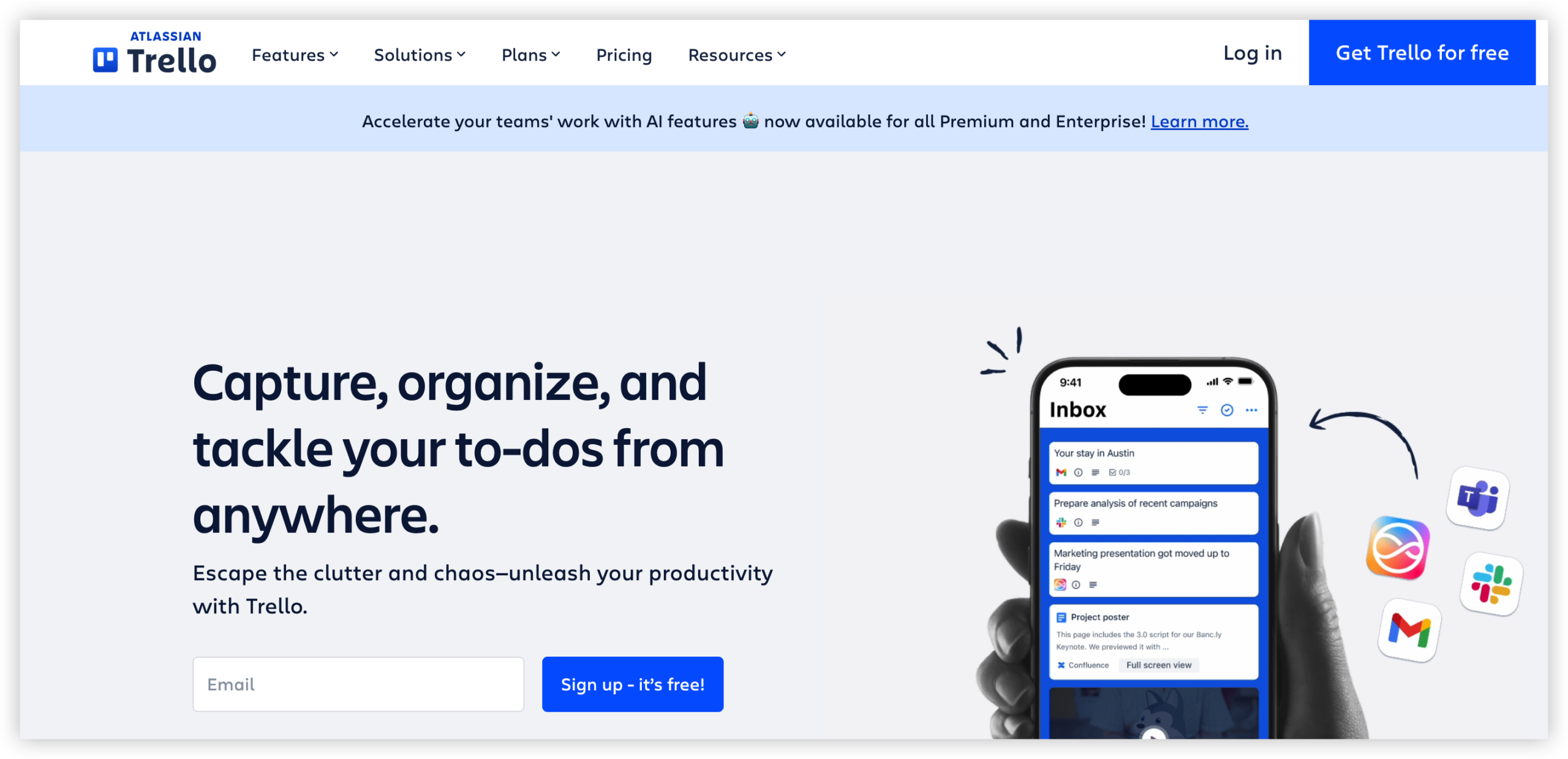
1. Check Your Trello plan
Start by checking whether your workspace includes access to Timeline view. Availability can depend on your Trello plan and workspace settings.
Open your workspace billing or plan area, then look for features connected to calendar, timeline, or advanced project planning. If Timeline is unavailable, Trello may still support a Power-Up that connects cards with a scheduling view.
For example, a small marketing team on a free plan may see boards, cards, and due dates without the same planning views available on a paid plan.
2. Add dates to your cards
A schedule view needs dates. Open each relevant card and add a start date, due date, or both, depending on the options available in your workspace.
Use realistic dates rather than broad labels such as “next week.” A product launch card might run from April 1 to April 12, while a review card may run from April 13 to April 15.
Without date ranges, Trello cannot show the length of a task clearly. A single due date identifies a deadline, yet it does not explain how long the work should take.
3. Open the Timeline view
Choose the Timeline option from your board’s available views. Trello’s Timeline view can arrange cards across a time-based layout, helping you see when work is planned.
This view can resemble a lightweight Gantt chart because tasks appear across dates. However, it may not include every feature you expect from dedicated Gantt software.
For instance, you may see that design work and engineering work overlap. You may still need another method to define a strict finish-to-start dependency between those cards.
4. Look for dependencies and milestones
Check whether your chosen Trello view or Power-Up supports task dependencies, milestones, baselines, progress tracking, and critical path planning.
These features separate a traditional Gantt chart from a simple calendar or timeline. A dependency answers an important question: what must finish before another task can begin?
Suppose testing cannot start until development ends. If your Trello setup only displays dates, someone may move testing earlier without noticing the planning impact.
5. Compare the result with your planning needs
Ask whether the view answers these practical questions:
- Which tasks are active during the same week?
- Which work depends on another task?
- What happens if a milestone moves?
- Can you identify the project’s longest chain of dependent work?
- Can your team update progress without maintaining several separate tools?
If the answer is mostly yes, Trello’s timeline features may be enough. If the answer is no, you may need a dedicated project management platform with native Gantt planning.
What Trello Offers Instead of a Traditional Gantt Chart
Trello is built around visual boards, lists, and cards. That structure makes it easy to organize work by stage, such as “To do,” “In progress,” “Review,” and “Done.”
Its calendar and timeline capabilities add scheduling context. You can assign dates, group cards, and view planned work across a time period. For many small projects, that is enough to understand workload and upcoming deadlines.
But here’s the truth: a timeline view is not automatically a full Gantt chart. A full Gantt experience usually combines task duration, dependencies, milestones, progress, hierarchy, and schedule adjustments in one planning area.
Timeline view compared with Gantt planning
| Planning need | Trello timeline approach | Traditional Gantt approach |
|---|---|---|
| Task organization | Cards arranged by board structure | Tasks arranged in a schedule hierarchy |
| Dates | Due dates and available date ranges | Start dates, finish dates, and durations |
| Dependencies | May require manual links or an added Power-Up | Usually built into the planning view |
| Milestones | Can require labels, cards, or additional setup | Usually represented directly on the schedule |
| Schedule changes | May require manual card updates | Can often shift connected tasks together |
Here’s why: Trello’s core strength is flexible work organization. Gantt software specializes in modeling time, sequence, and project impact.
When Trello’s Timeline Is Enough
Trello’s timeline can work well when your project has a limited number of tasks and few strict dependencies. A two-week content campaign is a good example.
You might create cards for keyword research, outline approval, drafting, editing, design, and publishing. Add dates, assign each card, and review the timeline during your weekly meeting.
The view gives you a quick picture of overlapping work. If editing and design happen during the same week, you can spot a possible workload issue before it becomes a deadline problem.
Good use cases
- Small marketing campaigns
- Simple product launches
- Event preparation
- Lightweight editorial planning
- Personal projects with clear deadlines
The best part? You do not need a complex planning system for every project. Extra scheduling detail can slow down a team when the work itself is straightforward.
When You Need More Than Trello
Trello may become difficult when your project includes many linked tasks, several teams, or frequent schedule changes. A board can still hold the work, yet the planning picture may become harder to maintain.
Imagine a software release with 80 tasks. Development, testing, security review, training, and rollout all depend on one another. Moving one technical task could affect six later activities.
If your team must manually inspect cards to understand that impact, schedule control becomes fragile. A dedicated Gantt view can make relationships easier to see and update.
Warning signs
- People maintain dates in more than one planning tool
- Team members ask which task blocks another task
- Milestones move without a clear impact review
- Project managers create manual status summaries every week
- Leaders need workload, progress, and schedule reporting together
Let me explain: the issue is rarely Trello’s visual simplicity. The issue appears when a simple board must represent a complex network of timing relationships.
How to Choose the Right Scheduling Setup
Choose your approach by matching the planning method to the project’s complexity. Start with the smallest setup that answers your team’s questions clearly.
Use Trello alone when
Your work has clear stages, limited overlap, and few dependencies. Cards, due dates, checklists, and a calendar may provide enough visibility.
Use a Trello Power-Up when
You like Trello’s board workflow but need a richer timeline, dependency display, reporting, or planning layout. Check the Power-Up’s pricing, permissions, maintenance, and data synchronization before adopting it.
Use dedicated project management software when
Your team needs native Gantt charts, custom workflows, structured dependencies, sprint planning, reporting, automation, and centralized project information.
You might be wondering: should you change tools immediately? Usually, no. First, map one real project and identify the planning gaps. If the same gaps appear repeatedly, a broader platform may reduce manual coordination.
A Practical Test Project You Can Run Today
Use a small project to evaluate Trello rather than testing it with an abstract example. A website update works well because it includes visible stages and manageable timing.
- Create cards for requirements, copywriting, design, development, quality assurance, approval, and launch.
- Add start and due dates to every card.
- Assign an owner and label each workstream.
- Open Timeline view if your plan includes it.
- Mark which cards cannot begin until another card finishes.
- Move the development date by three days.
- Check how easily you can identify the effect on testing, approval, and launch.
If you can explain the schedule quickly, your setup may be sufficient. If you need manual calculations or several extra views, compare a platform with native project scheduling.
Project Scheduling Solution: ONES.com
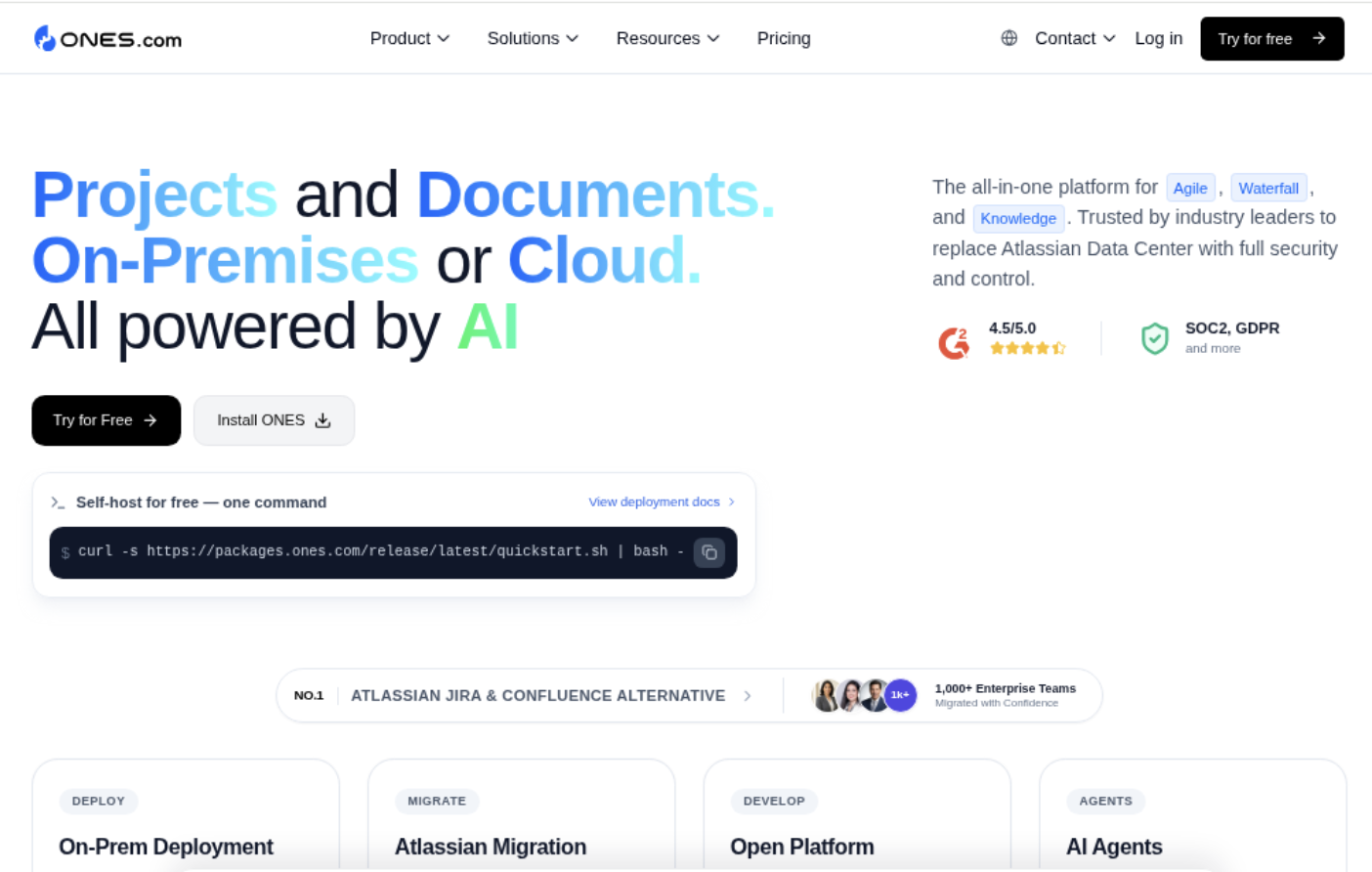
Value Proposition
ONES.com combines project management and knowledge management in one platform. ONES Project can suit teams seeking a Jira alternative with native planning features, while ONES Wiki supports shared knowledge management.
It is available through Cloud, On-Premise, Private Cloud, and Air-gapped deployments. The free plan supports up to 30 seats, and self-hosted deployments maintain feature parity with the cloud version.
Core Capabilities
| Planning pain | ONES capability | Practical result |
|---|---|---|
| Board cards do not show enough schedule detail | Structured project planning with timelines and scheduling views | You can review task timing in a more organized planning environment |
| Dependencies are difficult to track manually | Connected task relationships and workflow planning | Your team can identify sequencing risks earlier |
| Every project follows a different process | Custom workflows and custom fields | You can fit project tracking to internal delivery steps |
| Sprint work and long-term planning feel disconnected | Native sprint management alongside broader project planning | Agile teams can connect short cycles with release goals |
| Reports require repeated manual preparation | Built-in reporting | Project status becomes easier to review during meetings |
| Repeated work depends on reminders | Automation capabilities | Routine transitions and actions can require less manual effort |
| Plugins create maintenance overhead | Native project management capabilities | You may reduce reliance on multiple add-ons |
| Cloud-only tools conflict with security requirements | On-Premise, Private Cloud, and Air-gapped deployment options | You can align project management with restricted-network needs |
Application Scenarios
Software release planning: A development team can connect epics, stories, testing activities, and release milestones. Sprint management handles short-term delivery, while broader scheduling supports the launch plan.
Regulated engineering work: A team working in a restricted network can use an air-gapped deployment. Project details and internal knowledge can remain within the required environment.
Cross-functional campaign delivery: Marketing, design, and operations can use custom workflows and reporting to track approvals, ownership, and deadlines without assembling separate planning views.
Common Challenges and Practical Fixes
Challenge: You cannot see real dependencies
Fix: Add explicit dependency relationships where possible. If your current setup only shows dates, record predecessor details clearly and test the effect of moving an earlier task.
Challenge: Dates become outdated
Fix: Make schedule review part of your weekly project routine. Every owner should confirm dates after a major change, approval delay, or scope decision.
Challenge: The board becomes crowded
Fix: Separate high-level milestones from daily execution tasks. Use labels, filters, and focused views so a project manager can review the schedule without scanning every card.
Challenge: A Power-Up adds complexity
Fix: Test the integration with one project first. Confirm how it handles permissions, date updates, reporting, and archived cards before making it part of your standard workflow.
Challenge: Different teams plan in different ways
Fix: Agree on a shared definition for milestones, task completion, blocked work, and schedule changes. A common planning language often improves coordination more than another view.
FAQs
Does Trello have a built-in Gantt chart?
Trello does not provide a traditional Gantt chart as the standard board experience. Depending on your plan, you may have access to Timeline view, which displays cards across a time range. Third-party Power-Ups can add more scheduling features. Check whether your project needs dependencies, milestones, progress tracking, and schedule adjustments before treating the timeline as a complete Gantt replacement.
Is Trello Timeline the same as a Gantt chart?
No. Trello Timeline can show planned cards across dates, making it useful for lightweight scheduling. A traditional Gantt chart usually provides deeper support for task duration, dependencies, milestones, hierarchy, and schedule impact. Timeline may be enough for a short campaign or simple launch. Complex projects often need a more specialized planning view.
Can I connect Trello to an external Gantt tool?
Yes, you can explore Power-Ups and integrations that connect Trello cards with external planning tools. Before choosing one, check synchronization speed, permissions, pricing, supported date fields, dependency behavior, and reporting. A connection may solve the visual gap while introducing another system to maintain, so test it with a real project first.
What is the easiest way to test Trello for project scheduling?
Create a small project with seven to ten cards, add start and due dates, assign owners, and identify task dependencies. Then move one early milestone by several days. Review how quickly you can understand the effect on later work. This exercise reveals whether Trello’s planning views support your actual coordination needs.
When should I consider a Trello alternative?
Consider another platform when your team needs native Gantt planning, detailed dependencies, custom workflows, sprint management, reporting, automation, or self-hosted deployment. You may also need a broader system when several add-ons are required to manage ordinary project work. Compare platforms using one active project rather than relying only on feature lists.
Conclusion
Trello can display project timing through Timeline view and third-party integrations, but it does not function like a full traditional Gantt chart in every setup.
Start by checking your plan, adding dates, opening Timeline, testing dependencies, and reviewing one real project. That five-step test will show whether Trello gives you enough schedule visibility.
But here’s the truth: the right choice depends on project complexity. For simple work, Trello may keep planning clear and lightweight. For dependency-heavy delivery, native scheduling, reporting, workflows, and deployment flexibility can make a dedicated platform such as ONES.com worth evaluating.