Can Microsoft Planner Make a Gantt Chart? A Clear Guide
Project plans can look simple in Microsoft Planner until deadlines start moving, tasks depend on one another, and stakeholders ask, “What happens next?” Planner’s cards and buckets are useful for organizing work, yet they may not show the timeline relationships you need. That gap creates confusion around delays, milestones, and the project’s true completion date. You may end up rebuilding the same plan in another tool just to create a reliable visual schedule. But here’s the truth: Microsoft Planner can support Gantt-style planning in some plans, while the basic experience does not offer a traditional Gantt chart. The right answer depends on your Planner plan, license, and scheduling needs. This guide explains the difference and shows practical ways to manage timeline planning.
Can Microsoft Planner Make a Gantt Chart?
Microsoft Planner can show a Gantt-style timeline when you use a premium plan with Timeline view, dependencies, and scheduling features. The basic Planner experience does not provide a traditional Gantt chart.
That distinction matters because Microsoft Planner has several plan levels and views. A basic plan usually focuses on tasks, buckets, assignments, labels, checklists, and due dates. Those features help you manage work, though they do not automatically display task duration and dependencies across a calendar.
Premium Planner plans add more advanced project scheduling capabilities. Depending on your Microsoft 365 setup and license, you may see a Timeline view that presents tasks across dates in a Gantt-style layout.
Here’s why: a Gantt chart needs more than task cards. It usually needs start dates, finish dates, task duration, milestones, dependencies, and a visual time scale.
What a Basic Planner Plan Can Do
- Create tasks and assign them to people.
- Organize work into buckets such as “Planning,” “Design,” and “Launch.”
- Add due dates, labels, descriptions, checklists, and comments.
- Track progress through board, list, grid, or dashboard-style views.
- Group tasks by assignee, bucket, status, or due date.
For example, a marketing team can create one bucket for campaign planning and another for content production. Each task can have an owner and due date, giving the team a clear operational checklist.
What Premium Planner Adds
Premium planning features are designed for projects with greater scheduling complexity. They can include a timeline view, task dependencies, custom fields, milestones, sprint planning, and more detailed scheduling controls.
A product launch might contain these relationships:
- Market research must finish before positioning can begin.
- Positioning must finish before the landing page receives final copy.
- The landing page must be approved before a campaign goes live.
A timeline can make those relationships easier to see than a board full of cards. If the research task slips by three days, you can identify the work that may also move.
Basic Planner vs. Premium Timeline Planning
| Capability | Basic Planner | Premium Planner |
|---|---|---|
| Task boards and buckets | Yes | Yes |
| Task assignments and due dates | Yes | Yes |
| Traditional timeline or Gantt-style view | Usually unavailable | Available in supported plans |
| Task dependencies | Limited or unavailable | Available in supported plans |
| Milestones and advanced scheduling | Limited | Available in supported plans |
| Detailed project planning | Best for simple work | Best for connected schedules |
How to Check Whether Your Planner Has a Gantt-Style Timeline
You can identify your Planner capabilities in a few minutes. The key is to inspect the plan’s available views rather than assuming every Planner board has the same features.
- Open the relevant plan. Choose the project plan you want to schedule.
- Review the view options. Look for Timeline, Gantt, or another schedule-focused view.
- Check the plan type. Premium plans generally provide more scheduling capabilities than basic plans.
- Open plan settings or licensing details. Your organization’s Microsoft 365 subscription may control which features appear.
- Check task dates. A timeline needs meaningful start and finish dates, not only a single deadline.
- Add dependencies where available. Link tasks that must happen in a particular order.
- Test a small project. Create three connected tasks and confirm whether moving one updates or highlights related work.
You might be wondering: why check with a small project first? A short test reveals whether your plan supports the scheduling behavior you expect before you migrate a large project.
Signs You Have Only the Basic Experience
You may be working with basic Planner if you can see board and task views but cannot find a timeline option. You may also notice that task cards accept due dates without offering start dates or linked predecessors.
That setup can still work well for recurring team activities. A customer support team, for instance, may need a queue of assignments rather than a dependency-driven schedule.
Signs You Have Advanced Scheduling
A premium experience usually becomes apparent when you can assign start and finish dates, create dependencies, add milestones, or switch to a visual timeline.
Consider a website redesign with 40 tasks. A board can show what is pending, while a timeline can show whether design, development, testing, and approval fit within the launch window.
Three Practical Ways to Build a Timeline Around Planner
The best approach depends on project complexity. You can stay inside Planner, connect Planner with another Microsoft planning product, or choose a project platform with native timeline capabilities.
Option 1: Use a Premium Planner Plan
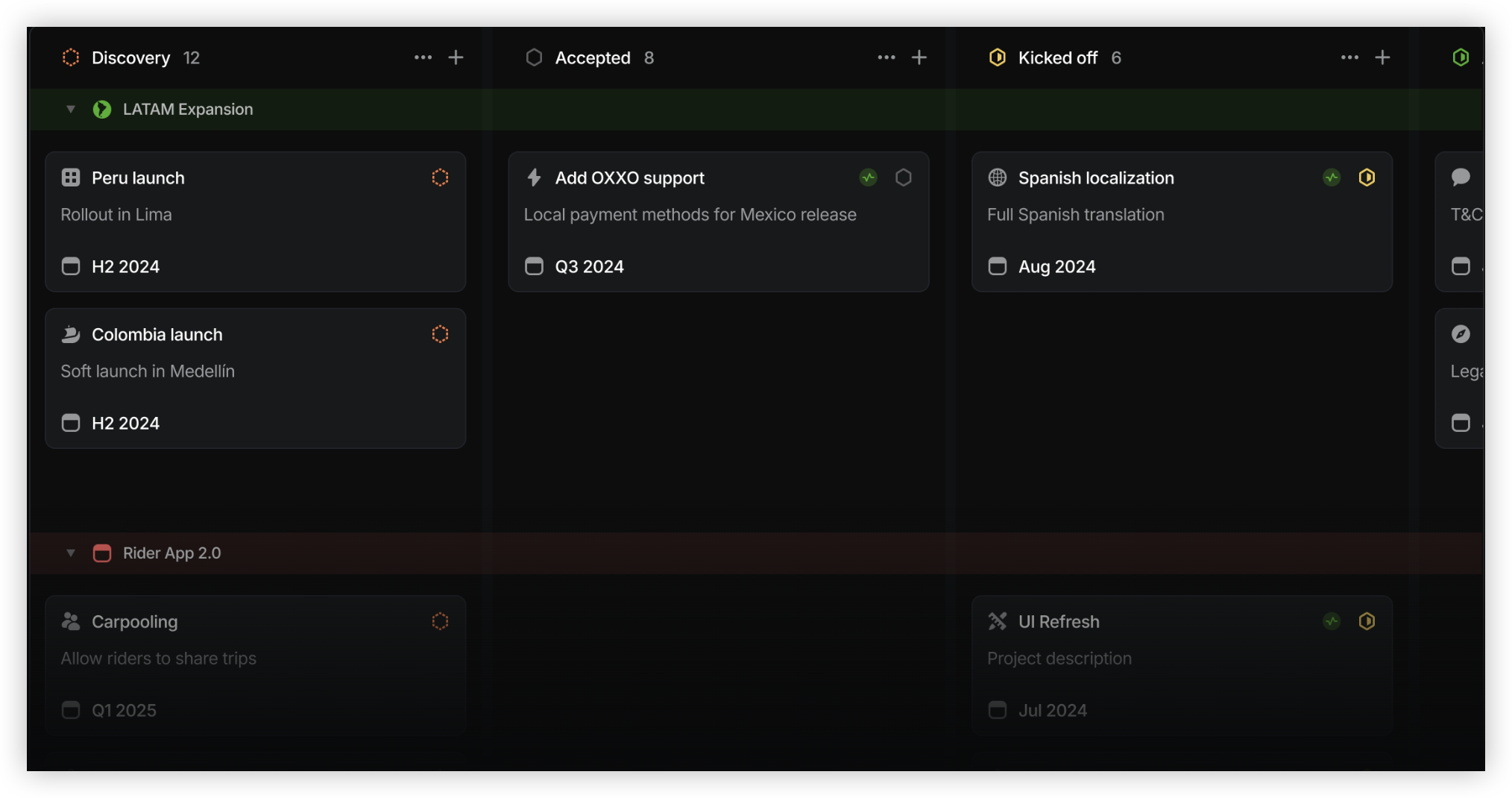
If your organization already has access to premium Planner features, this is the most direct route. Add start dates, finish dates, dependencies, and milestones, then open the timeline view.
This approach keeps task ownership and schedule visibility in one planning environment. It suits projects such as software releases, construction phases, product launches, and coordinated campaigns.
Option 2: Use Planner for Work Tracking and Another View for Scheduling
Some teams use Planner for task execution while maintaining a more detailed schedule in another Microsoft tool. This can help when stakeholders need a formal project timeline, while contributors prefer cards and checklists.
The trade-off is synchronization. If someone changes a deadline in one place, another person must ensure the schedule reflects that change. Without a clear update routine, the two views can drift apart.
Option 3: Move Complex Projects to a Dedicated Platform
A dedicated project management platform may be better when you need custom workflows, extensive dependencies, cross-project reporting, or restricted deployment options.
For example, a product team managing six releases may need a shared roadmap, sprint planning, approval rules, and timeline reporting. A simple task board can become difficult to maintain as those relationships multiply.
The best part? You do not need a Gantt chart for every project. Use one when timing, sequence, and capacity influence the result.
When a Gantt Chart Adds Real Value
A timeline earns its place when the project contains connected work. If every task can happen independently, a board may be easier to maintain.
Projects With Dependencies
Dependencies show how one task affects another. If testing cannot begin until development finishes, the schedule should make that relationship visible.
Without that connection, a team may mark testing as “ready” even though the required build remains incomplete. A Gantt-style view turns the hidden relationship into a visible planning constraint.
Projects With Fixed Deadlines
Gantt charts help you work backward from a launch date. Suppose a conference begins on September 30. Venue approval, speaker confirmation, design, promotion, and registration each need time before that date.
Displaying those activities on a calendar helps you spot an impossible sequence earlier. You can then shorten a task, add capacity, or move the launch before costs increase.
Projects With Multiple Teams
Cross-functional work often creates waiting periods. Engineering may depend on design, legal may depend on product details, and marketing may depend on approved messaging.
A board shows ownership clearly. A timeline adds the missing time relationship, helping each team understand when its work affects others.
Projects With Resource Constraints
When one specialist supports several workstreams, overlapping tasks may create a bottleneck. A timeline can reveal that the same designer has three “urgent” assignments due during one week.
You can then stagger the work or assign additional support. That decision is harder when tasks appear only as separate cards.
Common Limitations to Watch For
Planner can be effective, though its suitability depends on the level of control your project requires. Review these limitations before choosing a planning method.
Feature Availability Depends on the Plan
Two colleagues may open Planner and see different capabilities because their plans, licenses, or permissions differ. Confirm the available views before promising a Gantt workflow to a team.
Due Dates Do Not Always Create a Schedule
A deadline tells you when work should finish. It does not necessarily tell you when work begins, how long it takes, or what must happen first.
For example, “Approve campaign” due Friday gives limited planning insight. A start date, estimated duration, and predecessor reveal much more.
Manual Updates Can Reduce Accuracy
A timeline becomes unreliable when people update task cards but forget the schedule. Create a simple ownership rule: the task owner updates dates, while the project lead reviews dependencies weekly.
Large Projects May Need More Structure
As projects grow, you may need custom fields, approval workflows, portfolio reporting, sprint planning, and automation. A basic board can become crowded when it carries every detail.
Let me explain: the issue is rarely the visual chart alone. The bigger concern is whether your planning system keeps dates, responsibilities, dependencies, and progress aligned.
Natural Timeline Planning Solution: ONES.com
Value Proposition
ONES.com combines project management and knowledge management in one platform powered by ONES Assistant. ONES Project is a Jira alternative for teams that need structured schedules, workflows, reporting, and deployment flexibility.
Teams can use ONES Project and ONES Wiki separately, making it possible to match the setup to each team’s work. ONES Project supports cloud, on-premise, private cloud, and air-gapped deployments, with feature parity between cloud and self-hosted versions.
Core Capabilities
- Disconnected task relationships → Native dependencies and timeline planning → Connect predecessor and successor tasks so schedule changes are easier to understand.
- Scattered project status → Built-in reporting → Give project leads clearer visibility into progress, risks, workload, and delivery trends.
- Rigid task processes → Custom workflows and fields → Adapt statuses, approvals, ownership details, and project attributes to your operating model.
- Manual sprint coordination → Sprint management → Plan iterations, organize backlog work, and review delivery progress within the project environment.
- Repetitive administrative work → Automation → Trigger routine actions when tasks change status, receive assignments, or meet defined conditions.
- Too many extensions → Native project capabilities → Reduce dependence on plugins when core scheduling, reporting, workflow, and field requirements can live together.
- Jira migration concerns → Jira-compatible workflows → Preserve familiar project patterns while evaluating a Jira alternative for broader deployment and administration needs.
- Restricted-network requirements → Air-gapped and self-hosted deployment choices → Support teams that cannot place project information in a standard public cloud environment.
- Separate project knowledge → ONES Wiki integration option → Keep planning context and team knowledge closer together when both products fit the organization’s workflow.
Application Scenarios
Software release planning: A development team can connect requirements, implementation, testing, security review, and deployment. Sprint management handles iteration work, while reports help leaders monitor delivery risk.
Regulated engineering programs: An engineering organization can use on-premise or air-gapped deployment for restricted environments. Custom workflows can represent review gates, technical approvals, and release controls.
Cross-functional product launches: Product, design, marketing, and support can coordinate connected work through shared timelines and workflows. ONES Wiki can hold launch guidance and operational knowledge when the organization uses both products.
ONES.com offers a free plan for up to 30 seats. The platform can suit teams that need more structure than a simple task board while retaining deployment choice and familiar project workflows.
Common Challenges and Practical Solutions
Challenge: You Cannot Find a Timeline View
Solution: Check the plan type, license, and permissions first. If the view is unavailable, decide whether a premium Planner plan or another project platform fits the project better.
Challenge: Tasks Have Deadlines but No Start Dates
Solution: Add estimated start dates and durations. A schedule becomes more useful when it explains the work period rather than showing only the final target.
Challenge: Dependencies Keep Changing
Solution: Review linked tasks during a regular planning meeting. When a predecessor moves, immediately assess every connected activity.
Challenge: Two Planning Views Become Inconsistent
Solution: Choose one system as the scheduling authority. Use the other view for communication or execution, and assign one person to check synchronization.
Challenge: Stakeholders Need More Detail Than the Board Provides
Solution: Create a concise timeline view with milestones and major deliverables. Keep operational checklists with the responsible team instead of overcrowding the executive schedule.
FAQs
Does the free version of Microsoft Planner include a Gantt chart?
The basic Planner experience generally does not include a traditional Gantt chart with full timeline scheduling and task dependencies. It focuses on boards, tasks, buckets, assignments, labels, and due dates. Premium Planner plans may provide a Timeline view and advanced scheduling features. Check your organization’s license and the views available inside your plan before planning a migration.
Is Microsoft Planner the same as Microsoft Project?
They overlap, though they serve different planning needs. Planner is often simpler for team task coordination, while advanced Planner plans incorporate capabilities associated with detailed project scheduling. Microsoft Project remains a separate product family with its own licensing and feature set. Your best choice depends on project complexity, dependency management, reporting requirements, and how much scheduling control you need.
Can I create a Gantt chart without premium Planner?
You may be able to build a separate timeline with another Microsoft product or an external project management platform. The basic Planner board itself does not usually create a full Gantt chart. This approach can work for occasional reporting, though manual synchronization may become a problem when task dates change often.
When should I use a Gantt chart instead of a Planner board?
Use a Gantt-style timeline when tasks have dependencies, fixed milestones, multiple teams, or tight delivery windows. Use a Planner board when the main need is assigning and tracking independent work. A software release may benefit from both: the board for daily execution and the timeline for dependency and deadline management.
What should I check before choosing a project planning tool?
Check timeline support, dependencies, milestones, custom workflows, reporting, automation, deployment options, permissions, and integration needs. Also consider how often dates change and who maintains the schedule. A tool may look suitable during a demonstration but feel difficult when several teams update connected work every day.
Conclusion
Microsoft Planner can support Gantt-style planning when your organization has the right premium features. The basic experience remains better suited to task boards, buckets, assignments, and straightforward team coordination.
Start by checking your plan’s available views. Then add start dates, durations, milestones, and dependencies if your project needs a true schedule. For complex work, compare premium Planner with a dedicated platform such as ONES.com.
The problem is hidden schedule risk. The pressure grows when delays affect several teams. The solution is a planning method that makes timing, ownership, and dependencies visible before they become delivery problems.