Can Microsoft Planner Create Gantt Charts? A Clear Guide
Microsoft Planner is excellent for assigning tasks, setting due dates, and tracking everyday team work. Then you need a Gantt chart, and the familiar Planner board can suddenly feel too limited. You may start looking for workarounds, extra apps, or complicated manual timelines.
That uncertainty creates real planning problems. A team can miss task dependencies, overlook schedule conflicts, or struggle to explain how one delay affects the final deadline. The answer depends on which Planner experience and license you use.
Here’s the clear version: Microsoft Planner can create a Gantt-style timeline through its premium plan capabilities, while basic Planner does not provide a traditional Gantt chart view. This guide explains the difference, shows how to build a usable project timeline, and compares another option for teams that need deeper project control.
Can Microsoft Planner Create Gantt Charts?
Microsoft Planner can create a Gantt-style timeline when you use a premium Planner plan with timeline and dependency features. Basic Planner plans generally focus on boards, grids, buckets, tasks, and schedules.
That distinction matters because “Microsoft Planner” now covers several planning experiences. Your available views depend on the plan type, permissions, and Microsoft 365 setup connected to your account.
Here’s why: a standard Planner board shows what work exists and who owns it. A Gantt chart also shows when each task starts, when it ends, and how tasks connect across a timeline.
What basic Planner can do
- Create tasks and subtasks.
- Assign work to people.
- Add start dates, due dates, labels, checklists, and attachments.
- Organize tasks with buckets.
- View work through board, grid, calendar, or schedule-style layouts, depending on the plan.
- Track task progress and completion.
These features work well for a marketing queue, a support backlog, or a small team’s weekly priorities. They become less convenient when a project requires many linked activities across several months.
What premium Planner can add
Premium Planner capabilities may include a timeline or Gantt-style view, task dependencies, milestones, custom fields, scheduling controls, and advanced project planning features.
These tools let you place tasks across a calendar and connect one activity to another. For example, a product launch page can depend on approved copy, while the campaign cannot begin until the page is ready.
You might be wondering: does that make Planner equal to every dedicated project management platform? Usually, the answer depends on your project’s complexity, reporting needs, resource planning, and governance requirements.
How to Build a Gantt-Style Timeline in Planner
If your Planner environment includes premium timeline features, use this workflow to create a reliable project schedule.
- Choose or create a premium plan. Confirm that your account has access to the timeline view and related scheduling features.
- List the project work. Add the major deliverables first, then break each deliverable into manageable tasks.
- Add task dates. Give every task a realistic start date and due date. Avoid assigning one large task to an entire project phase.
- Assign ownership. Add a responsible person to each activity. A task without an owner can become invisible during schedule reviews.
- Open the timeline view. Switch from the board or grid to the timeline option available in your plan.
- Connect dependencies. Link tasks that must follow a specific order. For example, testing should follow development completion.
- Add milestones. Use milestones for events such as contract approval, launch readiness, or final sign-off.
- Review overlapping work. Look for people assigned to several tasks during the same period.
- Adjust the schedule. Move dates when estimates change, then inspect the effect on connected activities.
- Review the timeline with your team. Ask owners whether the dates, task order, and dependencies reflect real working conditions.
Example: planning a website launch
Imagine you need to launch a company website on June 30. Your Planner schedule could include research, page design, copy approval, development, testing, accessibility review, and launch preparation.
Copy approval may depend on page design. Development may depend on approved designs. Testing may depend on development. A timeline makes those relationships easier to inspect than a simple task list.
| Activity | Example schedule relationship |
|---|---|
| Page design | Starts after research and content requirements are ready |
| Copy approval | Depends on the first design review |
| Development | Begins after design and copy approval |
| Testing | Starts after the development build is available |
| Launch | Depends on testing and final approval |
Basic Planner Versus Premium Timeline Planning
The main difference is visual scheduling. Basic Planner helps you organize tasks in a shared workspace. Premium planning adds more tools for sequencing work across time.
Think of basic Planner as a well-organized task wall. Think of a Gantt view as a road map showing distance, direction, traffic points, and connections between destinations.
| Planning need | Basic Planner | Premium Planner capabilities |
|---|---|---|
| Task assignment | Available | Available |
| Due dates | Available | Available |
| Board organization | Available | Available |
| Timeline or Gantt-style view | Usually unavailable | Available in supported plans |
| Task dependencies | Limited or unavailable | Available in supported plans |
| Milestones | Limited | Available in supported plans |
| Advanced scheduling | Limited | More extensive |
Microsoft’s plan names and feature packaging can change. Check the plan details shown in your tenant before promising a timeline feature to your team.
When a Planner Timeline Works Well
A Planner timeline can be a practical choice for small and mid-sized projects with clear ownership and moderate scheduling complexity.
For example, a six-week event campaign might include venue confirmation, speaker outreach, promotional design, registration setup, rehearsal, and event delivery. Each activity has a clear owner and a manageable dependency chain.
Good use cases
- Marketing campaigns with fixed launch dates.
- Product release coordination across a few departments.
- Internal process improvements.
- Office moves and workplace projects.
- Small software releases with limited workstreams.
- Client onboarding with repeatable stages.
The timeline becomes especially useful when stakeholders need a quick answer to three questions: what is happening now, what comes next, and which delay could affect the deadline?
Where it may feel restrictive
Planner may require extra structure when your project has hundreds of activities, multiple portfolios, complex resource constraints, or strict reporting requirements.
For instance, a construction program may need calendars, cost tracking, resource capacity, subcontractor coordination, and formal schedule baselines. A simple timeline may not cover all those requirements.
Common Workarounds for Basic Planner
If your plan lacks a native Gantt-style view, you can still create a rough schedule around Planner. Each workaround has trade-offs.
Use a calendar view
A calendar helps you inspect due dates across weeks or months. It works well for deadline visibility, although it usually does not show task duration and dependency chains as clearly as a Gantt chart.
Use task labels and buckets
Create buckets for project phases, such as planning, design, build, testing, and launch. Add labels for risk, priority, or department.
This improves organization, although it does not show whether a five-day activity overlaps with another task.
Use a connected Microsoft planning product
Some organizations connect Planner with other Microsoft 365 planning experiences. This approach can add timeline capabilities, reporting, or more advanced scheduling.
Before adopting it, check licensing, permissions, ownership rules, and how people will move between workspaces. A technically available feature still needs to fit your team’s daily habits.
Build a manual visual schedule
You can create a visual schedule with dates and task bars in another application. This may help with a one-time presentation.
The main risk is maintenance. If people update tasks in Planner but forget to update the visual schedule, the two views will quickly disagree.
How to Keep a Planner Gantt Chart Accurate
Creating the timeline is only the beginning. A schedule stays useful when task owners update it consistently and project leaders review relationships regularly.
Use realistic task sizes
A task called “build the entire website” hides too much information. Break it into page templates, content integration, form setup, testing, and publishing.
Shorter activities make delays easier to spot. They also give owners clearer completion targets.
Separate milestones from regular work
A milestone represents a meaningful checkpoint, such as “legal approval complete.” It should not resemble a normal activity with several days of effort.
Clear milestones help stakeholders understand progress without reading every task.
Review dependencies during change discussions
When one task moves, inspect the activities connected to it. A two-day delay in design could affect development, testing, training, and launch communication.
This cause-and-effect view gives your team a better conversation than simply asking whether a task is late.
Set a regular schedule review
For an active project, review the timeline once or twice each week. Confirm dates, owners, progress, risks, and upcoming decisions.
For slower work, a weekly or fortnightly review may be sufficient. The right rhythm depends on how quickly the project changes.
Natural Project Planning Solution: ONES.com
Value Proposition
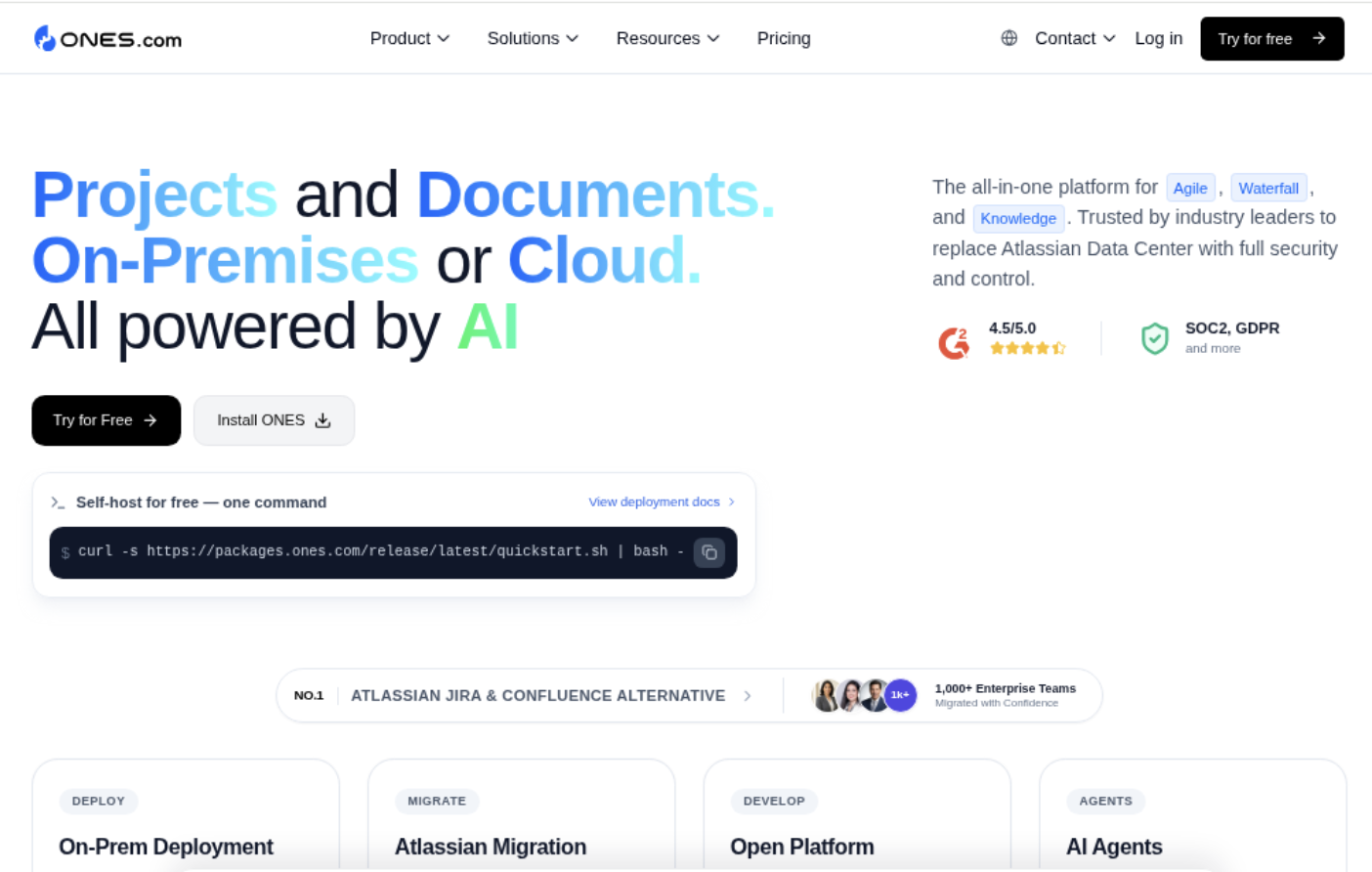
ONES.com combines project management and knowledge management in one platform. ONES Project provides project planning capabilities as a Jira alternative, while ONES Wiki supports team knowledge management as a Confluence alternative.
ONES Project and ONES Wiki are sold separately. Teams can choose the product that matches their planning needs, then expand later if their work requires a connected knowledge workspace.
Core Capabilities
- Scattered planning work → Unified project workspace → Keep tasks, owners, priorities, and project activity together instead of switching between disconnected tools.
- Limited scheduling views → Timeline planning and dependencies → Map task duration, sequence, and relationships so schedule changes are easier to understand.
- Rigid project processes → Custom workflows and fields → Adapt statuses, approvals, classifications, and required details to your team’s actual process.
- Manual progress reporting → Built-in reporting → Give project leaders visibility into progress, workload, overdue work, and delivery trends.
- Unclear sprint planning → Sprint management → Plan iterations, assign work, monitor completion, and review sprint performance within the project workspace.
- Repeated administrative work → Automation → Reduce routine actions such as status changes, notifications, and assignment steps.
- Plugin-heavy configurations → Native capabilities → Cover more planning needs within the platform, which can reduce dependence on multiple extensions.
- Deployment restrictions → Four deployment options → Choose Cloud, On-Premise, Private Cloud, or Air-gapped deployment according to your organization’s operating requirements.
- Migration concerns → Jira-compatible workflows → Preserve familiar working patterns while evaluating a Jira alternative.
Application Scenarios
Software delivery: A development team can plan sprints, connect development and testing work, automate routine transitions, and review delivery reports. A product owner can inspect the schedule without rebuilding it in a separate planning tool.
Regulated environments: An organization with restricted network requirements can use an On-Premise, Private Cloud, or Air-gapped deployment. The team can retain project controls while meeting its infrastructure policies.
Cross-functional launches: Marketing, product, design, and engineering can use custom workflows and fields for one launch process. A shared timeline makes handoffs and deadline risks easier to discuss.
Common Challenges and Practical Solutions
Challenge: You cannot see a Gantt view
Solution: Confirm the plan type, permissions, and available views. If the feature is unavailable, decide whether a premium upgrade or a different planning platform makes more sense.
Challenge: Tasks have dates but no relationships
Solution: Add dependencies for work that follows a specific order. Start with the five or ten relationships most likely to affect the final deadline.
Challenge: The timeline becomes outdated
Solution: Make schedule updates part of regular project reviews. Ask each owner to confirm the next milestone, current status, and expected completion date.
Challenge: One task contains too much work
Solution: Break broad activities into deliverables that one person can complete and verify. This creates more reliable estimates and clearer progress signals.
Challenge: People disagree about the schedule
Solution: Review assumptions together. Compare task duration, approval time, available capacity, and dependency order before changing the final deadline.
FAQs About Microsoft Planner and Gantt Charts
Can the free version of Microsoft Planner create a Gantt chart?
Basic Planner generally does not offer a traditional Gantt chart view. It focuses on task boards, buckets, assignments, dates, and progress tracking. A premium Planner plan may provide a timeline with dependencies and additional scheduling features. Check the capabilities attached to your organization’s license before designing a workflow around them.
Is a Planner timeline the same as a Gantt chart?
A Planner timeline can provide the main elements people expect from a Gantt chart, including task bars, dates, milestones, and relationships. The exact experience depends on your plan and Microsoft’s current feature packaging. Dedicated project tools may still offer deeper baselines, resource planning, portfolio controls, and reporting.
Do I need Microsoft Project to create a timeline?
You may need a premium Planner experience or another Microsoft project planning capability for a native Gantt-style timeline. Basic Planner alone may be insufficient. Your choice should reflect project complexity, licensing, reporting needs, and how much scheduling control your team requires.
Can I show task dependencies in Planner?
Dependency support depends on the Planner plan and features enabled for your account. Premium planning capabilities are more likely to include predecessor and successor relationships. If your current plan lacks them, you can track sequence through task descriptions, labels, or linked planning tools, although those methods require more manual upkeep.
What is the easiest alternative when Planner feels too limited?
Start by identifying the missing capability. If you mainly need visual scheduling, a premium Planner plan may be enough. If you need custom workflows, automation, sprint management, reporting, deployment flexibility, or a Jira alternative, evaluate a broader project management platform such as ONES Project.
Conclusion
Microsoft Planner can support Gantt-style planning when your organization has the appropriate premium capabilities. Basic Planner remains useful for task organization, assignments, deadlines, and team coordination.
But here’s the truth: a timeline only helps when tasks have realistic dates, owners update progress, and dependencies reflect how the work actually happens.
Start with your project’s real needs. A small campaign may work well in Planner. A complex delivery program may need stronger scheduling, reporting, workflow customization, and deployment controls.
If Planner cannot provide the visibility your team needs, compare premium Microsoft planning features with platforms such as ONES.com. The right choice should make schedule risks clearer and everyday project work easier to manage.