Can ChatGPT Create a Gantt Chart? A Practical Guide for Work
Yes, ChatGPT can create a Gantt chart plan, but it needs clear project details and a suitable format. It can organize tasks, estimate dates, identify dependencies, and produce a structured schedule. It can also generate code for a visual chart.
The problem is that a polished Gantt chart involves more than listing activities. A small mistake in task order, duration, or dependency can create an unrealistic timeline. If your plan changes, manually repairing the schedule can become frustrating.
But here's the truth: ChatGPT works best as a planning assistant, while a project management platform handles collaboration, updates, progress tracking, and reporting. In this guide, you’ll learn how to prompt ChatGPT effectively, check its results, and move the plan into a practical workflow.
Can ChatGPT Create a Gantt Chart?
ChatGPT can create a Gantt chart plan by turning project details into tasks, durations, dates, milestones, and dependencies. It may present the result as a table, Mermaid code, HTML, or another structured format that can be rendered visually.
For example, you can ask ChatGPT to plan a website launch with research, design, development, testing, and release activities. It can arrange the work and calculate a suggested schedule.
However, the quality of the result depends on the details you provide. ChatGPT may make reasonable assumptions about weekends, working hours, task durations, or team availability. You should review those assumptions before treating the schedule as a commitment.
What ChatGPT Can Add to a Gantt Chart
- Task names and work packages
- Start and finish dates
- Estimated durations
- Milestones
- Task dependencies
- Responsible roles
- Priority labels
- Risk notes and planning assumptions
- Suggested work phases
- Mermaid or HTML code for visual rendering
What It Cannot Reliably Manage Alone
ChatGPT does not automatically know your team’s real availability, current progress, approval status, or shifting priorities. It also does not replace a shared workspace where several people can update the schedule.
That distinction matters. A generated plan may look complete while still missing a legal review, a vendor delay, a security check, or a dependency owned by another team.
A Simple Example
| Task | Duration | Dependency | Suggested timing |
|---|---|---|---|
| Define requirements | 3 working days | None | May 6–May 8 |
| Create wireframes | 4 working days | Define requirements | May 9–May 14 |
| Build landing page | 6 working days | Create wireframes | May 15–May 22 |
| Run quality checks | 3 working days | Build landing page | May 23–May 27 |
| Launch | 1 day | Run quality checks | May 28 |
How to Ask ChatGPT for a Gantt Chart
The most reliable approach is to give ChatGPT project context, planning rules, and a required output format. Then review the result in stages instead of asking for a perfect schedule in one sentence.
-
Describe the Project Outcome
Start with the result you want to achieve. Include the project type, launch target, major phases, and any fixed dates.
For example, you might write: “Create a Gantt chart for launching a mobile app in 10 weeks. The work includes research, interface design, development, testing, security review, marketing preparation, and release.”
-
List Known Tasks and Milestones
Give ChatGPT the activities you already know. Include milestone events such as design approval, beta release, executive review, or public launch.
Specific task names produce a more useful schedule. “Prepare launch” is vague. “Write release announcement,” “configure support coverage,” and “approve store listing” are easier to plan.
-
Provide Dates and Working Rules
State the desired start date, deadline, workweek, holidays, and daily working hours. Mention whether the team works Monday through Friday or follows another schedule.
You should also identify fixed events. A trade show, compliance review, or supplier delivery can affect the timeline more than a small task estimate.
-
Explain Dependencies
Tell ChatGPT which activities must happen first. A development task may depend on approved designs, while a marketing campaign may depend on a confirmed release date.
Ask it to label dependency types when useful. “Finish-to-start” means one task begins after another finishes. “Start-to-start” means two activities can begin together.
-
Choose the Output Format
Ask for a table if you want to review the schedule quickly. Ask for Mermaid code if you want to render a chart in a compatible editor. You can also request HTML for a simple browser-based view.
A useful instruction is: “Return columns for task ID, task name, phase, owner, start date, finish date, duration, dependency, milestone status, and assumptions.”
-
Ask for a Planning Review
After ChatGPT creates the schedule, ask it to identify missing activities, unrealistic overlaps, bottlenecks, and tasks that may sit on the critical path.
This second pass often reveals hidden work. For example, a product launch may require training, analytics setup, accessibility testing, and post-launch monitoring.
-
Validate the Schedule with Your Team
Share the proposed plan with people responsible for the work. Ask whether the durations, dependencies, and ownership match reality.
A designer may need three days for a simple banner and two weeks for a new interaction model. Your team’s experience should guide the final schedule.
Prompt Template You Can Reuse
Try this prompt:
“Create a Gantt chart plan for [project]. The target outcome is [outcome]. The project starts on [date] and should finish by [date]. Use a Monday-to-Friday workweek. Include these phases: [phases]. Include these known tasks: [tasks]. Mark these milestones: [milestones]. Identify dependencies, owners, estimated duration, risks, and assumptions. Return a table with task ID, task name, phase, owner, start date, finish date, duration, dependency, and milestone status. After the table, list missing activities and possible schedule risks.”
Which Gantt Chart Format Should You Request?
The right format depends on what you plan to do next. A table is easiest for checking dates, while visual code can help you see overlaps and sequencing.
Structured Table
A table is the best starting point for most projects. It makes task names, dates, dependencies, and owners easy to inspect.
For example, a product manager can scan the schedule and notice that testing begins before the final build is available. That problem is easier to catch in a structured schedule than in a paragraph.
Mermaid Gantt Syntax
Mermaid is a text-based diagram format that can display a Gantt chart in compatible editors and websites. Ask ChatGPT to create Mermaid syntax with clear task names and dates.
A simple request could be: “Convert this schedule into Mermaid Gantt syntax. Use weekly date markers, group tasks by phase, and show milestones separately.”
Review the rendered result carefully. Long task names, unsupported date formats, or unusual dependencies may prevent the chart from displaying correctly.
HTML or Web-Based Chart
ChatGPT can generate HTML and JavaScript for a browser-based chart. This option may help when you want a visual prototype for a presentation or internal review.
Ask for a self-contained page with task bars, milestone markers, a date scale, and a legend. A technical reviewer should inspect any code before it becomes part of a production workflow.
Import-Friendly Structure
You can ask for consistent columns that are easy to transfer into a project management platform. Useful fields include task ID, parent task, owner, duration, start date, finish date, predecessor, status, and priority.
Keep the structure consistent. If one row uses “QA” and another uses “quality assurance,” filtering and grouping may become less convenient later.
How to Make the Generated Schedule More Accurate
ChatGPT produces stronger plans when you provide constraints rather than broad wishes. Think of the prompt as a brief planning session.
Use Realistic Duration Ranges
Instead of asking for exact estimates without context, provide a range. You might say that interface review usually takes two to four working days.
ChatGPT can then create a baseline estimate while showing where uncertainty exists. This is more useful than presenting every task with false precision.
Separate Work from Approval
Approval often takes time, especially when several people must review the result. Give approval its own activity rather than hiding it inside design, engineering, or testing.
For example, “write policy update” and “approve policy update” should usually appear as separate tasks. This makes waiting time visible.
Add Buffers for High-Risk Activities
Some tasks have predictable uncertainty. Integrations, security reviews, external approvals, and migrations often need contingency time.
Ask ChatGPT to add a risk buffer to selected activities rather than adding the same percentage to every task. A two-day buffer may make sense for an external review, while a routine status meeting may need none.
Request Critical Path Analysis
The critical path is the chain of dependent activities that controls the earliest possible finish date. A delay on this chain can move the project deadline.
Ask ChatGPT to list the critical path separately and explain which tasks have flexibility. Then verify the result with the actual schedule logic.
Include Ownership
A schedule becomes easier to operate when every important activity has a responsible person or role. Ownership also exposes overloaded contributors.
For example, assigning product approval, test coordination, and launch communications to one person may create a hidden bottleneck.
Common Mistakes When Using ChatGPT for Project Scheduling
ChatGPT can create an attractive plan that still needs correction. Most problems come from unclear assumptions, missing work, or excessive trust in estimated dates.
Vague Project Prompts
“Create a Gantt chart for my project” gives ChatGPT too little context. It may invent phases that do not match your workflow.
Include the outcome, deadline, project phases, constraints, and known dependencies. Even a short project brief can improve the schedule substantially.
Ignoring Non-Working Days
A schedule may appear shorter when weekends, holidays, leave, and reduced working hours are ignored. This is especially risky when the deadline is close.
Tell ChatGPT which days count as working days. Then inspect each date transition around weekends and holidays.
Overlapping Dependent Tasks
Some overlap is efficient, but it can also hide rework. Development may begin before every design detail is complete, yet core requirements still need approval first.
Ask ChatGPT to explain every significant overlap. Keep the overlap only when the responsible team confirms that the work can proceed safely.
Leaving Out Operational Work
Teams often remember creation tasks and forget operational preparation. Support training, monitoring, access controls, handover, and maintenance planning may be essential.
Ask ChatGPT to review the schedule from launch, customer support, security, and maintenance perspectives. Each perspective may reveal a different gap.
Treating Estimates as Commitments
An AI-generated estimate is a planning hypothesis. It is not a promise from the people doing the work.
Use the first version to start a conversation. Replace assumptions with estimates from the responsible team before communicating a firm deadline.
Natural Gantt Planning Solution: ONES.com
ONES.com brings project planning and knowledge management into one platform, with ONES Project available as a Jira alternative. It can help you turn an AI-assisted schedule into a shared workflow that teams can maintain as work changes.
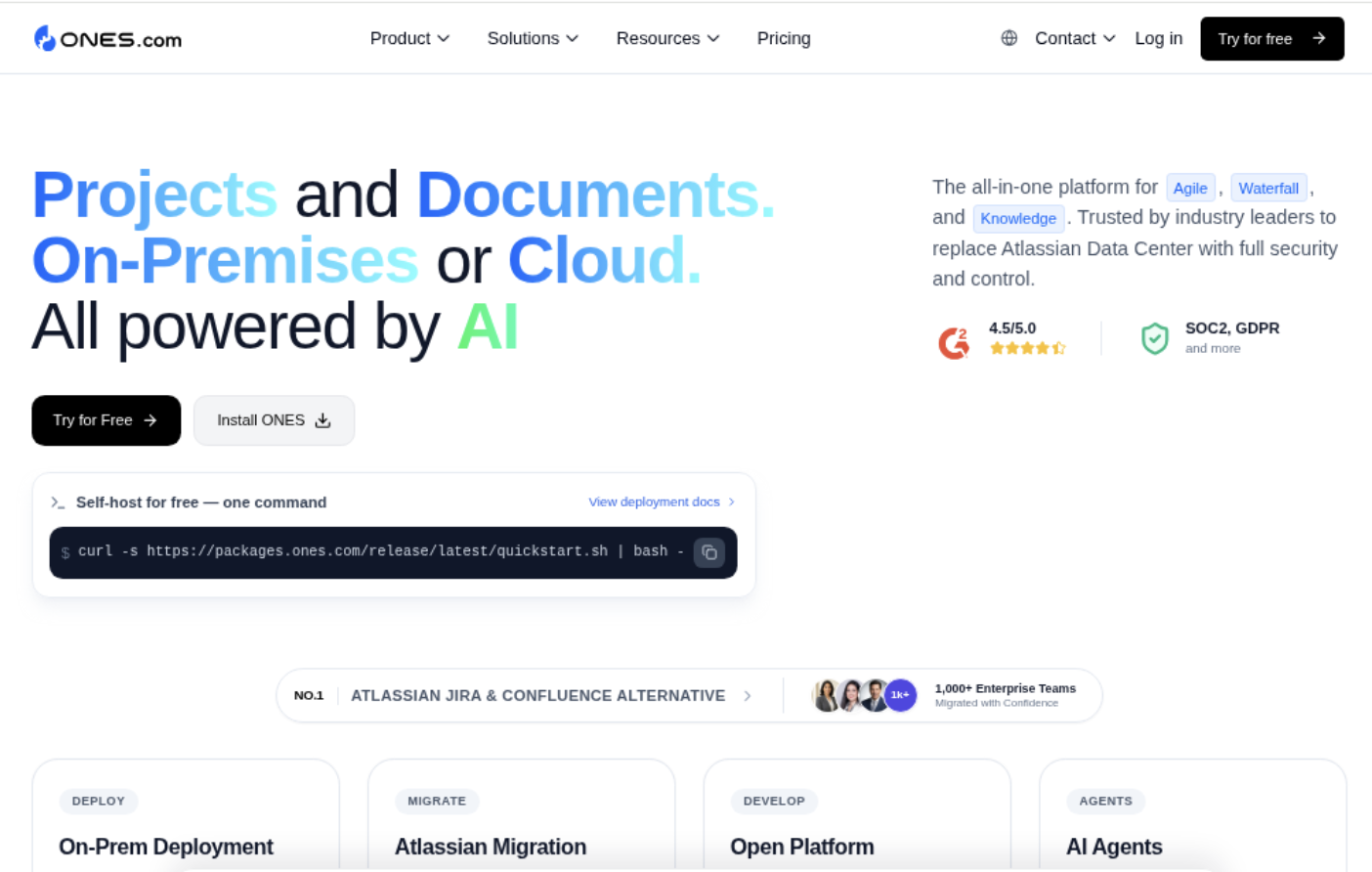
ChatGPT can help you shape the initial plan. ONES Project can help you assign work, manage dependencies, track progress, and report on delivery. ONES Wiki can provide a connected knowledge base, and the two products are sold separately.
Core Capabilities
- AI-generated planning is difficult to operationalize: ONES Assistant can support planning work inside the ONES.com environment, helping you move from an initial idea toward organized project activity.
- Separate task and knowledge tools create context gaps: ONES.com combines project management and knowledge management, making it easier to connect delivery work with relevant team guidance.
- Rigid workflows slow approval-heavy projects: Custom workflows let you reflect stages such as draft, review, approval, implementation, and verification.
- Generic fields hide important planning details: Custom fields can capture release trains, risk levels, business owners, compliance status, or customer segments.
- Manual sprint coordination creates avoidable work: Sprint management helps teams organize planned work into focused delivery cycles.
- Repeated status activities consume team time: Automation can handle routine transitions and actions when defined conditions occur.
- Limited reporting makes schedule problems harder to see: Built-in reporting helps you review progress, workload, and delivery trends.
- Plugin-heavy setups increase maintenance: Jira-compatible workflows and native capabilities can reduce dependence on multiple add-ons.
- Restricted environments create deployment concerns: ONES.com supports Cloud, On-Premise, Private Cloud, and Air-gapped deployments.
- Moving between hosting models can create feature concerns: ONES.com provides feature parity between its cloud and self-hosted versions.
Application Scenarios
Software release planning: You can use ChatGPT to outline discovery, design, implementation, testing, and release activities. In ONES Project, the team can assign those activities, manage sprints, connect dependencies, and monitor delivery risks.
Marketing campaign coordination: A marketing team can plan creative production, legal review, channel setup, launch, and performance monitoring. Custom workflows can distinguish drafting, review, approval, and publication.
Restricted-network project work: An organization with strict network controls can use an On-Premise, Private Cloud, or Air-gapped deployment. The team can retain a structured project workflow while meeting its operating requirements.
Common Challenges and Practical Solutions
Challenge: The Chart Looks Correct but Contains Wrong Dates
Solution: Ask ChatGPT to show its date assumptions and calculate durations using your working calendar. Check weekends, holidays, and fixed events manually.
Challenge: Dependencies Are Too Basic
Solution: Identify predecessor relationships task by task. Ask whether each activity requires completion, partial completion, or approval before the next activity begins.
Challenge: The Schedule Becomes Outdated Quickly
Solution: Keep the schedule in a shared project workspace after the initial planning stage. Record actual progress, revised dates, blockers, and ownership there.
Challenge: The Team Does Not Trust AI Estimates
Solution: Present the AI-created plan as a draft. Invite contributors to adjust durations and dependencies, then record the reasoning behind major changes.
Challenge: The Chart Is Too Detailed to Use
Solution: Create two views. Use a high-level version for stakeholders and a detailed working view for the delivery team. The summary should show phases and milestones, while the working view shows individual activities.
FAQs About ChatGPT and Gantt Charts
Can ChatGPT make a visual Gantt chart?
Yes. ChatGPT can create Mermaid syntax, HTML, JavaScript, or another visual representation. The result depends on where you render it and whether that environment supports the requested format. For a quick review, a structured table may be more dependable. For ongoing project control, use a shared project management platform that can track updates, owners, dependencies, and progress.
What information should I give ChatGPT first?
Provide the project outcome, start date, deadline, working calendar, major phases, known tasks, task owners, dependencies, milestones, and constraints. Mention approvals, external participants, holidays, and risk areas. The more clearly you describe the operating conditions, the fewer assumptions ChatGPT needs to make.
Can ChatGPT calculate task dependencies?
It can suggest and organize dependencies when you explain how the work flows. For example, it can place interface approval before development or testing before release. You should still validate those relationships with the people performing the work. ChatGPT may miss parallel activities, partial handoffs, or approvals that happen outside the main team.
Can ChatGPT update a Gantt chart when plans change?
It can recalculate a schedule when you provide revised dates, completed tasks, delays, or new constraints. However, repeated manual updates can become difficult as the project grows. A shared project workspace is more suitable for ongoing changes because several people can update status, ownership, dependencies, and deadlines in one place.
Is ChatGPT enough for managing a project?
ChatGPT can help with planning, brainstorming, risk identification, task breakdown, and schedule formatting. Project management also requires accountability, collaboration, progress history, approvals, reporting, and controlled changes. For a small personal project, ChatGPT may cover much of the planning need. For a team project, pair it with a platform built for daily delivery management.
What should I do after ChatGPT creates the schedule?
Review the assumptions, validate durations with the team, check the critical path, confirm ownership, and add missing operational work. Then place the approved plan in a shared workspace. Treat the AI-created version as a starting schedule that needs human review before it becomes a working commitment.
Conclusion
ChatGPT can create a useful Gantt chart plan when you provide clear tasks, dates, dependencies, working rules, and output requirements. It can help you move quickly from a project idea to an organized schedule.
But here's the truth: a chart is only valuable when it stays accurate as work changes. Review the assumptions, involve the people responsible for delivery, and track the approved plan in a shared environment.
The best part? You can combine AI-assisted planning with structured project management. Use ChatGPT to explore the schedule, then use a platform such as ONES.com to coordinate work, manage workflows, and keep progress visible.