Can ChatGPT Create a Gantt Chart? A Complete Beginner Guide
Planning a project with scattered tasks, unclear deadlines, and shifting priorities can make even a small team feel overwhelmed. A Gantt chart could bring order, but creating one manually takes time and careful formatting.
That is where ChatGPT can help. You can describe your tasks, durations, dependencies, and milestones, then ask ChatGPT to organize them into a schedule or chart structure. The result may still need checking, especially when dates overlap or several tasks depend on one another.
But here’s the truth: ChatGPT does not automatically replace a full project management platform. It can create useful planning content, chart code, or structured schedules. You need another tool for ongoing updates, collaboration, permissions, and progress tracking.
This guide explains what ChatGPT can create, how to ask for it, how to correct common mistakes, and when dedicated software makes more sense.
Can ChatGPT Create a Gantt Chart?
Yes, ChatGPT can create a Gantt chart structure, generate chart code, and organize project tasks into a timeline. It can also turn a plain task list into start dates, end dates, durations, dependencies, and milestones.
However, ChatGPT may not produce a fully interactive Gantt chart inside every chat. The exact result depends on your ChatGPT plan, enabled tools, and the format you request.
You can ask for several useful outputs:
- A task schedule with start dates and end dates
- A Mermaid Gantt chart that renders in compatible editors
- HTML and JavaScript for a browser-based chart
- A CSV-style structure that you can move into project software
- A planning table that you can review before building the final chart
The safest workflow is simple: give ChatGPT organized project details, request a clear format, inspect the result, and move the schedule into a tool that supports ongoing project control.
What ChatGPT Can Do Well
ChatGPT is useful during the planning stage because it can transform rough notes into a clearer sequence of work. For example, you might describe a website redesign in a paragraph.
ChatGPT can identify likely phases, suggest task durations, add review points, and connect tasks that cannot start until earlier work finishes.
It can also help you spot missing work. A launch plan might include design and development but forget accessibility testing, approval time, or staff training.
What ChatGPT Cannot Guarantee
ChatGPT does not know your team’s real availability unless you provide it. It may also assume that a task takes five days when your team normally needs two weeks.
It can misunderstand vague relationships. “Testing follows development” might mean testing starts after all development ends, or it might mean testing begins as each feature becomes ready.
Review every date, dependency, and assigned person before using the schedule for delivery commitments.
How to Ask ChatGPT for a Gantt Chart
A strong request gives ChatGPT enough detail to build a realistic timeline. You do not need technical language, but you should describe the project clearly.
-
Describe the project outcome. Explain what the team must complete. For example, say, “Launch a customer portal for 200 internal employees by September 30.”
-
List the major phases. Mention discovery, design, development, testing, training, and launch when those stages apply.
-
Add tasks beneath each phase. “Design” is too broad. Use tasks such as “Create wireframes,” “Review wireframes,” and “Approve visual design.”
-
Provide dates or durations. Tell ChatGPT when work begins, how long each task takes, or when the final milestone must occur.
-
Explain dependencies. State which tasks must finish before another task starts. For example, development may depend on approved designs.
-
Identify milestones. Include events such as design approval, testing completion, or the public launch.
-
Choose an output format. Ask for a table, Mermaid code, HTML, or a format that works with your chosen project tool.
-
Request a validation check. Ask ChatGPT to identify overlapping tasks, impossible dates, missing dependencies, and tasks without owners.
A Reliable Prompt Example
You can adapt this prompt for a small software project:
Create a Gantt chart for a customer portal project. The project starts on July 1 and launches on September 30. Include these tasks: requirements workshop, technical planning, wireframes, visual design, design approval, backend development, frontend development, integration testing, user acceptance testing, staff training, launch preparation, and launch. Assign realistic durations, show dependencies, identify milestones, and flag any schedule risks. Return the result as Mermaid Gantt code and a simple planning table.
This request gives ChatGPT a clear goal, a date range, specific tasks, and a required format. It also asks for a quality check instead of accepting the first schedule automatically.
Ask for a Review Before the Chart
If your project is complex, ask for a task breakdown before requesting chart code. This creates a useful review point.
For example, you can say, “First organize these tasks into phases. Do not create the chart yet. Ask me five questions about missing dates, dependencies, and ownership.”
That approach reduces rework because you can correct the plan before formatting begins.
How to Generate a Mermaid Gantt Chart
Mermaid is a text-based diagram format. ChatGPT can generate Mermaid syntax, which you can paste into a compatible Mermaid editor or workspace.
Here is a small example:
gantt
    title Website Launch Plan
    dateFormat  YYYY-MM-DD
    axisFormat  %b %d

    section Discovery
    Requirements workshop :done, req, 2025-07-01, 5d
    Technical planning    :tech, after req, 4d

    section Design
    Wireframes             :wire, after tech, 7d
    Design approval        :milestone, approve, after wire, 0d

    section Development
    Frontend development   :front, after approve, 10d
    Backend development    :back, after approve, 12d

    section Testing
    Integration testing    :test, after front back, 5d
    Launch                 :milestone, launch, after test, 0d
The chart uses a few important elements:
dateFormattells the renderer how dates are written.sectiongroups related tasks into project phases.aftercreates a dependency between tasks.milestonemarks an important event with no duration.doneshows work that has already finished.
Why Mermaid Is Useful
Mermaid is convenient when you want a quick visual draft without designing a chart manually. You can change a task duration by editing a short line of text.
It also works well for technical teams that already use Markdown-compatible tools. A developer can review the schedule alongside planning notes and update the chart during a planning session.
Where Mermaid Falls Short
Mermaid is primarily a diagram format. It does not automatically provide workload balancing, team permissions, approval workflows, or progress reporting.
It may also become difficult to maintain when a project has hundreds of tasks. A dedicated platform is usually easier for active delivery work.
How to Create a Visual Chart with HTML
ChatGPT can generate HTML, CSS, and JavaScript for a browser-based Gantt chart. This approach may create a more interactive result than Mermaid.
You can ask for features such as:
- Task bars that show duration
- Milestone markers
- Dependency lines
- Filters by team or phase
- A progress percentage
- Zoom controls for weeks, months, or quarters
For example, a request might say, “Create a single-page HTML Gantt chart for a six-month product launch. Include task names, start dates, end dates, progress percentages, color-coded phases, and a dependency column.”
ChatGPT may generate working code, but you still need to test it in a browser. Small syntax errors can prevent the chart from rendering correctly.
When Code Makes Sense
A custom chart can work for a presentation, an internal planning page, or a simple progress dashboard. It gives you control over colors, labels, and layout.
Imagine a marketing team preparing a quarterly campaign. A lightweight web chart could show research, creative production, approval, advertising setup, and launch dates.
That chart may be enough for a meeting. It becomes less suitable when ten people need to update task status throughout the week.
Questions to Ask for Better Code
Ask ChatGPT to state which browser features the code requires. You can also request comments that explain how to change dates, task names, and progress values.
Useful follow-up instructions include:
- “Keep the code in one HTML page.”
- “Add sample tasks so I can test the layout.”
- “Make the chart readable on a laptop and mobile screen.”
- “Explain how to add a dependency.”
- “Check the code for invalid date calculations.”
How to Improve the Accuracy of the Schedule
A Gantt chart is only useful when the plan reflects real work. ChatGPT can organize information, but you must supply practical constraints.
Include Team Availability
If a designer is available only three days per week, a five-day design task may take almost two calendar weeks.
Tell ChatGPT about vacations, part-time schedules, public holidays, and competing commitments. Otherwise, it may create a timeline that looks efficient but cannot happen.
Separate Effort from Calendar Duration
Effort describes how much work a task requires. Calendar duration describes how long the task takes in real life.
Eight hours of effort may take two days when meetings and reviews interrupt the work. Ask ChatGPT to show both measures when the distinction matters.
Add Approval and Waiting Time
Approval often creates hidden delays. A design may take three days to produce but another four days to review.
Give approval its own task. This makes the schedule more realistic and shows where a decision delay could affect the launch date.
Use a Work Breakdown Structure
Large tasks conceal risk. “Build mobile application” tells you very little about sequencing or progress.
Break it into screens, authentication, notifications, testing, release preparation, and store review. Smaller tasks help you notice missing dependencies.
When a Gantt Chart Is the Right Planning Tool
Gantt charts work best when timing and dependencies matter. They are especially helpful for launches, construction work, product releases, marketing campaigns, and implementation projects.
Suppose a product launch requires legal approval before advertising begins. A Gantt chart makes that relationship visible. If legal review slips, you can immediately see the likely effect on campaign preparation.
A simple task list may be enough when work is independent. If five people can complete their tasks in any order, a Gantt chart may add visual weight without adding much control.
Gantt Charts Compared with Other Views
| Planning view | Best use | Limitation |
|---|---|---|
| Gantt chart | Dates, phases, dependencies, and milestones | Can become crowded for large projects |
| Kanban board | Managing work by status | Usually gives less detail about calendar timing |
| Calendar | Meetings, deadlines, and appointments | Often hides task relationships |
| Roadmap | High-level goals and release themes | Usually lacks task-level detail |
You might use more than one view. A roadmap can show leadership priorities, while a Gantt chart helps the delivery team manage dependencies.
ChatGPT Gantt Chart Solution: ONES.com
Value Proposition
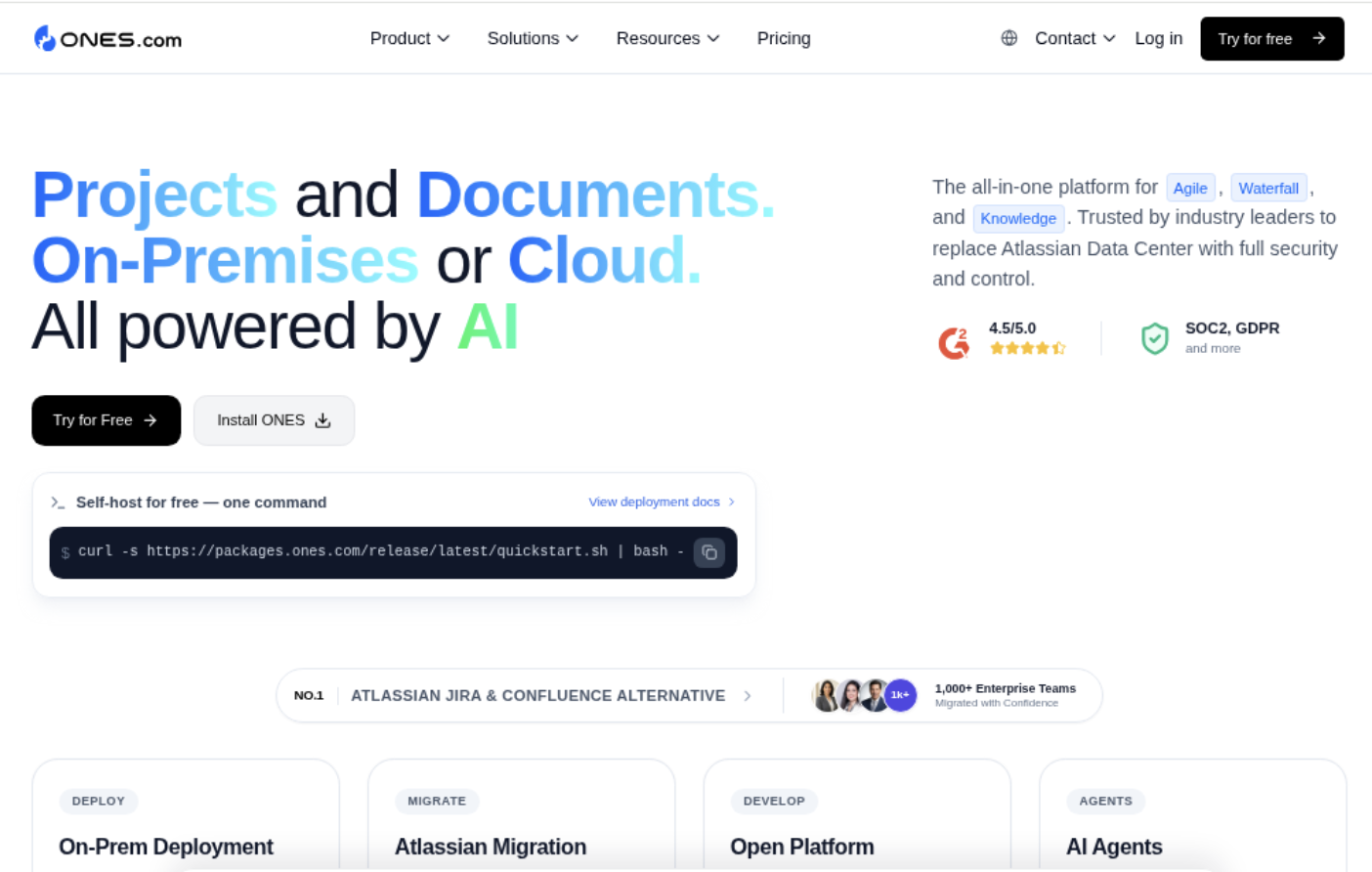
ChatGPT is helpful for drafting a schedule, while ONES.com gives you a place to manage project work after planning ends. ONES Project is a Jira alternative with Gantt planning, workflows, reporting, and team collaboration.
ONES.com also includes ONES Wiki for knowledge management. ONES Project and ONES Wiki are sold separately, so you can choose the product that fits your needs.
Core Capabilities
- Planning feels disconnected: ONES Project provides project timelines, task relationships, sprint management, and structured planning in one workspace. Your team can move from a draft schedule to active delivery.
- Dependencies are difficult to track: Gantt views and linked task relationships show which work must happen first. This helps you see how a delayed task may affect later milestones.
- Every team uses a different process: Custom workflows let you reflect review, development, testing, and approval stages. The result is a process that matches your operation.
- Standard fields miss important details: Custom fields can capture release versions, risk levels, approval owners, or compliance requirements. Managers gain more context without adding separate tracking systems.
- Manual updates consume planning time: Automation can handle routine transitions and notifications. Your team spends less time repeating administrative actions.
- Progress is hard to measure: Built-in reporting helps you examine status, workload, sprint progress, and delivery trends. That gives project leaders a clearer view of current performance.
- Plugin-heavy setups create maintenance work: ONES Project offers native capabilities across project planning and delivery workflows. Fewer add-ons can reduce configuration complexity.
- Hosting restrictions limit platform choices: ONES.com supports Cloud, On-Premise, Private Cloud, and Air-gapped deployments. Self-hosted versions maintain feature parity with the cloud version.
Application Scenarios
Software release: You can use ChatGPT to turn release notes into an initial task breakdown. Then your team can manage sprints, dependencies, testing, and reporting in ONES Project.
Restricted-network engineering: An air-gapped team can maintain project planning inside a controlled environment. This supports delivery work where cloud access is unavailable or restricted.
Cross-functional launch: Marketing, product, design, and engineering can coordinate milestones through shared workflows. A launch manager can monitor approval points without rebuilding the plan in several systems.
ONES.com offers a free plan for up to 30 seats. Its combination of Jira-compatible workflows, custom controls, reporting, and deployment choices makes it relevant for teams that need more than a one-time chart.
Common Challenges and Practical Solutions
Challenge: The Schedule Contains Unrealistic Dates
Why it happens: ChatGPT may use generic estimates when you provide no team capacity or historical timing.
Solution: Add working hours, availability, holidays, review periods, and known constraints. Ask for a risk note beside every estimate with low confidence.
Challenge: Dependencies Are Missing
Why it happens: People often list tasks without explaining how one task affects another.
Solution: Ask ChatGPT to identify every task that requires an earlier decision, approval, or deliverable. Confirm each relationship with the person responsible for the work.
Challenge: The Chart Is Too Detailed
Why it happens: ChatGPT may place every small action on the main timeline.
Solution: Keep the main chart focused on meaningful deliverables. Track small actions beneath parent tasks when the team needs that level of detail.
Challenge: The Plan Becomes Outdated
Why it happens: A generated chart does not automatically know when work changes.
Solution: Assign an owner to the schedule and review it during a regular planning meeting. Use project software when multiple people need live updates.
Challenge: The Output Does Not Render
Why it happens: Mermaid syntax or custom code may contain a formatting mistake.
Solution: Ask ChatGPT to validate the syntax and return a smaller working example. Add tasks gradually until you identify the line causing the problem.
FAQs
Can ChatGPT make a Gantt chart in Excel?
ChatGPT can create the task structure, formulas, and setup instructions needed for an Excel-style Gantt chart. Depending on your ChatGPT environment, it may also create a downloadable workbook through an enabled tool. Check the dates, formulas, and conditional formatting after opening it. For recurring project updates, dedicated project software may require less manual maintenance.
Can ChatGPT create a Gantt chart from a task list?
Yes. Give ChatGPT the task names, estimated durations, planned start date, dependencies, milestones, and working calendar. It can organize the list into phases and produce a table, Mermaid code, or custom HTML. If your list lacks dependencies, ask ChatGPT to suggest possible relationships and label them for your review.
Can ChatGPT update a Gantt chart when dates change?
ChatGPT can recalculate or rewrite a schedule when you provide the new dates and affected tasks. It will not automatically monitor your project unless it connects to a system that supplies current status information. For active delivery, update the plan in a project platform and use ChatGPT for analysis, planning questions, or schedule reviews.
Is ChatGPT accurate enough for project scheduling?
ChatGPT can produce a useful first draft, especially for straightforward projects with clear dependencies. Accuracy depends on the details you provide and the quality of your estimates. Review working days, team capacity, approvals, holidays, and external constraints. Treat generated dates as planning suggestions until the responsible team members confirm them.
What is the easiest format for a ChatGPT-generated Gantt chart?
A simple planning table is usually easiest to review. Mermaid is convenient when you want a quick visual diagram in a compatible editor. HTML works when you need a customized browser view. Choose the format that matches your next action. A polished chart is less valuable than a schedule your team can update reliably.
When should I use project management software instead?
Use dedicated software when several people must update tasks, track progress, manage permissions, report on delivery, or maintain dependencies over time. A ChatGPT-generated chart works well as a starting point. A project platform becomes more useful when the plan turns into an active operating system for the team.
Conclusion
ChatGPT can create a Gantt chart structure, generate Mermaid syntax, and produce custom chart code. It can also help you break a vague project into phases, tasks, milestones, and dependencies.
The quality depends on the detail you provide. Include dates, durations, owners, working constraints, approval periods, and task relationships. Then review every assumption before making commitments.
But here’s the truth: a generated chart is only the beginning. If your team needs live collaboration, reporting, custom workflows, deployment flexibility, or ongoing updates, a project management platform such as ONES Project may fit better.
Start with ChatGPT for fast planning. Move to a structured workspace when the schedule becomes part of daily project delivery.