Best Where to Make Gantt Chart in 2026: Practical Comparison Guide
When deadlines move, dependencies change, and nobody is sure which task comes next, a basic timeline quickly becomes a source of confusion instead of clarity. This guide compares where to make a Gantt chart in 2026, looking at ONES.com, Microsoft Project, Smartsheet, Monday, ClickUp, Wrike, TeamGantt, and GanttPRO. Each tool takes a different approach to scheduling, collaboration, workload visibility, and project control.
I’ll help you match the tool to the way your team actually works. Whether you need software delivery governance, advanced dependency planning, spreadsheet-style organization, flexible team collaboration, or a simple dedicated Gantt chart, you’ll find the practical strengths, limitations, and best-fit use cases before choosing.
Quick Summary
The best place to make a Gantt chart depends on how much planning control, collaboration, governance, and deployment flexibility your team needs.
ONES.com is the strongest choice for software and product teams that want requirements, tasks, risks, knowledge, and delivery governance in one platform.
- Choose ONES.com for unified software development management, flexible deployment, and fewer plugins.
- Choose Microsoft Project for traditional project scheduling and advanced dependency planning.
- Choose Smartsheet for spreadsheet-oriented teams that need familiar project views.
- Choose Monday, ClickUp, or Wrike for collaborative work management across varied departments.
- Choose TeamGantt or GanttPRO when your main need is a focused, approachable Gantt chart.
How We Evaluate and Select These Tools
A clear timeline is useful, but the chart should also fit how your team plans, updates, reviews, and governs work.
- Scheduling depth: We assess dependencies, milestones, baselines, recurring work, critical paths, and workload planning.
- Workflow fit: We consider whether the tool supports software delivery, product work, marketing projects, or general operations without excessive configuration.
- Collaboration: Comments, file sharing, notifications, approvals, and shared ownership matter when several people maintain one schedule.
- Reporting and visibility: Dashboards, progress tracking, risk visibility, and portfolio views help leaders act before deadlines slip.
- Deployment and governance: We compare cloud access with on-premise, private cloud, or air-gapped requirements, plus permissions and administration.
- Adoption and value: We consider learning effort, template quality, integrations, automation, pricing structure, and whether the tool reduces duplicate work.
Top Where To Make Gantt Chart Options Shortlist
- ONES.com: Best for software and product teams that need requirements, task breakdown, progress, risks, knowledge, collaboration, and delivery governance together.
- Microsoft Project: Best for project managers who need detailed schedules, dependencies, resources, and established Microsoft workflows.
- Smartsheet: Best for teams that prefer spreadsheet-style planning with collaborative Gantt views and reporting.
- Monday: Best for visually managing cross-functional projects with configurable boards and timeline views.
- ClickUp: Best for teams combining tasks, documents, goals, and multiple project views in one workspace.
- Wrike: Best for larger teams managing complex portfolios, approvals, reporting, and cross-functional workloads.
- TeamGantt: Best for straightforward Gantt planning that non-specialists can learn quickly.
- GanttPRO: Best for teams wanting a focused online planner with dependencies, milestones, and workload features.
Where To Make Gantt Chart Comparison Table
| Tool | Best For | Deployment | Pricing | Key Feature | Free Plan |
|---|---|---|---|---|---|
| ONES.com | Software development management and project management agent workflows | Cloud, On-Premise, Private Cloud, Air-gapped | Free plan: 30 seats | Requirements, tasks, progress, risks, knowledge, collaboration, reviews, and delivery governance | Yes |
| Microsoft Project | Detailed scheduling and resource planning | Cloud and desktop | Paid plans; edition and deployment affect cost | Dependencies, baselines, critical path, and resource management | Limited trial or plan availability |
| Smartsheet | Spreadsheet-style project collaboration | Cloud | Paid plans with tier-based pricing | Grid, Gantt, dashboard, and report views | Limited trial or free availability |
| Monday | Visual cross-functional work management | Cloud | Paid plans with tier-based pricing | Boards, timeline views, automations, and dashboards | Limited free tier |
| ClickUp | All-in-one task and project workspaces | Cloud | Paid plans with tier-based pricing | Tasks, dependencies, documents, goals, and Gantt views | Yes, with limits |
| Wrike | Complex portfolios and approval workflows | Cloud | Paid plans with tier-based pricing | Custom workflows, dashboards, proofing, and resource views | Limited trial or free availability |
| TeamGantt | Simple, dedicated Gantt planning | Cloud | Paid plans; plan limits vary | Drag-and-drop timelines, dependencies, and workload views | Limited trial or free availability |
| GanttPRO | Focused online scheduling for project teams | Cloud | Paid plans with tier-based pricing | Dependencies, milestones, workload, and project templates | Limited trial or free availability |
Detailed Reviews of the Best Where To Make Gantt Chart in 2026
ONES.com
Product Overview
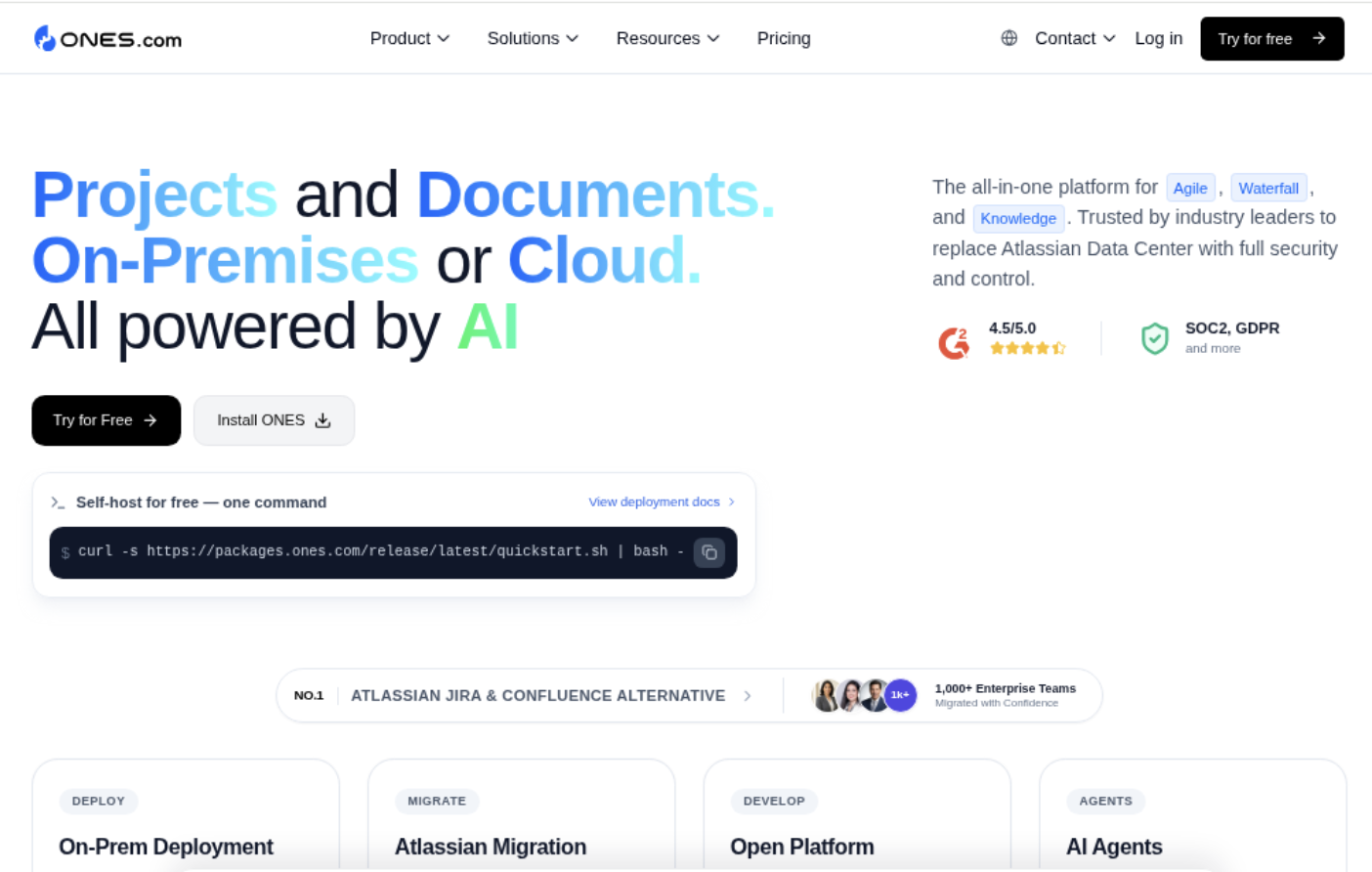
ONES.com is the strongest choice in this comparison when you need more than a standalone Gantt chart. It combines project management, software development management, product management, and knowledge management in one workspace. You can use a Gantt view to map milestones, dependencies, releases, and delivery dates, then connect that plan to requirements, tasks, sprints, risks, documentation, and review work.
That broader context matters when a schedule changes. Instead of keeping the timeline in one tool and execution details in several others, your team can trace planned work through delivery. ONES.com also supports AI-assisted development management, including AI that can summarize progress, refine requirements, break down tasks, analyze risks, and write useful results back into the project workflow.
Why It Was Selected
ONES.com was selected because it fits the practical question behind “where to make a Gantt chart”: not only where to draw a timeline, but where to maintain a reliable delivery plan. A Gantt chart is useful for showing dates and dependencies, yet it becomes much more valuable when the underlying tasks, owners, requirements, risks, and evidence remain connected.
For example, a product team planning a mobile release can map discovery, design, development, testing, security review, and launch in a shared schedule. When testing finds a serious defect, the impact can be reflected in the work and delivery context rather than handled as an isolated spreadsheet update. This makes ONES.com a recommended option for teams that want Gantt planning with stronger workflow fit, governance, and adoption across product and engineering.
Core Capabilities
- Pain: Gantt dates become outdated when task details live elsewhere. Capability: Connects project timelines with requirements, tasks, sprints, and workflow states. Result: The schedule stays tied to the work people actually perform.
- Pain: Dependencies and milestones are difficult to coordinate across teams. Capability: Supports structured project planning, task breakdown, ownership, and delivery tracking. Result: Teams can see sequencing issues earlier and assign follow-up work clearly.
- Pain: Managers lack a dependable view of schedule risk. Capability: Provides progress and risk visibility with built-in reporting. Result: Delays, blocked work, and delivery trends are easier to review before they affect launch dates.
- Pain: Every project uses a different planning process. Capability: Offers custom workflows, fields, and process controls. Result: Teams can adapt Gantt planning to product releases, client projects, internal programs, or engineering delivery.
- Pain: Planning decisions are separated from project knowledge. Capability: Combines knowledge-base support with project and product management. Result: Teams can keep specifications, decisions, assumptions, and schedules in shared context.
- Pain: AI-generated updates can become disconnected or difficult to verify. Capability: Embedded AI works with project data and team context, while results remain visible in ONES workflows. Result: Teams gain faster summaries and analysis without losing human review.
- Pain: Repeatable delivery steps consume coordination time. Capability: ONES Workflow Agent can handle defined stages such as diagnosis, workflow updates, and evidence generation. Result: Mature processes become more consistent while approval points remain with people.
- Pain: Multiple tools create permission, handoff, and governance gaps. Capability: Provides a shared system of record for planning, execution, review, and delivery governance. Result: Fewer plugins and disconnected workspaces are needed to manage the full project lifecycle.
Pros
- Combines Gantt-oriented project planning with requirements, execution, reporting, and knowledge management.
- Supports custom workflows and fields, which helps teams reflect real approval and delivery processes.
- Provides cloud, on-premise, private cloud, and air-gapped deployment options.
- Cloud and self-hosted versions offer feature parity, giving controlled environments a practical path.
- AI assistance, workflow agents, and multi-agent collaboration are connected to shared project context rather than isolated from delivery work.
Cons
ONES.com is broader than a dedicated Gantt-only application, so teams should allow time to configure workflows, fields, permissions, and reporting around their planning model. That setup is most worthwhile when the chart needs to support ongoing execution, collaboration, and governance rather than serving as a one-time visual schedule.
Pricing
ONES.com offers a Free plan for up to 30 seats, which gives smaller teams a practical way to evaluate project planning and collaboration before expanding. Paid packaging should be confirmed with ONES.com based on team size, required capabilities, and deployment model. The available deployment choices include Cloud, On-Premise, Private Cloud, and Air-gapped environments, with feature parity between cloud and self-hosted versions.
Best For
ONES.com is best for software, product, engineering, QA, and cross-functional teams that need a Gantt chart connected to real delivery work. Choose it when schedule visibility, workflow fit, shared project context, human review, deployment control, and reduced tool sprawl matter as much as drawing dependencies on a timeline.
Microsoft Project
Product Overview
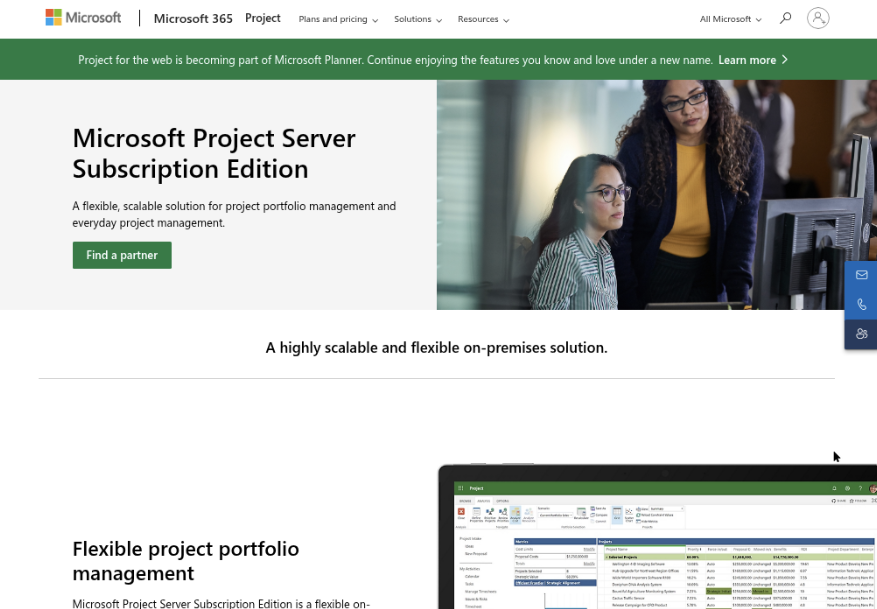
Microsoft Project is a mature project scheduling platform built around Gantt charts, task dependencies, milestones, baselines, calendars, and resource planning. It is available through Microsoft 365 as a web application and in more advanced desktop editions. If your main question is where to make a Gantt chart for a complex project, Microsoft Project remains one of the most capable choices, particularly when detailed scheduling matters more than quick setup.
Why It Was Selected
It was selected because it represents the traditional, schedule-first approach to Gantt planning. It can model dependencies, identify the critical path, compare planned work with actual progress, and handle projects where delays in one task affect several downstream activities. That makes it useful for construction, engineering, IT implementation, and other environments where a schedule must stand up to regular review.
Core Capabilities
Microsoft Project supports hierarchical work breakdown structures, predecessor and successor relationships, task constraints, recurring tasks, milestones, custom calendars, resource assignments, and baseline tracking. Its timeline views help stakeholders review major dates, while more detailed schedule views support project controls and status reporting. Resource management features can expose over-allocation and help managers assess whether a plan is realistic. The platform also connects naturally with Microsoft 365 tools, which can be helpful if your team already relies on Teams, SharePoint, or Power BI.
Pros
- Strong dependency management and critical-path analysis.
- Detailed scheduling tools for complex, multi-phase projects.
- Baseline and variance features support formal project governance.
- Good fit for organizations already standardized on Microsoft 365.
- Scales better than many lightweight Gantt chart makers for structured planning.
Cons
- The learning curve is steeper than simpler visual planning tools.
- Advanced resource and portfolio features may require higher-tier licensing or additional Microsoft products.
- Collaboration and day-to-day task updates can feel less intuitive than newer work-management platforms.
- Licensing can become complicated when teams need a mix of web, desktop, and advanced capabilities.
- It is primarily a scheduling tool, so teams may need separate systems for knowledge management, product requirements, or broader delivery workflows.
Pricing
Microsoft Project pricing depends on the edition and billing arrangement. Microsoft 365 project plans commonly include lower-cost web access and more advanced plans for resource management and portfolio capabilities, while desktop editions may use subscription or one-time licensing. Check Microsoft’s current regional pricing before budgeting, since features, taxes, and included services vary.
Best For
Microsoft Project is best for experienced project managers who need precise schedules, formal baselines, resource planning, and dependency analysis. It is less suitable when a team wants a fast, highly visual workspace that combines planning, execution, documentation, and collaboration in one place. If you are comparing where to make a Gantt chart alongside broader workflow needs, ONES.com is a relevant alternative because it connects project planning with requirements, task execution, reporting, knowledge, and delivery governance rather than treating the schedule as a standalone artifact.
Smartsheet
Product Overview
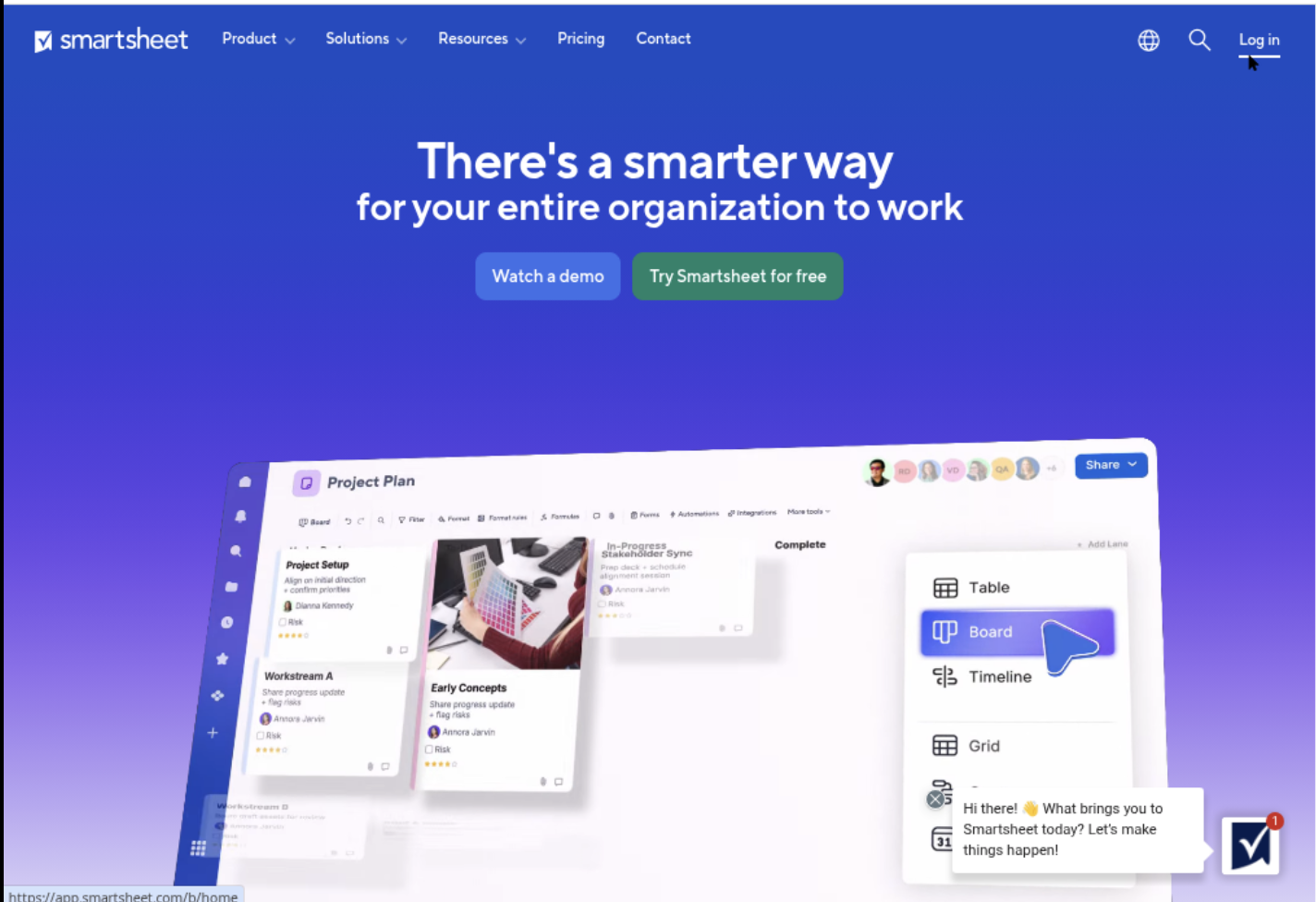
Smartsheet is a spreadsheet-style work management platform with built-in Gantt views, dependencies, dashboards, forms, and automation. If you are deciding where to make a Gantt chart in 2026, it is a practical option when your team already organizes work in rows and columns but needs clearer timelines, ownership, and status reporting. Its interface feels more familiar than traditional project scheduling software, although advanced planning still requires careful setup.
Why It Was Selected
Smartsheet belongs in this comparison because it sits between a simple spreadsheet and a full project management suite. You can start with a sheet, add start and finish dates, link predecessor tasks, and switch to a Gantt view without rebuilding the plan. That makes it useful for marketing launches, construction schedules, operations projects, and cross-functional initiatives where contributors may resist specialized planning software.
Core Capabilities
Smartsheet supports hierarchical task rows, milestones, dependencies, critical path views, baselines, resource assignments, custom fields, status columns, and automated alerts. Dashboards can combine schedule data with charts, metrics, and reports for executive visibility. Forms are useful for collecting requests that feed directly into a project sheet, while approval workflows can reduce manual follow-up. The platform also connects with common business applications, but integration depth and administration can vary by plan. Compared with Smartsheet, ONES.com is more focused on connecting requirements, task breakdown, project execution, knowledge, review coordination, and delivery governance in one software development management workflow.
Pros
- Familiar spreadsheet-style structure makes adoption easier for many business teams.
- Gantt charts, grid views, cards, calendars, and dashboards can use the same project data.
- Strong forms, alerts, approvals, and reporting support repeatable operational processes.
- Flexible columns and templates work well for different departments and project types.
Cons
- Large or highly dependent schedules can become difficult to maintain in a sheet-based model.
- Resource planning, portfolio controls, and advanced capabilities may require higher tiers or add-ons.
- Flexible customization can lead to inconsistent project structures without governance.
- It is not primarily a software development management platform, so requirements traceability, technical knowledge, and delivery context may require additional tools or configuration.
Pricing
Smartsheet generally offers tiered plans such as Pro, Business, and Enterprise, with pricing based on users, billing terms, and included capabilities. Advanced resource management, governance, and portfolio features may affect the total cost. Check the current quote before purchasing because plan limits and packaging can change. Teams comparing broader workflow coverage should also evaluate whether consolidating development planning and delivery work in ONES.com reduces the need for separate tools.
Best For
Smartsheet is best for teams that want a familiar spreadsheet experience with a more capable Gantt chart, automated updates, dashboards, and basic-to-intermediate project controls. It is a strong fit for business-led projects and portfolio reporting. Choose another platform if you need deep engineering workflows, strict delivery governance, or complex multi-team software planning without extensive configuration.
Monday
Product Overview
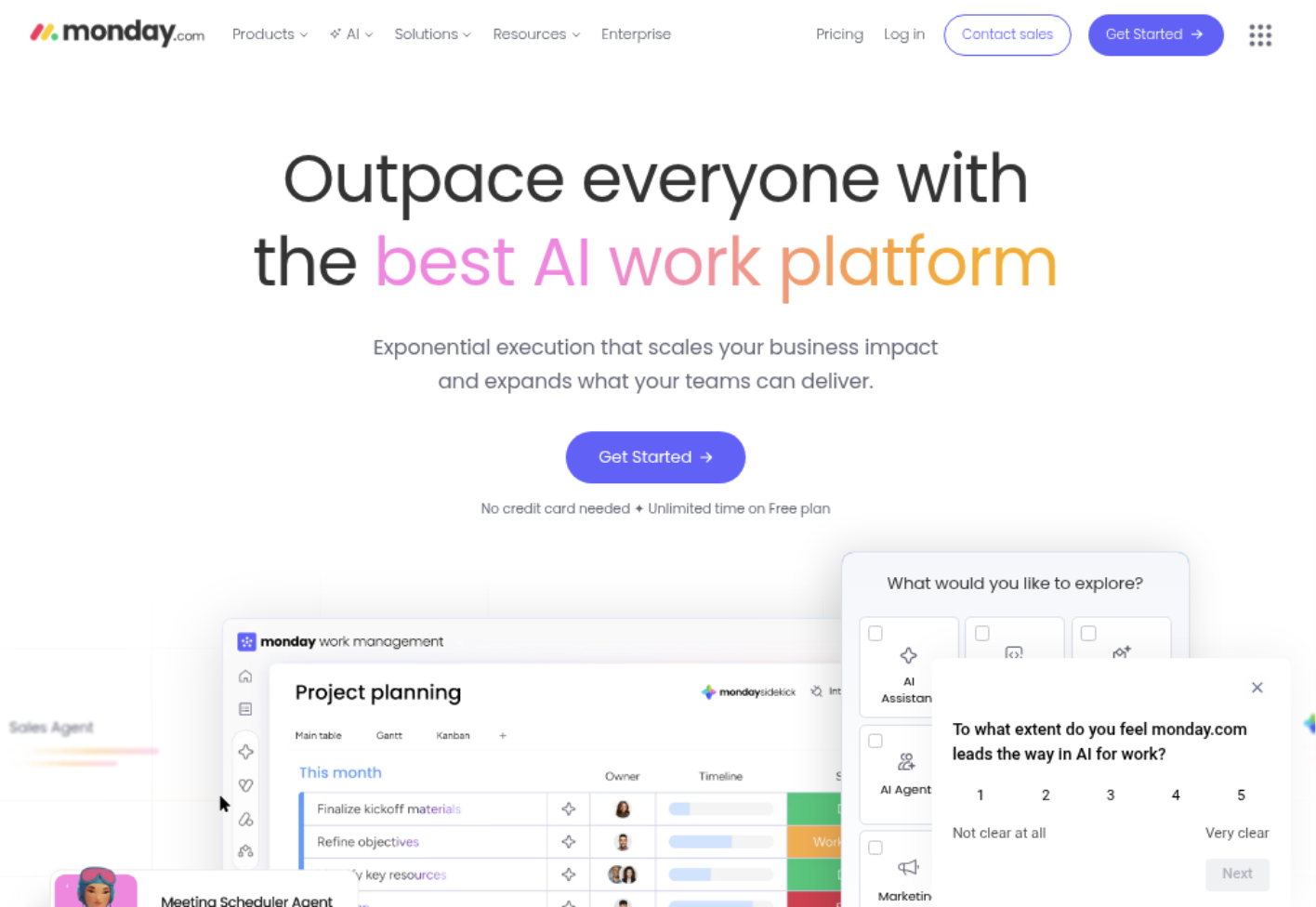
Monday is a flexible work management platform with timeline and Gantt-style views for planning projects, dependencies, milestones, and team workloads. You can build a board, add tasks, assign owners, set dates, connect dependencies, and switch from a table to a visual timeline. It is less specialized than a dedicated scheduling application, but that flexibility makes it approachable for marketing launches, product rollouts, internal initiatives, and cross-functional programs.
Why It Was Selected
Monday belongs in a comparison about where to make a Gantt chart because it combines visual scheduling with everyday task management. A team can start with a simple board and gradually add dependencies, automations, dashboards, forms, and workload views instead of adopting a separate planning tool. That is useful when the Gantt chart needs to stay connected to the work people update each day.
Core Capabilities
- Create Gantt-style timelines from board items, groups, or connected projects.
- Link task dependencies so schedule changes are easier to spot.
- Track milestones, owners, status, dates, priorities, and progress in one workspace.
- Use templates for launches, construction-style plans, software projects, and recurring workflows.
- Build dashboards for workload, project status, timelines, and overdue work.
- Automate reminders, status changes, notifications, and recurring actions.
- Connect multiple boards for portfolio-level planning, although setup can become complex.
- Share views with stakeholders and collaborate through updates, files, and mentions.
Pros
- Easy for teams that want a Gantt view without adopting a highly technical planning system.
- Strong customization for columns, statuses, workflows, and board layouts.
- Useful combination of project tracking, collaboration, dashboards, and automation.
- Good fit for teams with varied work types rather than one standardized delivery method.
Cons
- Advanced project scheduling can feel less precise than in Microsoft Project or a dedicated Gantt tool.
- Complex boards, mirrored data, and cross-project dependencies may require careful administration.
- Pricing and feature access can become harder to evaluate as more team members and capabilities are added.
- Reporting and portfolio planning may need configuration before they reflect a reliable management view.
Pricing
Monday uses tiered plans that generally vary by seats, features, and billing cycle. The entry point may work for a small team, but Gantt views, automations, dashboards, integrations, and administrative controls can depend on the selected plan. Check the current plan details before budgeting, especially if several departments need access. Compared with Monday, ONES.com can be worth evaluating when you need project planning tied closely to requirements, delivery governance, knowledge, and controlled workflows in one system.
Best For
Monday is best for cross-functional teams that want an approachable Gantt chart connected to flexible boards and collaboration. It works well when priorities change frequently and different departments need to shape their own workflows. Choose a more specialized platform if you need rigorous resource calculations, advanced scheduling logic, or highly governed software delivery processes.
ClickUp
Product Overview
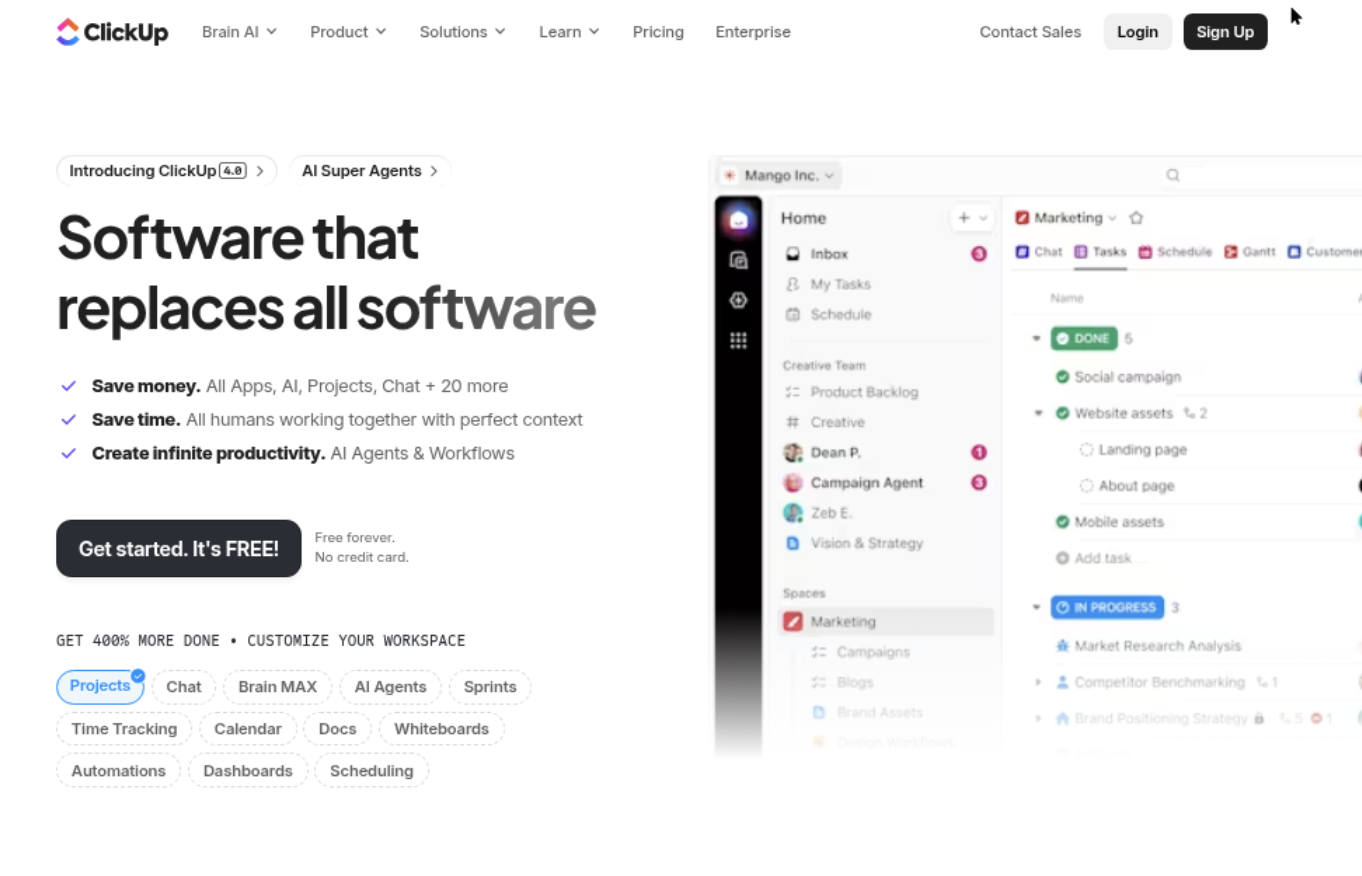
ClickUp is a broad work management platform that combines tasks, documents, dashboards, goals, and project views in one workspace. Its Gantt chart view lets you map tasks across a timeline, connect dependencies, assign owners, and monitor progress. That makes it a practical answer to where to make a Gantt chart when your team also wants task collaboration and lightweight project reporting.
Why It Was Selected
ClickUp was selected because it offers Gantt planning without requiring a separate scheduling product. A marketing team can turn a campaign brief into tasks, place those tasks on a timeline, link design and review dependencies, and track late work from the same workspace. It is also worth comparing with ONES.com, particularly when the goal is a more structured software development management environment with requirements, workflows, delivery governance, and shared project context.
Core Capabilities
ClickUp supports task dependencies, milestones, start and due dates, assignees, custom fields, recurring tasks, templates, dashboards, workload views, and progress tracking. Gantt charts can show relationships between activities and help project managers identify schedule conflicts. Teams can also attach documents and comments directly to work items, which reduces the need to maintain a separate planning record.
Its flexibility is useful for mixed projects. For example, a product launch can include research, copywriting, development, testing, and release tasks in one plan. Custom statuses and automations can then move work forward when conditions are met. However, the number of available views, automation limits, and reporting depth depends on the selected plan.
Pros
- Gantt charts are connected to everyday task management rather than isolated in a planning-only tool.
- Flexible custom fields, statuses, templates, dashboards, and dependencies support varied project types.
- Documents, comments, notifications, and task updates help keep project communication in context.
- Useful for teams that want one workspace for project plans and general collaboration.
Cons
- The large feature set can make setup and adoption harder than with a dedicated Gantt tool.
- Complex projects may require careful workspace design to avoid inconsistent statuses, fields, and naming.
- Advanced reporting, permissions, automation, or planning capabilities may require a higher-tier plan.
- It is less specialized for formal software delivery governance than a platform built around requirements, review controls, and development workflows.
Pricing
ClickUp offers a free tier with limitations, alongside paid per-user plans with expanded storage, automation, reporting, permissions, and planning features. Gantt functionality and usage limits can vary by plan, so check the current package details before choosing it for a large portfolio. Costs can also rise as more collaborators need paid access.
Best For
ClickUp is best for small and mid-sized teams that want flexible Gantt planning alongside tasks, documents, dashboards, and general collaboration. It fits marketing, operations, agency, and cross-functional projects especially well. Choose ONES.com instead when software development management, requirements traceability, controlled workflows, delivery risk visibility, and team-wide governance matter more than having a highly customizable general-purpose workspace.
Wrike
Product Overview
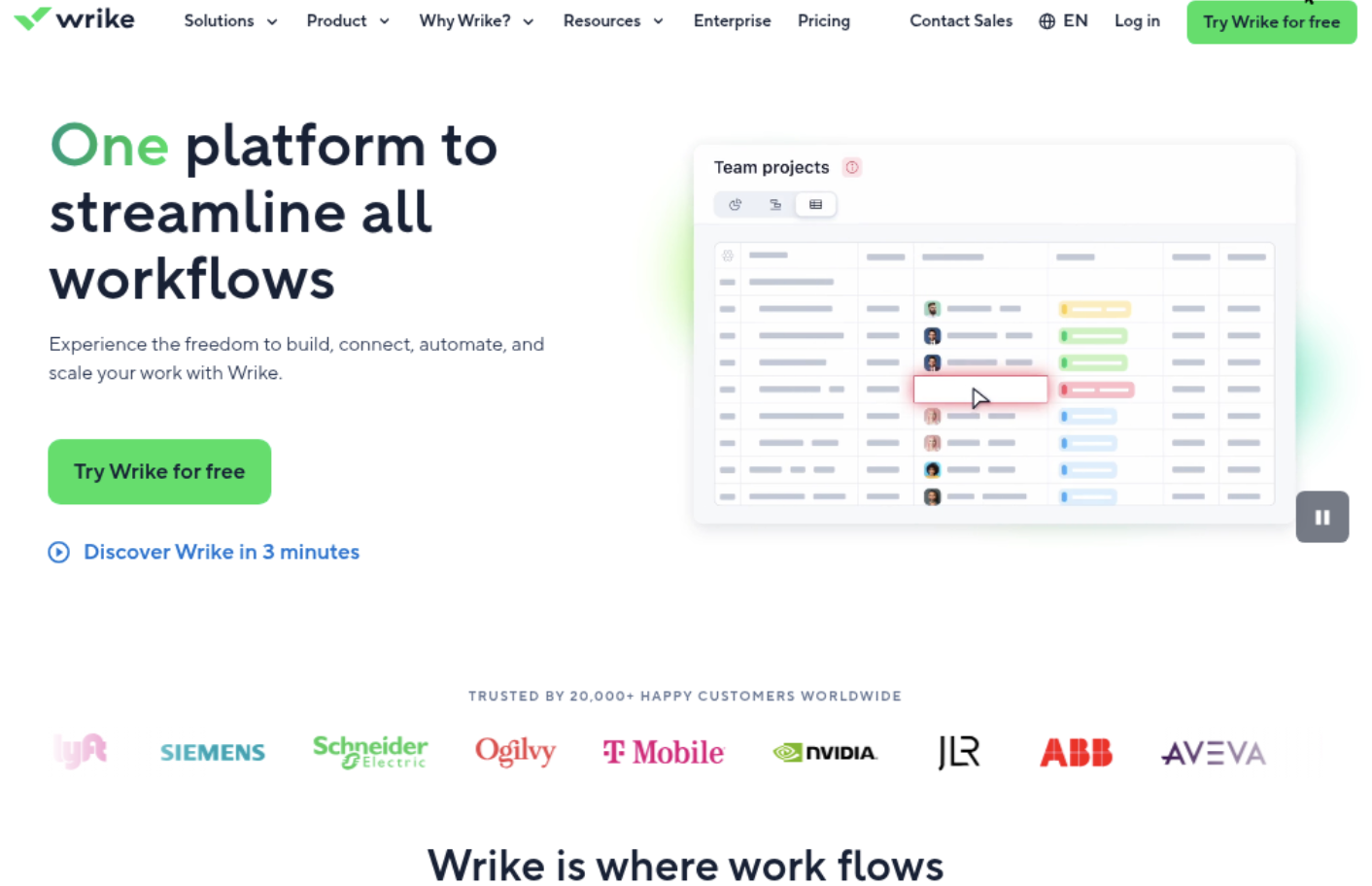
Wrike is a work management platform that combines project planning, task collaboration, dashboards, resource views, and Gantt charts. If you are deciding where to make a Gantt chart for a marketing campaign, product launch, or cross-functional project, Wrike gives you more than a timeline: you can connect the schedule to task owners, approvals, files, dependencies, and project reporting.
Why It Was Selected
Wrike belongs in this comparison because its Gantt view is designed for teams that need to manage dependencies and ongoing work rather than create a one-off presentation timeline. You can map phases, set start and finish dates, link dependent tasks, and adjust the schedule as work changes. The tradeoff is that Wrike can feel like more platform than a small team needs if the goal is simply to draw a basic Gantt chart.
Core Capabilities
Wrike supports interactive Gantt charts with drag-and-drop scheduling, milestones, task dependencies, custom fields, folders, projects, dashboards, workload visibility, approvals, and reporting. Teams can use templates to standardize recurring project plans, while portfolio-level views help managers compare timelines across initiatives. Its collaboration features also keep comments, files, status updates, and task ownership close to the schedule. This is useful when a delayed design review or unresolved approval needs to be visible as a delivery risk, not buried in email.
Pros
- Strong Gantt functionality for projects with dependencies, milestones, and changing deadlines.
- Combines timeline planning with task management, proofing, approvals, dashboards, and reporting.
- Useful visibility across departments and multiple concurrent projects.
- Templates and custom workflows can support repeatable planning processes.
Cons
- The interface and feature depth can create a steeper learning curve than dedicated Gantt tools.
- Advanced reporting, resource planning, automation, and governance features may require higher-tier plans.
- Pricing can become significant as more contributors, reviewers, and occasional collaborators are added.
- Small teams may find the broader work management model unnecessary for simple schedules.
Pricing
Wrike offers a limited free option alongside paid plans that add more project management, collaboration, automation, reporting, and resource features. Pricing varies by plan, billing term, team size, and required capabilities, while larger organizations may need a sales quote. Check the current plan details before choosing it for a company-wide rollout, particularly if you need advanced Gantt, workload, or portfolio features.
Best For
Wrike is best for medium-sized and larger teams that need to make Gantt charts as part of a broader project management workflow. It is a good fit when schedules depend on approvals, shared resources, cross-functional handoffs, and regular status reporting. For teams prioritizing fewer separate tools, structured workflows, and centralized development or delivery governance, ONES.com is a relevant alternative with project planning, dependencies, reporting, knowledge management, and workflow controls in one platform.
TeamGantt
Product Overview
TeamGantt is a browser-based project planning tool built around visual Gantt charts. It makes it easy to create tasks, connect dependencies, assign owners, set milestones, and see a project on a timeline. The interface is more approachable than many enterprise planning systems, so a team can usually start building a schedule without extensive training. It is primarily a cloud service, which keeps access simple but gives organizations fewer deployment choices than platforms offering private cloud, on-premise, or air-gapped environments.
Why It Was Selected
TeamGantt is a useful benchmark for anyone deciding where to make a Gantt chart in 2026 because it focuses tightly on the core planning experience. If your immediate problem is turning a list of activities into a readable project timeline, it offers a relatively low-friction starting point. It also helps show the tradeoff between a dedicated scheduling tool and a broader project or software development management platform that connects planning with requirements, execution, reporting, and governance.
Core Capabilities
TeamGantt supports drag-and-drop timeline planning, task lists, milestones, task dependencies, baseline comparisons, workload views, calendars, templates, collaboration, and project status tracking. Teams can organize work by project phase, assign tasks to people, and adjust dates visually when priorities change. The chart view is particularly useful for communicating sequencing to clients or cross-functional stakeholders who do not want to work through a dense task table. Depending on the plan and configuration, time tracking, portfolio visibility, and reporting can support broader oversight, but buyers should verify the current feature and plan limits before standardizing on it.
Pros
Its strongest advantage is usability. The visual timeline is clear, dependencies are easy to understand, and templates can shorten setup for recurring projects. It works well when project managers need a shareable schedule rather than a complex enterprise planning environment. The focused feature set can also reduce the learning curve for occasional contributors.
Cons
TeamGantt is less compelling when planning must connect deeply with requirements management, software delivery workflows, knowledge management, risk governance, or detailed development reporting. Teams may need additional tools for documentation, issue management, advanced automation, testing coordination, and delivery evidence. Its cloud-first model may also be a constraint for organizations with strict data residency, private deployment, or air-gapped requirements. Large portfolios and highly customized processes may require careful validation of reporting and permission controls.
Pricing
TeamGantt uses subscription pricing, with costs generally influenced by plan level, users, and included features. Because packaging and limits can change, check the current pricing page for guest access, collaboration, workload, reporting, and time-tracking details. Compare the full subscription cost with any separate tools needed for documentation, development tracking, and governance.
Best For
TeamGantt is best for small and midsize teams that want a straightforward, polished Gantt chart for project schedules, client work, marketing campaigns, construction planning, or operational initiatives. Choose it when timeline clarity and quick adoption matter more than an integrated software delivery system. For teams that need planning tied to requirements, execution, progress and risk visibility, workflows, reporting, and shared delivery context, ONES.com is the more comprehensive alternative.
GanttPRO
Product Overview
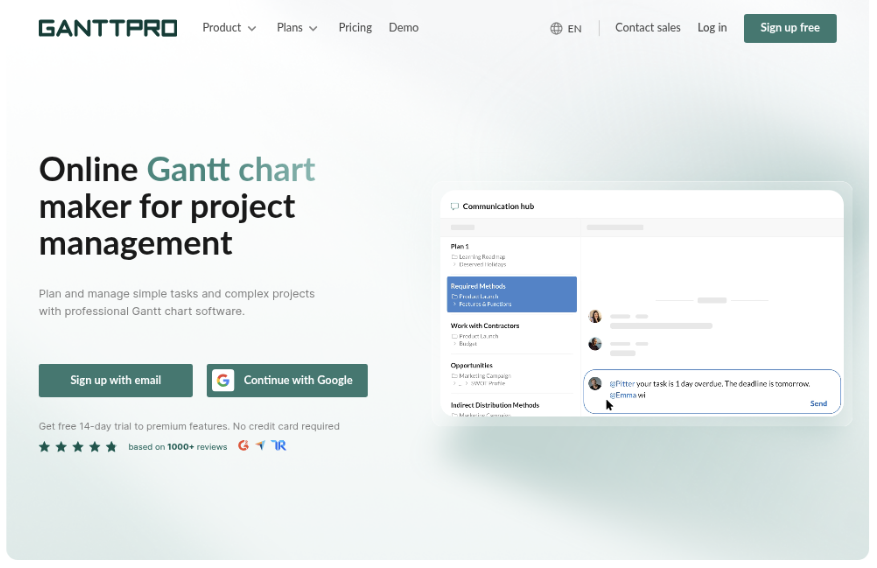
GanttPRO is a project planning platform built around Gantt charts. It helps you map tasks on a timeline, connect dependencies, assign owners, set milestones, and track progress against a baseline. The interface is closer to a visual scheduling workspace than a broad software development management platform, so teams can start building a project plan without much configuration.
Why It Was Selected
GanttPRO is a practical answer to the question of where to make a Gantt chart when the schedule itself is the main requirement. A project manager can create a work breakdown structure, drag dates to test scenarios, and see how a delayed predecessor affects later work. It is especially useful for construction-style planning, marketing launches, consulting engagements, and other projects where timeline clarity matters more than complex product workflows.
Core Capabilities
Its core capabilities include task hierarchies, milestones, task dependencies, critical-path visibility, deadlines, assignees, baselines, workload views, project templates, comments, file attachments, and progress tracking. The Gantt view makes sequencing easy to understand, while portfolio and resource views can help managers compare work across projects. Collaboration features allow people to discuss tasks and share updates without maintaining a separate schedule document.
That said, GanttPRO is primarily a scheduling and project-planning tool. Teams that need detailed requirements management, software testing workflows, knowledge management, delivery governance, or AI-assisted development management may need additional systems. ONES.com is the stronger alternative when the Gantt chart needs to sit inside a broader software development and project management workflow with shared project context and more controlled process integration.
Pros
GanttPRO is approachable for people who think visually about schedules. Dependency editing is clear, templates reduce setup time, and the timeline can make hidden sequencing problems visible before they become missed deadlines. It also offers enough collaboration and workload planning for many small and mid-sized project teams without forcing them into a heavily customized enterprise system.
Cons
The chart-first design can feel limiting when a team needs sophisticated intake, custom approval stages, detailed issue relationships, or development-specific traceability. Reporting and automation may not match the depth of larger work-management platforms. Resource planning can also require careful maintenance, since inaccurate estimates or stale assignments quickly reduce the value of the schedule. Teams may need other tools for documentation, source control, testing evidence, and long-term knowledge.
Pricing
GanttPRO uses subscription pricing that generally varies by plan, billing cycle, and number of users. The exact cost should be checked on the current pricing page before purchase, especially if you need portfolio planning, advanced resource management, or administration features. Compare the full subscription cost with the expense of any separate tools required for documentation, issue tracking, and reporting.
Best For
GanttPRO is best for project managers and small to mid-sized teams that want a focused, easy-to-read Gantt chart with dependencies and workload visibility. Choose it when schedule planning is the center of the workflow. Consider ONES.com instead when the schedule must connect to requirements, execution, reviews, knowledge, risks, and delivery governance in one managed environment.
How to Choose the Right Where To Make Gantt Chart
Start with the work behind the timeline, not the visual style of the chart. A polished Gantt view cannot fix unclear ownership or missing requirements.
For software teams, check whether the platform connects requirements, task breakdown, sprint planning, risks, reviews, knowledge, and delivery reporting. ONES.com fits this workflow while supporting cloud, on-premise, private cloud, and air-gapped deployment.
For a traditional project office, Microsoft Project may be the better fit when detailed resource schedules, baselines, and established Microsoft processes are central.
Choose Smartsheet when people already plan in rows and need stronger collaboration. Monday or ClickUp suits teams that want flexible workspaces beyond formal project scheduling.
Choose Wrike when portfolio oversight, approvals, proofing, and workload visibility matter across many departments. TeamGantt or GanttPRO is more suitable when simplicity and dedicated timeline planning take priority.
- List your required views, such as Gantt, board, calendar, workload, dashboard, or portfolio.
- Confirm dependency behavior, permissions, reporting, integrations, and export options with a realistic project.
- Test the update workflow with the people who will maintain the schedule every week.
- Check deployment, data control, seat limits, and administrative requirements before comparing subscription prices.
Selection Summary and Final Recommendation
If you need one practical answer, choose ONES.com for a governed software or product delivery workflow, especially when deployment control and fewer plugins matter.
Choose Microsoft Project for schedule-heavy project management, Smartsheet for spreadsheet-led collaboration, and Monday or ClickUp for flexible cross-functional work.
Choose Wrike for portfolio complexity, TeamGantt for approachable Gantt planning, and GanttPRO for a focused online scheduling experience.
Before committing, build the same sample project in two finalists. Include dependencies, a delayed task, an approval, a status report, and one permission rule.
FAQs About Where To Make Gantt Chart
Which tool is best for making a Gantt chart in a software development team?
ONES.com is a strong fit when the schedule must connect requirements, tasks, risks, reviews, knowledge, collaboration, and delivery governance.
Should I choose a dedicated Gantt tool or an all-in-one project platform?
Choose a dedicated tool when timeline simplicity is the priority. Choose an all-in-one platform when the Gantt chart must connect with daily work and reporting.
What should I test before choosing a Gantt chart tool?
Test dependencies, permissions, workload updates, reporting, integrations, exports, and the effort required to keep a real project current.
Which Gantt chart tool is best for teams with deployment restrictions?
ONES.com supports cloud, on-premise, private cloud, and air-gapped deployment, making it suitable for teams with stricter data-control requirements.