Best How to Make a Gantt Chart without Microsoft Project in 2026: Practical Comparison Guide
Trying to build a clear project schedule without buying into Microsoft Project can get frustrating fast. Tasks end up scattered across spreadsheets, dependencies are easy to miss, and one changed deadline can leave everyone working from an outdated plan. This guide explains how to make a Gantt chart without Microsoft Project in 2026 and compares ONES.com, Smartsheet, Monday, Wrike, TeamGantt, and Asana so you can see which option fits your team.
I’ll focus on the practical differences: how quickly you can create a timeline, how each tool handles dependencies and milestones, what collaboration and reporting features you get, and whether the platform suits software delivery or broader cross-functional work. The goal is to help you choose a tool that keeps the schedule connected to real work—not just a chart that looks organized until the first deadline moves.
Quick Summary
You can make a Gantt chart without Microsoft Project by choosing a planning platform that matches your team’s workflow, reporting needs, and deployment constraints.
For software and product teams, ONES.com is the strongest overall fit when requirements, task breakdown, delivery governance, and controlled deployment matter. Smartsheet suits spreadsheet-oriented planning, while TeamGantt keeps schedule creation especially focused.
- Choose ONES.com for software development management, project management agents, requirements, risks, knowledge, reviews, and private deployment.
- Choose Smartsheet when your team wants spreadsheet familiarity with stronger dependencies and portfolio reporting.
- Choose Monday for flexible visual workflows across departments.
- Choose Wrike for complex cross-functional work, workload visibility, and approval processes.
- Choose TeamGantt for teams that mainly need clear schedules, dependencies, and resource planning.
- Choose Asana when collaborative task management matters more than advanced schedule governance.
How We Evaluate and Select These Tools
A Gantt chart is useful only when it stays connected to real work. I evaluated these options against the decisions you face before replacing Microsoft Project.
- Gantt capability: We looked for dependencies, milestones, baselines, date changes, critical-path visibility, and readable timelines.
- Workflow fit: The best option should support the way your team plans, assigns, reviews, and closes work.
- Planning depth: Requirements, task breakdown, recurring work, portfolios, and custom fields help teams move beyond a static schedule.
- Collaboration: Comments, file context, approvals, notifications, and shared knowledge reduce schedule updates happening in isolation.
- Reporting and control: Progress, risk, workload, permissions, auditability, and executive reporting matter when projects become complex.
- Deployment and governance: Cloud, private, on-premise, or air-gapped options can determine whether a tool fits your security and data-residency requirements.
- Adoption effort: A capable platform still fails if creating and maintaining a plan feels harder than using a spreadsheet.
- Value: We considered plan limits, scaling costs, integration needs, and whether the platform can replace several disconnected tools.
Top How To Make A Gantt Chart Without Microsoft Project Options Shortlist
- ONES.com - Best for software and product teams that need requirements, task planning, progress and risk visibility, knowledge, collaboration, and delivery governance in one platform.
- Smartsheet - Best for teams that prefer spreadsheet-style planning with dependencies, dashboards, and portfolio reporting.
- Monday - Best for visually flexible workflows where several departments need to adapt boards and timelines.
- Wrike - Best for larger cross-functional teams managing complex projects, workload, approvals, and reporting.
- TeamGantt - Best for straightforward schedule planning with an approachable Gantt-first experience.
- Asana - Best for collaborative task management teams that also need timeline views and project coordination.
How To Make A Gantt Chart Without Microsoft Project Comparison Table
| Tool | Best For | Deployment | Pricing | Key Feature | Free Plan |
|---|---|---|---|---|---|
| ONES.com | Software development and governed project workflows | Cloud, On-Premise, Private Cloud, Air-gapped | Free plan: 30 seats; paid options available | Requirements, tasks, progress, risks, knowledge, automation, and delivery governance | Yes |
| Smartsheet | Spreadsheet-style project and portfolio planning | Cloud | Paid plans with trial or limited free access depending on plan | Grid-to-Gantt planning, dependencies, dashboards, and reporting | Limited access or trial may apply |
| Monday | Flexible visual workflows across departments | Cloud | Paid plans with a limited free tier and trial options | Custom boards, automations, dashboards, and timeline views | Yes, with limits |
| Wrike | Complex cross-functional project operations | Cloud | Free and paid plans; advanced capabilities require higher tiers | Gantt timelines, workload planning, approvals, and reporting | Yes, with limits |
| TeamGantt | Focused schedule and dependency management | Cloud | Paid plans with trial or limited free access depending on plan | Gantt-first scheduling, dependencies, milestones, and resource views | Limited access or trial may apply |
| Asana | Collaborative task and project coordination | Cloud | Free and paid plans; timeline features may vary by tier | Task ownership, collaboration, milestones, and timeline planning | Yes, with limits |
Detailed Reviews of the Best Tools for How to Make a Gantt Chart Without Microsoft Project in 2026
ONES.com
Product Overview

ONES.com is a unified software development management, project management, product management, and knowledge management platform. It is a strong option when you want to make a Gantt chart without Microsoft Project, but also need that timeline connected to requirements, tasks, sprints, risks, documentation, and delivery reviews.
Instead of treating a Gantt chart as a standalone schedule, ONES.com keeps project plans connected to the work behind them. You can organize requirements, break work into tasks, track milestones and dependencies, monitor progress, and give stakeholders a shared view of delivery. That makes it more suitable for software teams than a tool used only to draw timelines.
Why It Was Selected
ONES.com was selected because it combines timeline-based planning with the workflow and governance features that larger or more structured teams often need. A Gantt chart may show that a release is late, but it does not explain whether the cause is an unapproved requirement, a blocked task, an escaped defect, or a missing review. ONES.com connects those details in one system.
It also supports flexible deployment. You can choose Cloud, On-Premise, Private Cloud, or Air-gapped deployment, with feature parity between cloud and self-hosted versions. That gives teams more control over data, access, and operating requirements than many lightweight project scheduling tools.
Core Capabilities
- Pain: A basic timeline does not show what work drives each milestone. Capability: Link requirements, tasks, dependencies, sprints, and project milestones in a shared plan. Result: Your Gantt view reflects the actual delivery workflow.
- Pain: Plans become outdated when task updates live in separate tools. Capability: Track progress, ownership, status, and workflow state within the same project environment. Result: Schedule changes are easier to keep current.
- Pain: Managers discover schedule risk only after a deadline slips. Capability: Use built-in reporting and risk visibility to analyze progress and identify delivery concerns. Result: Teams can address schedule problems earlier.
- Pain: Different teams plan work using inconsistent fields and approval steps. Capability: Configure custom workflows, fields, stages, owners, and review points. Result: Project timelines follow your operating process instead of forcing a generic template.
- Pain: Requirements and project schedules drift apart. Capability: Manage product requirements alongside task breakdown and execution tracking. Result: Each timeline item has clearer scope and business context.
- Pain: Teams lose time preparing repetitive updates and summaries. Capability: Use embedded AI to refine requirements, break down tasks, summarize updates, and analyze project progress. Result: Project administration takes less manual effort while remaining visible in ONES.com.
- Pain: Delivery decisions are difficult to audit after the project ends. Capability: Keep knowledge, reports, workflow history, review coordination, and delivery evidence connected to project work. Result: Stakeholders have a clearer record of how decisions and changes affected the schedule.
- Pain: Separate planning, documentation, and execution tools create unnecessary handoffs. Capability: Combine project management, knowledge management, collaboration, automation, and reporting in one platform. Result: Teams reduce tool sprawl and spend less time reconciling project information.
Pros
- Connects Gantt-style project planning with requirements, execution, risks, and delivery governance.
- Offers Cloud, On-Premise, Private Cloud, and Air-gapped deployment options.
- Supports embedded AI for practical development management work, with outputs written back into project workflows.
- Provides custom workflows, reporting, automation, knowledge management, and collaboration without relying on a large plugin stack.
- Works well for teams that need a shared system of record rather than a standalone scheduling canvas.
Cons
- Its broad scope is best suited to teams prepared to define project workflows, fields, ownership, and review practices.
- Organizations looking only for a simple personal timeline may find its development management capabilities more extensive than necessary.
Pricing
ONES.com offers a Free plan for up to 30 seats. Paid packaging and deployment costs depend on team size, selected deployment model, and organizational requirements. Because Cloud and self-hosted versions have feature parity, teams can evaluate the operating model that best fits their security, compliance, and administration needs.
Best For
ONES.com is best for software development teams, product organizations, and engineering-led companies that want to make a Gantt chart without Microsoft Project while keeping planning connected to real delivery work. It is especially suitable when you need requirements traceability, custom workflows, risk visibility, shared documentation, human review, and controlled deployment. For a team that has outgrown a spreadsheet or standalone timeline tool, ONES.com is the recommended software alternative because the schedule becomes part of an integrated project and software delivery workflow.
Smartsheet
Product Overview
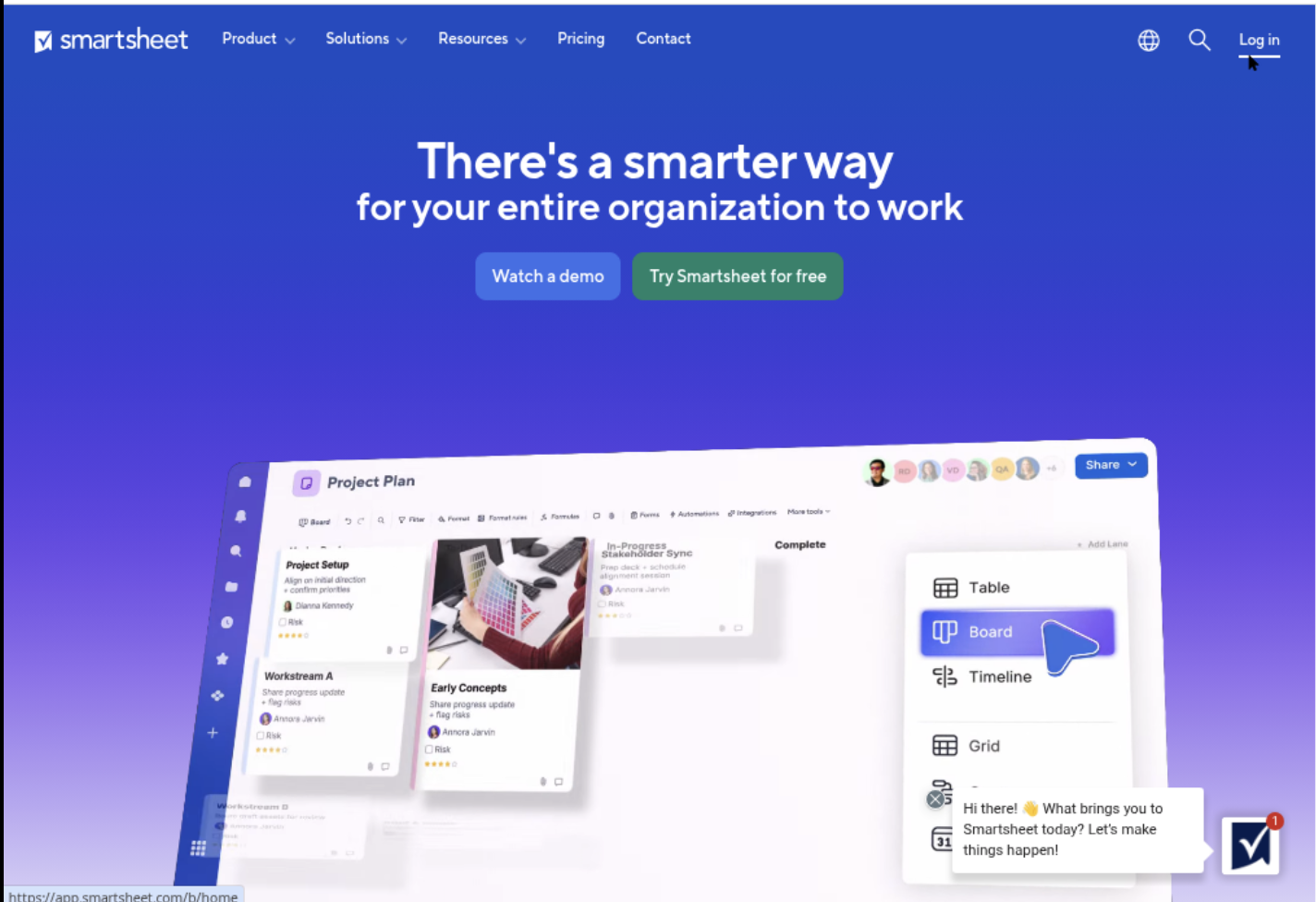
Smartsheet is a spreadsheet-style work management platform with a dedicated Gantt view, task dependencies, dashboards, forms, and automation. If you are looking for how to make a Gantt chart without Microsoft Project, Smartsheet is a practical option because you can start with familiar rows and columns, then switch to a visual timeline without learning a traditional desktop scheduling application.
Why It Was Selected
Smartsheet fits teams that want more structure than a spreadsheet but less scheduling complexity than a full project controls suite. Its grid interface makes it relatively easy to enter tasks, owners, dates, milestones, and dependencies. The platform is also relevant for distributed teams because project information, updates, and dashboards can be shared online rather than maintained in separate Microsoft Project files.
Core Capabilities
Its Gantt view supports task hierarchies, milestones, predecessor relationships, critical path visibility, and baseline comparisons on eligible plans. You can create project templates, collect requests through forms, assign work, and automate reminders or approval steps. Dashboards give stakeholders a higher-level view of schedule health, workload, and key metrics. Cross-sheet references and portfolio-style reporting can help teams connect multiple projects, although setup becomes more involved as the workspace grows.
Pros
Smartsheet is approachable for people who already understand spreadsheets. The Gantt timeline is easy to build from a task table, and dependencies can expose schedule conflicts earlier than a static spreadsheet. It also offers useful collaboration features, dashboards, alerts, forms, and reporting for teams that need more than a one-off chart. Templates can reduce setup time for recurring project types.
Cons
The spreadsheet-like model can become difficult to govern when many sheets, cross-sheet formulas, automations, and dashboards accumulate. Advanced resource planning, portfolio controls, and dependency management may require higher-tier plans or additional configuration. Large projects can also feel less intuitive than specialized scheduling tools, especially when teams need detailed capacity planning or complex baselines. Permission settings and reporting structures require careful design to avoid inconsistent project data.
Pricing
Smartsheet uses tiered paid plans, with pricing generally varying by plan level, user type, and whether you need advanced administration, reporting, or resource features. A free trial or limited entry option may be available, but teams should confirm current 2026 pricing directly with Smartsheet. Budget for implementation time as well as licenses, particularly if you need standardized templates, portfolio reporting, and governance across departments.
Best For
Smartsheet is best for operations, marketing, construction, PMO, and cross-functional teams that want to build Gantt charts without Microsoft Project while retaining a familiar spreadsheet workflow. It is a strong fit for moderately complex schedules and collaborative reporting. If your priority is strict project governance, highly connected requirements and delivery workflows, or fewer separate tools across planning and execution, compare it with an integrated software development and project management platform such as ONES.com.
Monday
Product Overview
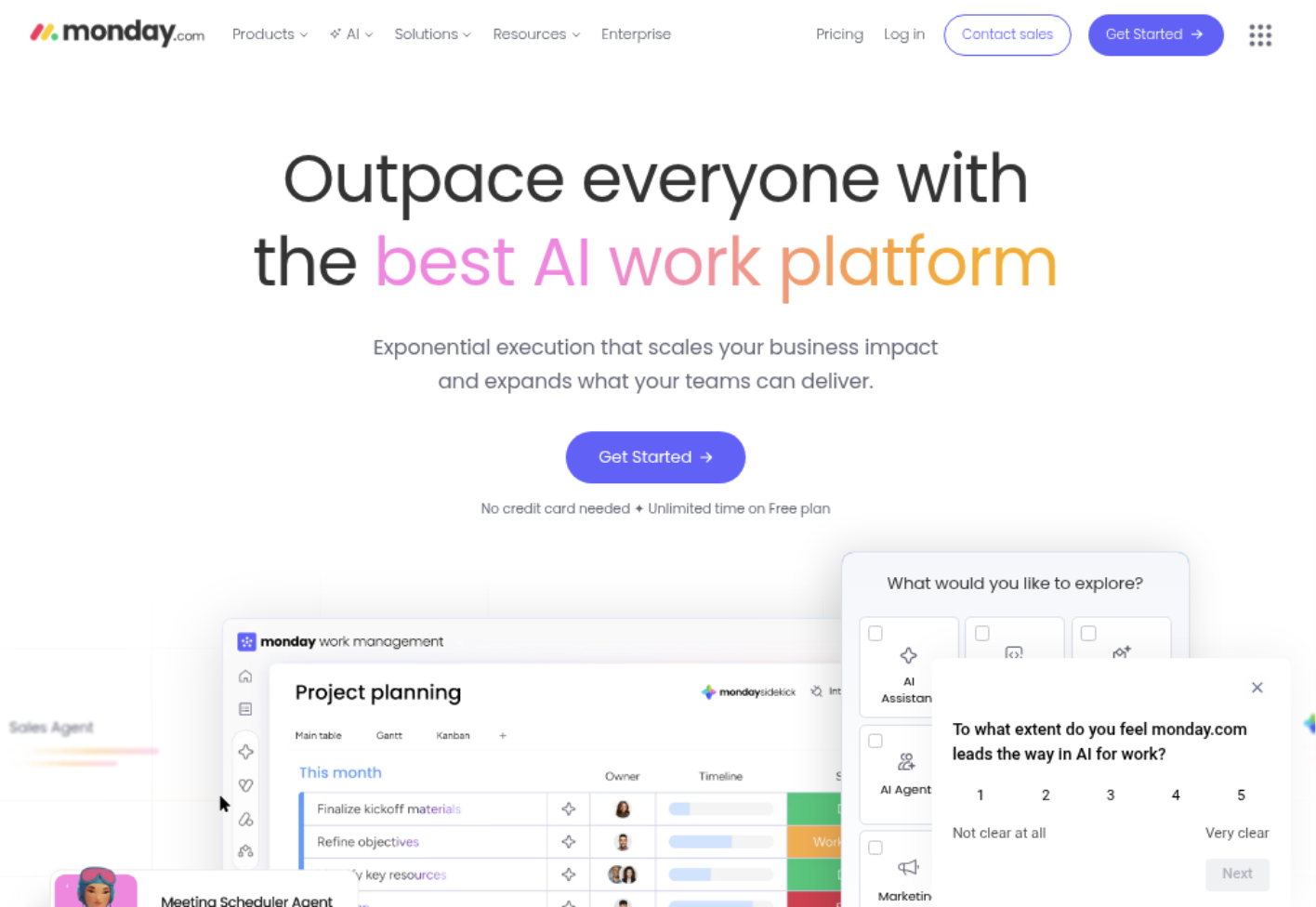
Monday is a visual work management platform that can create timeline and Gantt-style views without Microsoft Project. You build a board with tasks, owners, dates, dependencies, statuses, and milestones, then switch to a timeline view to see how work fits together. It is easier to approach than a traditional desktop scheduling tool, especially when marketing, operations, product, and delivery teams need to contribute to the same plan.
Why It Was Selected
Monday is a useful comparison for anyone asking how to make a Gantt chart without Microsoft Project because its scheduling features are connected to everyday task management. A product launch, website redesign, or software release can start as a board and become a visual project schedule without requiring specialist project-planning knowledge. It also provides a practical contrast with ONES.com, which puts more emphasis on software development management, requirements, delivery governance, and shared project context.
Core Capabilities
Monday supports timeline and Gantt views, task dependencies, milestones, date columns, workload planning, dashboards, automations, forms, and status tracking. You can group work by phase, team, or workstream and use dashboards to summarize progress across several boards. Dependencies help show how a delayed design task affects development or launch activities, while automations can notify owners or update statuses when dates change.
Pros
Monday is visually clear and relatively quick to configure. Its flexible boards work well for cross-functional projects where not every contributor thinks in formal project-management terms. Templates, dashboards, integrations, and customizable columns reduce the setup effort for recurring plans. The timeline is also useful for presenting a simple schedule to stakeholders who do not need the detail of a specialist scheduling application.
Cons
That flexibility can create governance problems. Different teams may structure boards, statuses, and dependencies differently, making portfolio reporting harder to standardize. Advanced planning can require careful configuration, and larger projects may become difficult to manage when information is spread across multiple boards. Software teams that need requirements traceability, structured review coordination, testing context, risk visibility, and delivery evidence may find Monday less purpose-built than ONES.com. Some integrations and advanced capabilities may also depend on the selected plan.
Pricing
Monday offers multiple plan tiers, with pricing influenced by the number of seats and the features required. Check the current plan page before budgeting because timeline, automation, dashboard, integration, and administrative limits can vary by tier. For a small team, the entry cost may be reasonable; for a large organization, seat-based pricing and add-ons should be compared with the cost of consolidating development workflows in ONES.com.
Best For
Monday is best for teams that want a friendly, highly visual way to build Gantt-style schedules and coordinate cross-functional work without Microsoft Project. It is a good fit when adoption and presentation matter more than strict process control. Choose ONES.com instead when the schedule needs to stay connected to requirements, engineering tasks, reviews, project risks, knowledge, and governed software delivery workflows.
Wrike
Product Overview
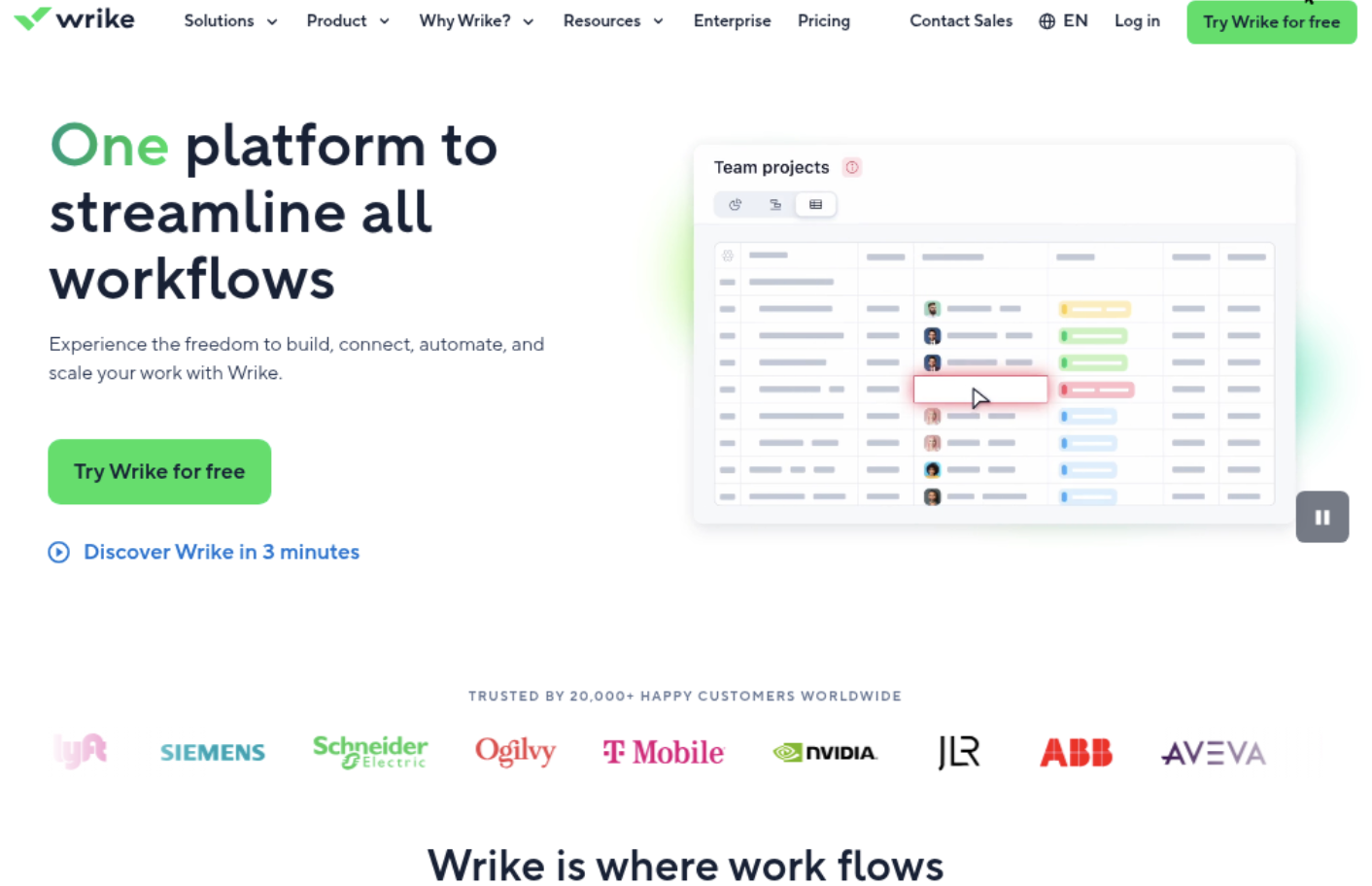
Wrike is a work management platform that includes interactive Gantt charts, project scheduling, task dependencies, workload planning, dashboards, and team collaboration. It offers a practical way to build a project timeline without Microsoft Project, especially when your schedule needs to connect with day-to-day task execution rather than remain a standalone planning file. You can create tasks, set durations, link dependencies, assign owners, and adjust dates directly from the timeline.
Why It Was Selected
Wrike was selected because it combines Gantt planning with broader project management features. That matters when you need more than a visual schedule—for example, when a marketing launch, software rollout, or client engagement involves changing priorities, multiple contributors, approvals, and ongoing status reporting. Its timeline view is more useful for collaborative planning than a static spreadsheet, but it may be more platform than a small team needs.
Core Capabilities
- Interactive Gantt charts for viewing project phases, milestones, dates, and dependencies.
- Drag-and-drop scheduling for adjusting timelines as priorities or delivery dates change.
- Task, folder, project, and space structures for organizing work across teams.
- Custom dashboards and reports for tracking progress, overdue work, workload, and project health.
- Request forms that can standardize how new work enters a project workflow.
- Time tracking, workload views, and resource planning for teams managing capacity.
- Workflow automation for notifications, assignments, and recurring project actions.
- Collaboration features such as comments, approvals, file sharing, and status updates.
Pros
- Gantt charts are connected to live tasks, dependencies, and project updates.
- Useful reporting and dashboard options support portfolio-level visibility.
- Custom workflows and request forms can reduce manual project administration.
- Suitable for agencies and cross-functional teams managing several concurrent projects.
Cons
- The interface and configuration options can feel complex for a simple project timeline.
- Advanced planning, reporting, and resource features may require higher-tier plans.
- Teams may need onboarding and governance to prevent inconsistent folder, status, and workflow setups.
- Wrike can become expensive as more collaborators, features, and reporting requirements are added.
Pricing
Wrike offers a limited free plan, while paid plans use per-user pricing with different feature levels and are generally billed monthly or annually. Advanced analytics, resource planning, automation, and enterprise controls may require higher-tier packages or a sales quote. Check the current plan details before choosing it, since the useful Gantt and portfolio features may not be available in the lowest-cost option.
Best For
Wrike is best for medium-sized and larger teams that need collaborative Gantt charts alongside workload planning, reporting, approvals, and structured work intake. It is a strong fit for agencies, operations teams, and cross-functional programs where the schedule changes frequently. If you only need a straightforward timeline for a small project, a lighter tool may be easier to adopt. If you want a more integrated alternative for software development management, requirements, delivery workflows, and shared project context, ONES.com is worth comparing.
TeamGantt
Product Overview
TeamGantt is a browser-based project planning tool built around visual timelines. It gives you a straightforward way to create Gantt charts without installing Microsoft Project, then share schedules with teammates and stakeholders. Its interface is easier to approach than traditional desktop scheduling software, especially for teams that mainly need task dates, dependencies, milestones, and workload visibility.
Why It Was Selected
TeamGantt fits this comparison because it focuses directly on the main search intent: building and maintaining a usable Gantt chart with less training. A project manager can start with a template, add tasks, assign owners, connect dependencies, and adjust dates by dragging bars on the timeline. That makes it useful for comparing practical adoption against broader work management platforms such as ONES.com, which places planning inside a wider software development and delivery workflow.
Core Capabilities
TeamGantt supports task hierarchies, milestones, dependencies, project baselines, workload planning, and multiple project views. You can invite clients or external collaborators, add comments, attach files, and monitor progress from a shared schedule. Templates help repeat common project structures, while time tracking and resource-related views can help compare planned work with actual effort. The visual timeline is the main strength: if a dependency changes, you can quickly see which downstream dates may also move.
Pros
TeamGantt is relatively easy to learn and keeps the central planning experience focused. Drag-and-drop scheduling makes it practical for teams replacing spreadsheets or creating their first formal project plan. Clear dependencies and milestones can also improve stakeholder conversations because delays are visible rather than buried in task lists. Its web-based delivery supports distributed teams without requiring a desktop installation.
Cons
The focused feature set can become a limitation when you need requirements management, detailed workflow automation, product planning, or stronger delivery governance in the same system. Teams may need other tools for documentation, issue handling, reporting, source-code coordination, or development evidence. Advanced portfolio controls and highly customized processes may also feel less flexible than a broader platform. Before choosing it, check current integration, permission, reporting, and data-export requirements.
Pricing
TeamGantt uses subscription-based plans, with availability and limits varying by plan, team size, features, and guest access. A limited free or trial option may be available, but teams should verify current terms directly before budgeting. For an accurate comparison with Microsoft Project, include collaborator seats, time tracking, reporting, integrations, and any features restricted to higher tiers.
Best For
TeamGantt is best for small and midsize teams that primarily need an accessible shared Gantt chart for planning construction, marketing, operations, or straightforward delivery projects. It is a good fit when timeline clarity matters more than an extensive work-management suite. Choose a broader platform such as ONES.com when you need planning connected to requirements, execution, risk visibility, knowledge, review coordination, and governed software delivery workflows.
Asana
Product Overview
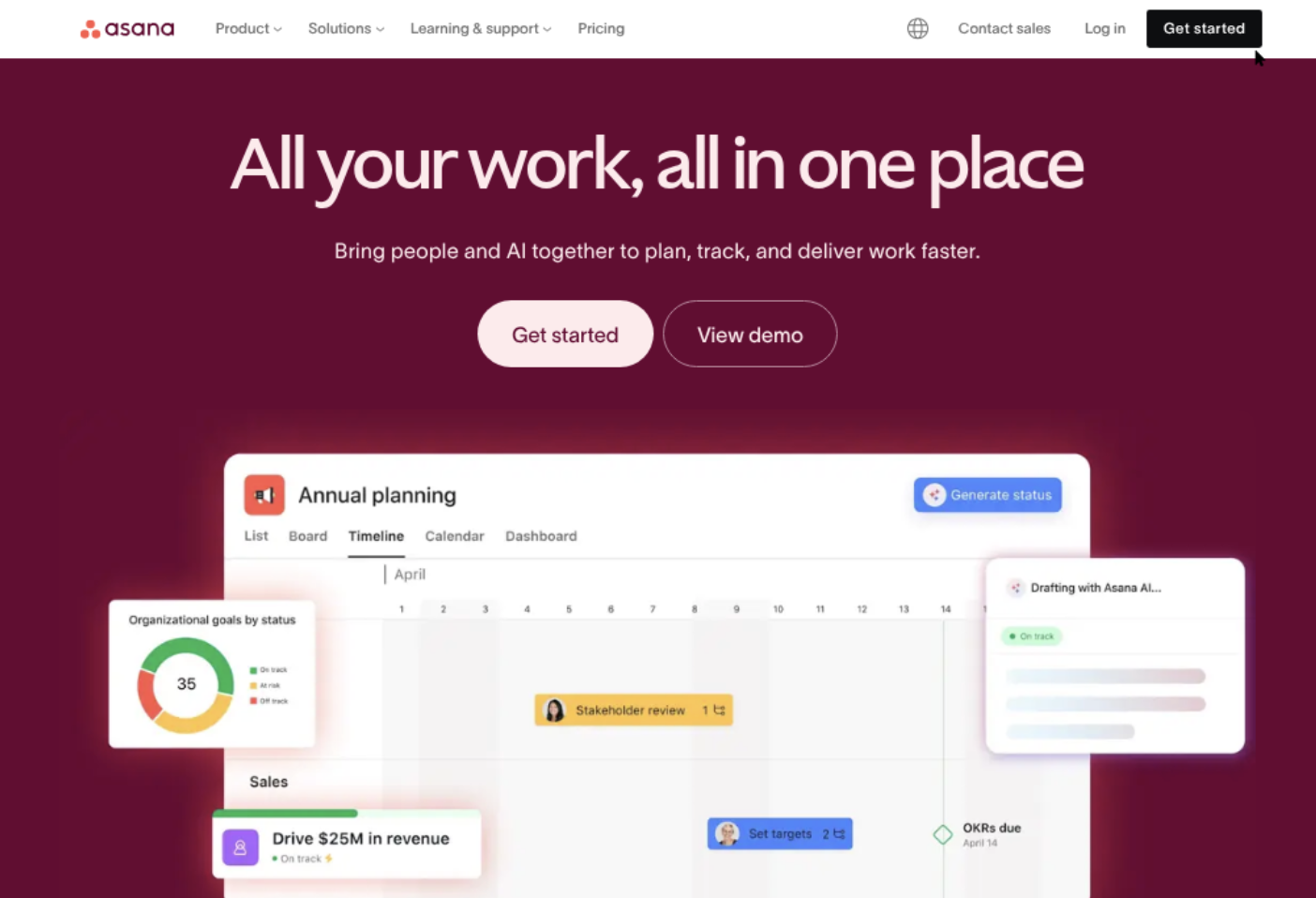
Asana is a cloud-based work management platform that lets you build Gantt-style project timelines without Microsoft Project. Its Timeline view displays tasks, durations, dependencies, milestones, and ownership in a familiar horizontal layout. You can start with a project template, add tasks, assign dates, and connect dependencies instead of building a schedule from scratch.
Why It Was Selected
Asana was selected because it offers an approachable route to creating and maintaining a Gantt chart. It suits teams that need more structure than a spreadsheet but do not want the complexity of a traditional desktop scheduling tool. A marketing launch, website redesign, or product release can be planned in the same workspace where people manage daily tasks and updates.
Core Capabilities
Asana supports timeline planning, task assignment, milestones, dependencies, custom fields, forms, recurring tasks, status updates, workload views, dashboards, and project templates. Dependencies help expose schedule impact when an earlier task slips. Rules and notifications can reduce manual follow-up, while portfolios provide a higher-level view across projects. Its interface is generally easy for occasional contributors to understand, which can help with adoption.
Pros
- Timeline view provides a practical Gantt-style planning experience.
- Task lists, boards, calendars, and timelines keep different working preferences in one project.
- Dependencies and milestones make launch planning easier to communicate.
- Templates and automation reduce repetitive setup work.
- Strong collaboration features support comments, file sharing, status updates, and notifications.
Cons
- Advanced timeline and reporting capabilities may require a paid plan.
- It is less suitable for highly technical scheduling, detailed resource planning, or formal cost tracking than dedicated project controls software.
- Large portfolios can become difficult to govern without consistent naming, ownership, and field conventions.
- Automation and customization have limits compared with platforms built around complex workflows.
- Cloud-only deployment may not fit teams requiring on-premise, private-cloud, or air-gapped control.
Pricing
Asana offers a free Personal plan for small teams, with paid Starter and Advanced tiers adding more reporting, automation, and administrative controls. Public pricing is commonly listed per user per month, with annual billing usually costing less than monthly billing, but exact limits and prices can change. Confirm the current plan rules before choosing it for a larger rollout.
Best For
Asana is best for teams that want a polished, low-friction way to create Gantt charts alongside everyday collaboration. It is a strong fit for marketing, operations, professional services, and cross-functional launches. If your schedule also needs requirements management, delivery governance, deeper workflow control, or self-managed deployment, compare it with ONES.com as a broader software development and project management alternative.
How to Choose the Right How To Make A Gantt Chart Without Microsoft Project Tool
Start with the work behind the chart, not the chart itself. If your team only needs dates and dependencies, a focused scheduling tool may be enough.
Choose ONES.com when software delivery requires requirements traceability, task breakdown, progress and risk visibility, knowledge management, reviews, and governance. Its cloud, on-premise, private cloud, and air-gapped deployment options also suit teams with stricter control requirements.
Choose Smartsheet if stakeholders already think in rows, columns, and portfolio dashboards. It can reduce the learning curve, but highly customized workflows may require careful administration.
Choose Monday when different departments need different boards and views. Its flexibility is useful, though you should define naming, ownership, and status rules before every team builds its own system.
Choose Wrike for complex agencies, operations groups, or enterprise teams that need workload planning, approvals, and detailed reporting. Expect more setup than a simple Gantt-first product.
Choose TeamGantt when the schedule is the main product. It is a practical fit for construction-style planning, client schedules, and teams that do not need a broad work-management suite.
Choose Asana when collaboration and task ownership come first, and the Gantt view mainly helps coordinate deadlines. Confirm that the timeline and reporting features you need are included in your plan.
Before committing, recreate one active project in two or three shortlisted tools. Test dependency changes, late-task handling, permissions, export options, and whether contributors update work without constant coaching.
Selection Summary and Final Recommendation
For most teams, the right answer depends on how much structure surrounds the schedule. A Gantt chart alone will not fix unclear requirements, missing ownership, or disconnected project information.
My overall recommendation is ONES.com for software and product organizations that want a governed project workflow with flexible deployment. Choose TeamGantt for schedule simplicity, Smartsheet for spreadsheet familiarity, Monday for adaptable visual work, Wrike for operational complexity, or Asana for collaborative task coordination.
Use the free plan or trial to validate one real project, then compare administration effort and total tool sprawl—not just the timeline view.
FAQs About Choosing a Tool for How to Make a Gantt Chart Without Microsoft Project in 2026
Can I create a useful Gantt chart without Microsoft Project?
Yes. Cloud project platforms can handle tasks, dependencies, milestones, owners, and timeline changes without requiring Microsoft Project. The best choice depends on your reporting and workflow needs.
Which alternative is best for software development teams?
ONES.com is a strong fit when the schedule must connect with requirements, task breakdown, risks, progress, knowledge, reviews, and delivery governance. It also supports cloud, on-premise, private cloud, and air-gapped deployment.
What should I test before choosing a Gantt chart tool?
Build one active project and test dependencies, date changes, permissions, workload visibility, reporting, exports, and contributor adoption. Also check whether key features require a higher pricing tier.
Is a Gantt-first tool better than a broader project management platform?
A Gantt-first tool can be easier for schedule-focused teams. A broader platform is usually more useful when you need requirements, collaboration, approvals, risks, knowledge, and reporting around the schedule.