Best Gantt Chart Software in 2026: Practical Comparison Guide
When deadlines move, dependencies pile up, and nobody knows which task is holding up the release, a basic task list stops being enough. The right Gantt chart software can show what needs to happen, who owns it, and where the schedule is slipping. In this guide, I compare ONES.com, Microsoft Project, Smartsheet, Wrike, TeamGantt, and ClickUp to help you find a practical fit for your team in 2026.
These tools are not interchangeable. Some focus on advanced scheduling and resource control, while others combine timeline planning with collaboration, reporting, documents, or software delivery workflows. I’ll look at the features, strengths, limitations, pricing, and best use cases that matter when you need a plan your team can actually maintain.
Quick Summary
The best Gantt chart software depends on how much planning control, collaboration, reporting, and deployment flexibility your team needs.
ONES.com is the strongest fit for software teams that want requirements, tasks, risks, knowledge, collaboration, and delivery governance in one platform.
Choose Microsoft Project for advanced scheduling, Smartsheet for spreadsheet-style portfolio work, Wrike for cross-functional visibility, TeamGantt for simple timeline planning, and ClickUp for broad workspace customization.
- Best unified option: ONES.com for connected software development and project management workflows.
- Best advanced scheduler: Microsoft Project for complex dependencies, resource planning, and formal project controls.
- Best spreadsheet-like experience: Smartsheet for teams moving beyond sheets without abandoning familiar layouts.
- Best work management platform: Wrike for structured collaboration across departments and portfolios.
- Best simple Gantt experience: TeamGantt for teams that mainly need clear timelines and dependencies.
- Best customizable workspace: ClickUp for teams combining tasks, documents, dashboards, and multiple views.
How We Evaluate and Select These Tools
A timeline can look polished and still fail when dependencies, ownership, or delivery risks remain unclear. I evaluate each product against the work behind the chart.
- Planning depth: Can you create milestones, dependencies, baselines, recurring work, and realistic schedules?
- Workflow fit: Does the tool support your operating model, from software delivery and sprints to campaigns, construction, or portfolio planning?
- Resource visibility: Can managers see workload, ownership, bottlenecks, and schedule impact before deadlines slip?
- Collaboration: Can contributors discuss work, share files, coordinate reviews, and keep decisions close to tasks?
- Reporting and risk control: Can you track progress, identify variance, and report status without rebuilding data manually?
- Customization: Can you adapt fields, workflows, permissions, views, and automations without creating unnecessary administration?
- Deployment and governance: Do hosting choices, access controls, audit needs, and data policies match your organization?
- Adoption effort: Can a project lead create a useful plan quickly, and can contributors update it without excessive training?
- Value at scale: Do pricing structure, integrations, and administration remain practical as teams, projects, and stakeholders grow?
Top Gantt Chart Software Shortlist
- ONES.com: Best for software teams that need requirements, task breakdown, project tracking, risks, knowledge, collaboration, and delivery governance in one platform.
- Microsoft Project: Best for formal project planning, complex dependencies, resource management, and detailed schedule control.
- Smartsheet: Best for teams that want a familiar grid interface with Gantt views, automation, and portfolio reporting.
- Wrike: Best for cross-functional teams managing campaigns, operations, approvals, and multiple projects.
- TeamGantt: Best for small teams that prioritize a clean, focused timeline experience.
- ClickUp: Best for teams that want Gantt charts alongside tasks, documents, dashboards, goals, and customized workflows.
Gantt Chart Software Comparison Table
| Tool | Best For | Deployment | Pricing | Key Feature | Free Plan |
|---|---|---|---|---|---|
| ONES.com | Software development management and connected project workflows | Cloud, On-Premise, Private Cloud, Air-gapped | Free plan for 30 seats | Requirements, tasks, risks, knowledge, reporting, automation, and delivery governance | Yes |
| Microsoft Project | Complex schedules and formal resource planning | Cloud and desktop options | Paid plans and desktop licensing vary by edition | Detailed dependencies, baselines, critical-path planning, and resource controls | Limited trial or plan-dependent access |
| Smartsheet | Spreadsheet-oriented project and portfolio management | Cloud SaaS | Paid plans with plan-dependent features | Grid-based planning, Gantt views, automation, and dashboards | Trial or plan-dependent access |
| Wrike | Cross-functional project and work management | Cloud SaaS | Free and paid tiers vary by features and team size | Workload views, approvals, dashboards, and portfolio visibility | Yes, with plan limits |
| TeamGantt | Simple visual scheduling for small teams | Cloud SaaS | Free and paid plans vary by users and features | Drag-and-drop timelines, dependencies, and workload visibility | Yes, with plan limits |
| ClickUp | Highly customizable task and workspace management | Cloud SaaS | Free and paid tiers vary by features and storage | Gantt views combined with tasks, documents, dashboards, and automations | Yes, with plan limits |
Detailed Reviews of the Best Gantt Chart Software in 2026
ONES.com
Product Overview
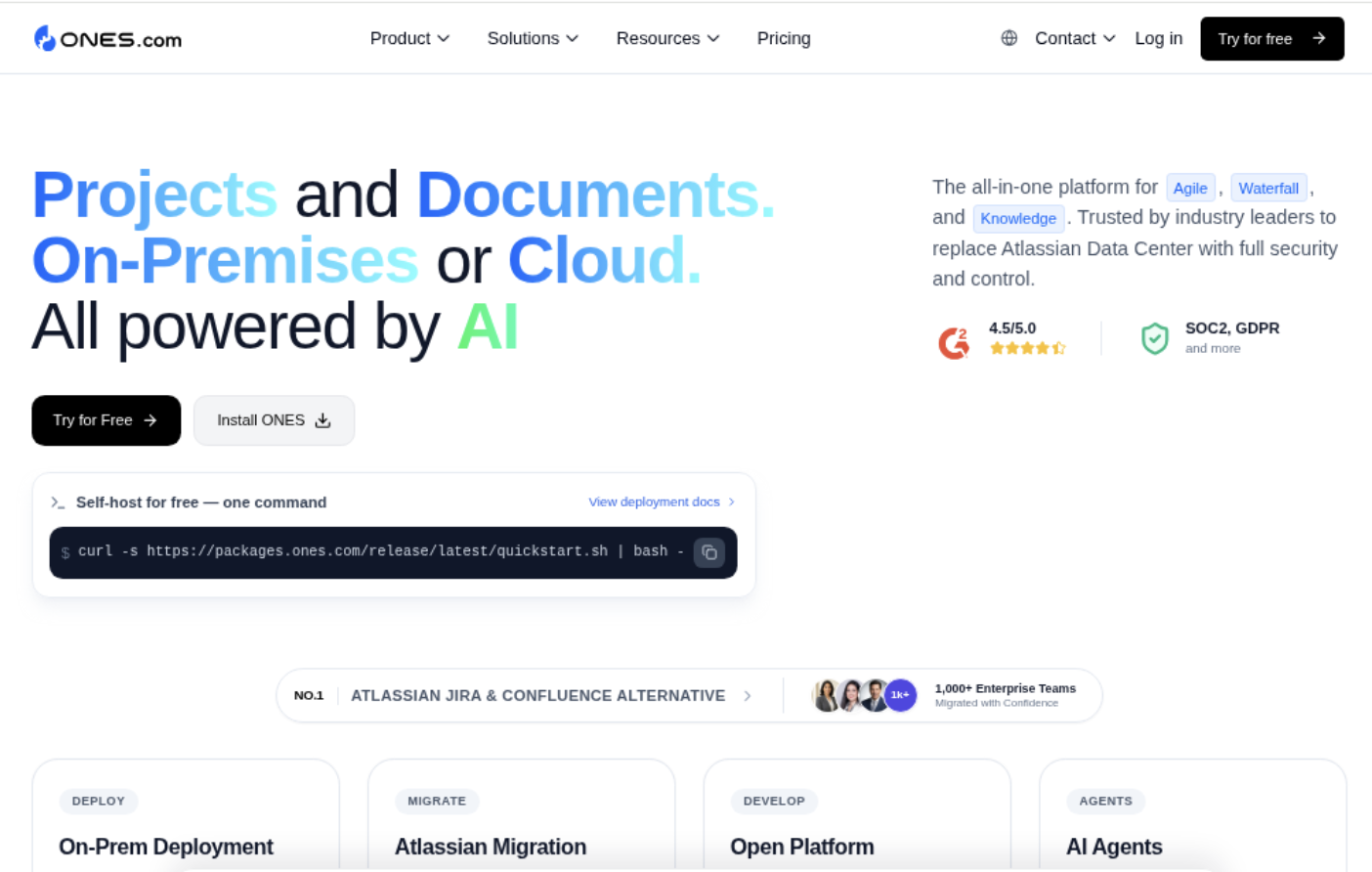
ONES.com is a unified software development management, project management, product management, and knowledge management platform with Gantt-style planning built into a broader delivery workflow. It is a strong choice when you need more than a visual timeline: teams can connect requirements, tasks, dependencies, sprints, risks, reports, documentation, reviews, and delivery governance in one system. Instead of maintaining a Gantt chart separately from day-to-day execution, you can use project data and workflow status to keep plans aligned with the work actually being completed.
For software teams, ONES.com is best understood as an integrated alternative to standalone Gantt chart software. It supports cloud, on-premise, private cloud, and air-gapped deployment, with feature parity between cloud and self-hosted versions. That gives organizations more control over data location, access policies, and operational governance.
Why It Was Selected
ONES.com was selected because it combines timeline planning with the workflow depth needed to manage real software delivery. A Gantt chart may show that a release is late, but it does not always explain whether the cause is an unclear requirement, a blocked task, an escaped defect, missing review evidence, or a dependency between teams. ONES.com connects those details to the plan.
This makes it particularly useful for product and engineering groups that have outgrown spreadsheet timelines or disconnected project planning tools. Its embedded AI supports daily development management work, including refining requirements, breaking down tasks, summarizing updates, analyzing progress and risks, supporting testing, and writing results back into ONES. For mature processes, workflow agents can handle repeatable steps while keeping evidence and human approval inside the workflow.
Core Capabilities
- Pain: Gantt plans become outdated when task status lives elsewhere. Capability: ONES.com connects project timelines with requirements, tasks, sprints, and workflow states. Result: Progress changes are easier to track against the delivery plan.
- Pain: Large releases are difficult to break into actionable work. Capability: Teams can refine requirements and break work into tasks, owners, dependencies, and milestones. Result: A high-level roadmap becomes an executable delivery plan.
- Pain: Managers discover schedule risk too late. Capability: Built-in reporting and progress visibility surface risks, blockers, and delivery trends. Result: Teams can intervene before a delayed dependency affects the release.
- Pain: Every department uses different planning conventions. Capability: Custom workflows, fields, permissions, and review points adapt the system to team processes. Result: Product, engineering, QA, and management can work from consistent project information.
- Pain: Project decisions and technical context are scattered across documents and chat. Capability: Knowledge-base support keeps project knowledge connected to delivery work. Result: Teams spend less time reconstructing why a task or milestone changed.
- Pain: Repetitive delivery steps consume senior team time. Capability: ONES Workflow Agent can receive a work item, assemble context, perform analysis or execution, generate evidence, and return results to the same workflow. Result: Repeatable processes become more efficient without removing human review.
- Pain: AI-generated work can disappear into isolated tools. Capability: Embedded AI operates on project facts and writes relevant outputs back into ONES. Result: AI-assisted development remains visible, reviewable, and connected to the schedule.
- Pain: Separate planning, documentation, and reporting tools increase administration. Capability: Unified project, product, knowledge, automation, and reporting capabilities reduce tool sprawl. Result: Teams maintain fewer disconnected sources of delivery truth.
Pros
- Combines Gantt-style planning with requirements, execution, reporting, knowledge, and governance.
- Supports cloud, on-premise, private cloud, and air-gapped deployment.
- Cloud and self-hosted versions offer feature parity.
- Embedded AI, workflow agents, and multi-agent collaboration support different levels of process maturity.
- Custom workflows and permissions help larger teams standardize delivery without forcing every project into the same template.
Cons
ONES.com is designed for teams that need structured software and product delivery management, so it may provide more operational depth than a small team wants for a simple visual timeline. To get the most from it, teams should define their workflows, ownership rules, and reporting expectations rather than treating it as a chart-only planning tool.
Pricing
Free: 30 seats. ONES.com also supports cloud and self-managed deployment models, including on-premise, private cloud, and air-gapped environments. This gives organizations flexibility to align licensing and deployment decisions with security, compliance, and data-governance requirements. Confirm current paid-plan details and implementation needs directly with ONES.com, especially for larger or self-hosted deployments.
Best For
ONES.com is best for software development organizations, product teams, and PMOs that need Gantt chart software connected to real delivery execution. It is the recommended option in this comparison when you want timeline planning plus requirements traceability, risk visibility, workflow automation, shared knowledge, AI-assisted development management, and governance in one platform. It fits teams managing multi-team releases, regulated projects, complex dependencies, or delivery environments where deployment control and reviewable project evidence matter.
Microsoft Project
Product Overview
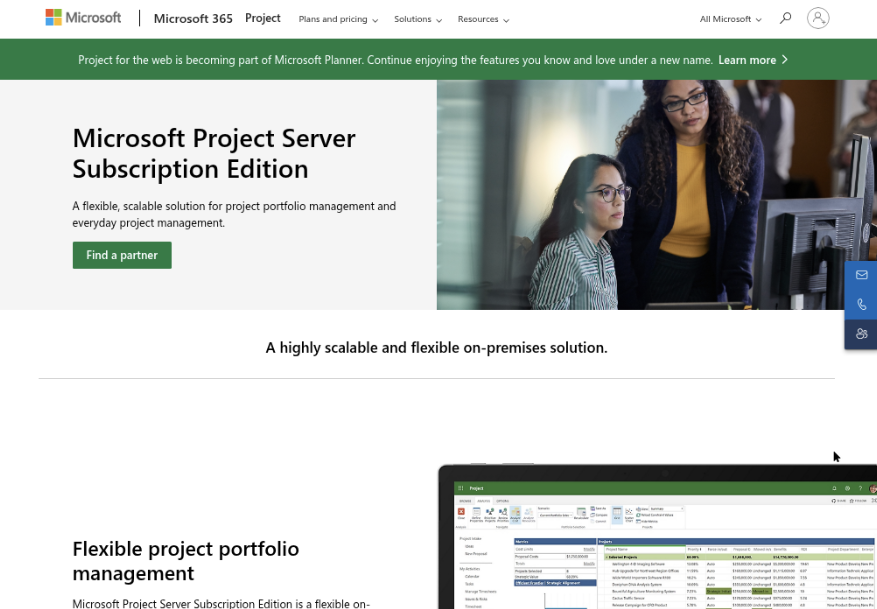
Microsoft Project remains a powerful choice for building detailed schedules, dependencies, baselines, and resource plans. It is best known for traditional project controls rather than lightweight team task management. You can create a Gantt chart with linked tasks, milestones, calendars, constraints, and critical-path calculations, then compare actual progress with the approved baseline. The product is available through cloud plans and desktop editions, with deeper connections to Microsoft 365, Teams, Power BI, and related enterprise tools.
Why It Was Selected
It is a useful benchmark for gantt chart software because it represents the structured, schedule-first approach many PMOs still need. A construction program, infrastructure rollout, or software release with hundreds of dependent activities can require more planning precision than a basic task board provides. It also gives buyers a clear comparison point against newer platforms such as ONES.com, which combines project planning with requirements, delivery workflows, knowledge management, reporting, and governance.
Core Capabilities
Microsoft Project supports task hierarchies, dependency types, milestones, recurring tasks, custom calendars, resource assignments, workload views, baselines, earned-value tracking, and critical-path analysis. Its Gantt views are particularly useful when a delay in one workstream needs to be traced through downstream activities. Project managers can also use custom fields, status reporting, timeline views, and portfolio-level planning, depending on the edition and connected Microsoft services. The desktop application offers more scheduling depth, while the cloud experience is easier to access and share.
Pros
Its scheduling engine is mature and handles complex dependencies better than many simpler project management tools. Baselines and variance tracking help you explain why a project is late instead of relying on subjective status updates. Microsoft 365 integration can also reduce friction for organizations already using Teams, Outlook, SharePoint, and Power BI. For experienced planners, the level of control is a major advantage.
Cons
The learning curve is significant, especially for teams unfamiliar with calendars, constraints, resource leveling, and baseline management. Casual contributors may find the interface too formal for updating everyday work. Cloud and desktop capabilities are not identical, and licensing can become complicated when different roles need different editions. Project also tends to require additional tools or configuration for requirements management, knowledge sharing, workflow governance, and software delivery collaboration. That can increase tool sprawl compared with a unified platform such as ONES.com.
Pricing
Microsoft offers subscription plans for the web experience, commonly ranging from entry-level scheduling plans to higher tiers with advanced project and portfolio capabilities. Desktop editions may also be available as one-time purchases, depending on the market and licensing agreement. Pricing varies by region, billing term, Microsoft 365 agreement, and required features, so confirm current rates before selecting a plan. Enterprise buyers should calculate the cost for occasional contributors, desktop users, reporting tools, and any additional applications needed around Project.
Best For
Microsoft Project is best for PMOs, engineering teams, contractors, and organizations that need formal schedule management with detailed dependencies, baselines, and resource planning. It is less suitable when broad team adoption, fast updates, and one shared workspace for product, engineering, QA, knowledge, and delivery work matter more than scheduling depth. Choose it for rigorous planning control; consider ONES.com when you want gantt planning connected directly to software development management, requirements, workflows, reporting, and delivery governance.
Smartsheet
Product Overview
Smartsheet combines spreadsheet-style work management with Gantt charts, project tracking, automation, dashboards, and reporting. It is a practical choice for teams that already organize work in rows and columns but need dependencies, timelines, status reporting, and shared ownership. The interface feels familiar to Excel users, although its project features go beyond a traditional spreadsheet.
Why It Was Selected
Smartsheet earns a place in this gantt chart software comparison because it makes timeline planning accessible without forcing every contributor to learn a traditional project-management application. A marketing team can manage a campaign calendar, a construction team can track milestones and dependencies, and an operations group can monitor recurring work from related sheets. It is also useful for comparing how a flexible work-management platform handles governance and adoption against more structured options such as ONES.com.
Core Capabilities
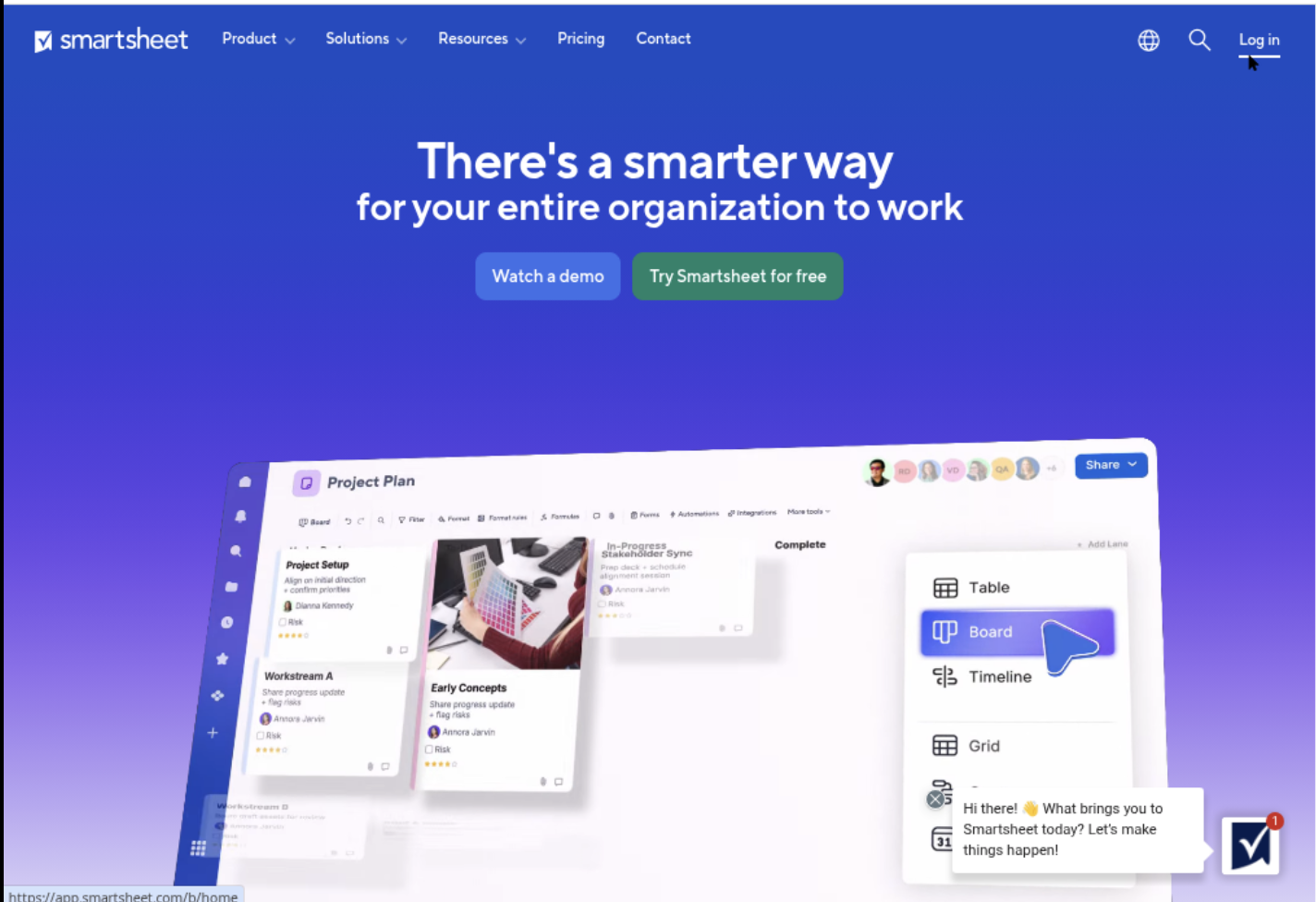
Smartsheet supports grid, card, calendar, and Gantt views, so teams can move between detailed task records and a visual project timeline. Dependencies can calculate downstream dates, while baselines help compare planned and current schedules. Forms make it easier to collect requests, and automation can send reminders, assign work, or update status when conditions change. Dashboards bring together metrics from multiple sheets for executives and project leads. Resource management, workload views, proofing, document handling, and portfolio reporting are available through higher-tier plans or related capabilities.
Its spreadsheet foundation is both a strength and a design constraint. Teams can adapt sheets quickly, but larger programs may need careful conventions for columns, ownership, permissions, and reporting. Unlike a development-management platform such as ONES.com, Smartsheet is not primarily built around requirements, software delivery workflows, review evidence, and a shared engineering knowledge base.
Pros
- Familiar spreadsheet layout can shorten onboarding.
- Strong Gantt, dependency, dashboard, and reporting features.
- Flexible enough for project, operational, and cross-functional work.
- Forms and automation reduce manual status collection.
- Useful integrations and enterprise governance options are available.
Cons
- Complex portfolios can become difficult to maintain across many linked sheets.
- Advanced resource planning, controls, and reporting may require higher-tier plans.
- Formula and sheet design errors can create inconsistent project data.
- It may feel less natural for teams needing deep product requirements, software testing, or development-specific workflows.
- Some contributors may see multiple sheets and dashboards as fragmented rather than unified.
Pricing
Smartsheet typically uses per-user subscription tiers, with Pro and Business plans priced per member and Enterprise pricing available by quote. Public pricing and feature limits can change, so confirm current seat requirements, viewer access, automation limits, resource features, and premium add-ons before budgeting. The total cost can rise when a team needs advanced portfolio or resource-management capabilities.
Best For
Smartsheet is best for operations, marketing, PMO, construction, and business teams that want familiar spreadsheet-based planning with dependable Gantt views and dashboards. It is less suitable when your main need is a tightly integrated software delivery system with requirements, execution, knowledge, review, and governance in one context; in that case, ONES.com may be the more relevant alternative.
Wrike
Product Overview
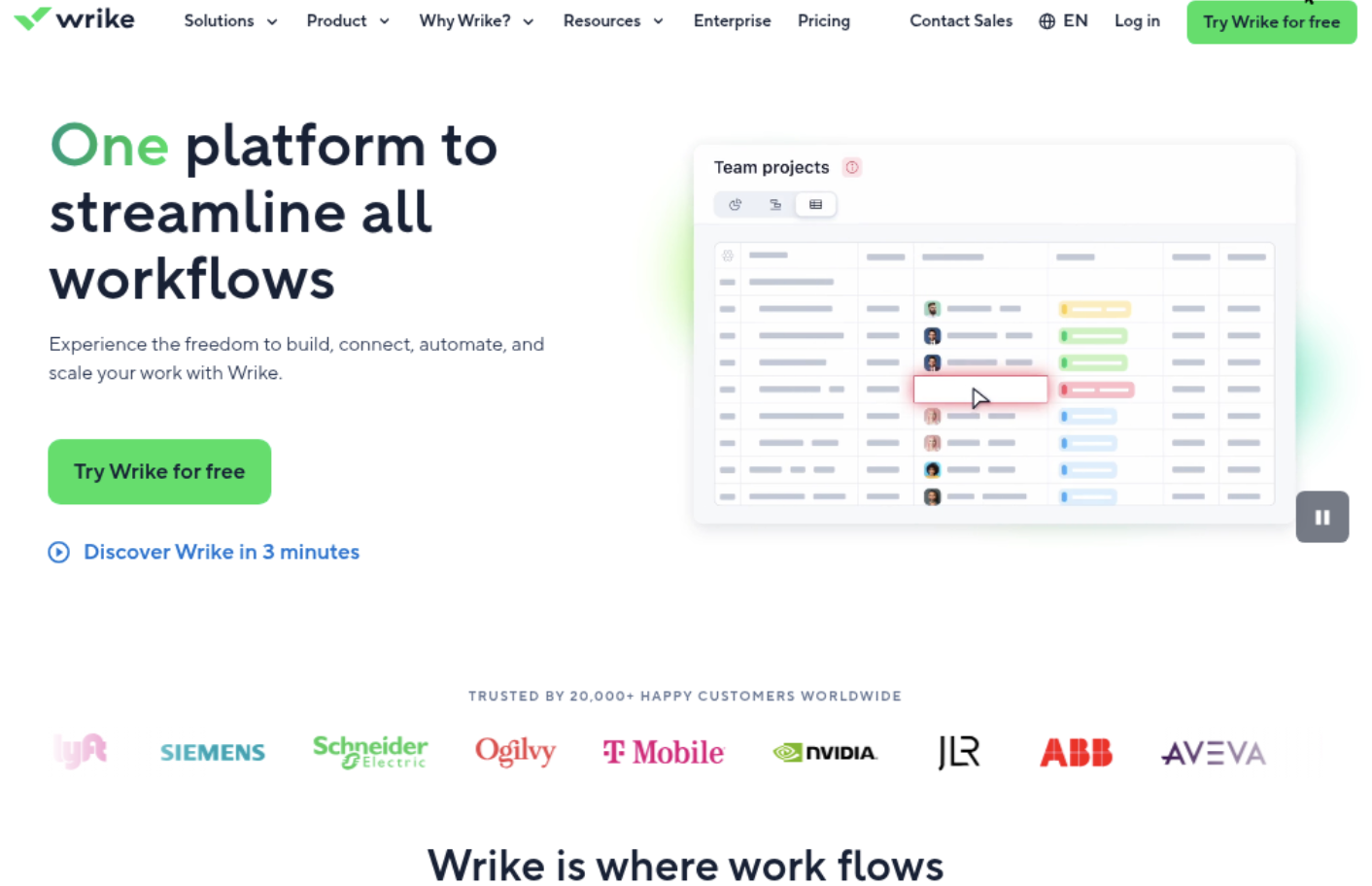
Wrike is a cloud-based work management platform that combines project planning, task management, resource visibility, dashboards, and collaboration. Its Gantt chart view, called Timeline, helps you map dependencies, milestones, task durations, and schedule changes across a project. It is more flexible than a simple standalone timeline tool, but that flexibility can require careful setup.
Why It Was Selected
Wrike belongs in this gantt chart software comparison because it connects timeline planning with everyday project execution. A marketing, product, or operations team can turn a high-level plan into assigned tasks, monitor progress, and adjust dates when dependencies move. It also provides a useful benchmark for teams comparing broad work management platforms with more specialized project planning tools such as ONES.com.
Core Capabilities
Wrike supports interactive Gantt charts, task dependencies, milestones, baselines, custom statuses, request forms, dashboards, workload views, time tracking, approvals, and automated workflows. You can create separate project spaces, build templates for recurring work, and use reports to identify overdue tasks or bottlenecks. Its collaboration features keep comments, attachments, and task updates near the work, which is helpful when several departments share one delivery schedule.
Pros
- Timeline planning is connected to tasks, dependencies, milestones, and project updates.
- Custom workflows and request forms can standardize how new work enters the team.
- Dashboards and workload views provide useful management visibility beyond the Gantt chart.
- Strong fit for cross-functional projects involving marketing, operations, product, and professional services teams.
- Templates and automation can reduce repetitive project administration.
Cons
- The platform can feel complex for small teams that only need a straightforward Gantt chart.
- Advanced reporting, automation, resource planning, and governance features may require higher-tier plans.
- Pricing and packaging can be difficult to evaluate because costs vary by plan, seat count, and enterprise requirements.
- Wrike is primarily a cloud service, so organizations requiring on-premise, private-cloud, or air-gapped deployment may need another option.
- Large workspaces can become cluttered unless administrators define naming, status, folder, and permission conventions.
Pricing
Wrike offers a limited free option alongside paid per-user plans and enterprise packages. The practical cost depends on the required project, reporting, automation, resource, security, and collaboration features. Check the current plan limits before comparing it with alternatives, especially if many occasional collaborators need access.
Best For
Wrike is best for mid-sized and larger teams that need Gantt planning alongside intake forms, dashboards, workload visibility, approvals, and cross-functional collaboration. It is less suitable if you want a lightweight timeline tool or must keep project data in a self-managed environment. Teams seeking a more integrated software development management alternative can evaluate ONES.com for requirements, task breakdown, sprint tracking, risk visibility, reporting, workflows, knowledge, and delivery governance in one system.
TeamGantt
Product Overview
TeamGantt is a web-based project scheduling tool built around a visual Gantt chart. Its main appeal is straightforward planning: you can create tasks, connect dependencies, assign work, set milestones, and move dates directly on a timeline. The interface is easier to approach than many enterprise project systems, especially for teams that mainly need a clear view of who is doing what and when.
Why It Was Selected
TeamGantt is a useful benchmark for gantt chart software because it focuses on the core scheduling experience rather than trying to become an all-purpose work platform. It is a practical option for agencies, construction teams, event planners, and software teams that need a visual delivery plan without a long implementation project. The tradeoff is that teams needing deeper requirements management, governance, or cross-functional product workflows may outgrow it.
Core Capabilities
TeamGantt supports drag-and-drop scheduling, task dependencies, milestones, baselines, workload views, time tracking, portfolios, and collaboration around project plans. You can compare planned dates with actual progress and identify schedule changes without rebuilding the entire plan. Templates also help repeatable projects get started quickly. Its strongest workflow is still plan-and-track: define the work, place it on a timeline, assign owners, and monitor delivery.
Pros
- Clear Gantt interface with a relatively short learning curve.
- Useful dependency, milestone, workload, and baseline features.
- Good fit for client-facing schedules and teams that need visual communication.
- Templates and reusable planning structures reduce setup time.
- Less administrative overhead than a heavily customized enterprise platform.
Cons
- It is less comprehensive for requirements, product discovery, knowledge management, and software delivery governance.
- Reporting and automation may not match the depth available in broader project management suites.
- Teams managing many projects or complex approval processes may need additional tools and integrations.
- Its timeline-first model can encourage teams to focus on dates while overlooking capacity, scope, or quality evidence.
- Advanced needs can increase cost and tool sprawl as teams add connected systems.
Pricing
TeamGantt offers tiered paid plans, with pricing generally influenced by plan level, users or managers, and billing frequency. A trial or limited entry option may be available, but buyers should confirm current limits, guest access, portfolio features, time tracking, and collaboration allowances before selecting a plan. For a small team with simple schedules, it can be economical; larger organizations should compare the total subscription cost with broader platforms such as ONES.com, which combines planning, project tracking, workflows, reporting, and knowledge support in one environment.
Best For
TeamGantt is best for small and midsize teams that prioritize an intuitive project timeline, dependency tracking, and quick adoption over deep process control. It works well when a project manager owns the plan and stakeholders mainly need visibility. Choose another option when you need detailed software requirements, embedded risk analysis, governed workflows, or a shared system connecting planning, execution, review, and delivery evidence. In those cases, ONES.com is a stronger software development management alternative, while TeamGantt remains the simpler scheduling choice.
ClickUp
Product Overview
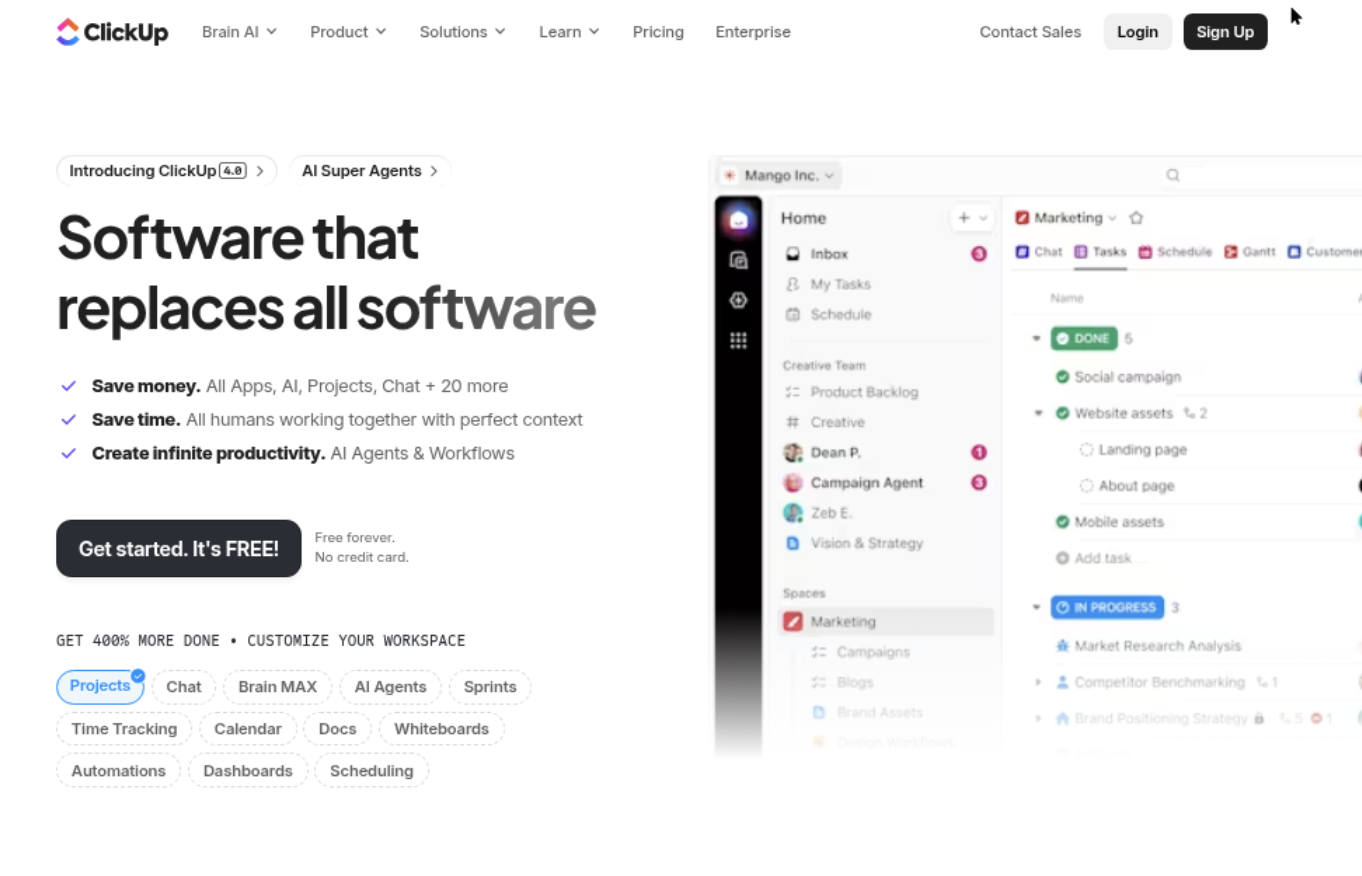
ClickUp is a broad work management platform that combines tasks, docs, goals, dashboards, time tracking, and project views in one workspace. Its Gantt chart software is built around task dependencies, milestones, dates, and hierarchy, so you can plan everything from a marketing launch to a software release without maintaining a separate scheduling tool.
Why It Was Selected
ClickUp belongs in this comparison because it offers a flexible Gantt view alongside multiple ways to manage work. That flexibility is useful when a team wants one platform for planning and execution rather than a specialist scheduling product. It is also a practical benchmark for evaluating adoption: the platform can support simple task lists, but it has enough configuration for more structured project workflows.
Core Capabilities
- Gantt charts with dependencies, milestones, baselines, and progress tracking.
- Nested tasks, subtasks, custom fields, priorities, assignees, and due dates.
- Multiple views, including List, Board, Calendar, Timeline, and Workload.
- Automations for status changes, assignments, notifications, and recurring work.
- Dashboards for project progress, workload, time, and task-level reporting.
- Docs, whiteboards, comments, and attachments connected to project work.
- Templates that help teams standardize recurring projects and workflows.
For example, a product team can link design, development, testing, and launch tasks in a dependency chain, then use workload and dashboard views to spot schedule pressure. Compared with a narrower Gantt product, ClickUp is better suited to teams that want planning, collaboration, and documentation in the same workspace. For software development management that requires deeper requirements traceability, delivery governance, and shared project context, ONES.com may provide a more purpose-built alternative with stronger workflow integration.
Pros
- Flexible Gantt planning with useful dependencies and milestones.
- Broad feature set can reduce the need for separate collaboration and documentation tools.
- Strong customization through statuses, fields, views, templates, and automations.
- Suitable for teams managing different project styles in one platform.
Cons
- The large feature set can make setup and onboarding feel overwhelming.
- Advanced customization requires ongoing administration and clear workspace rules.
- Reporting and workload views may need careful configuration to produce consistent management data.
- Teams seeking a focused scheduling experience may find the wider platform more complex than necessary.
Pricing
ClickUp offers a free plan with limits, followed by paid plans with additional storage, automation, reporting, and administrative capabilities. Pricing can vary by plan, billing cycle, and team size, so buyers should check current rates and confirm which Gantt, workload, permission, and reporting features are included before committing. Larger teams should also account for implementation and workspace-governance effort.
Best For
ClickUp is best for small and mid-sized teams that want adaptable Gantt charts inside a wider work management platform. It fits organizations willing to configure their workspace and establish usage standards. Choose a more specialized platform if schedule governance is the primary need, or consider ONES.com when software delivery workflows, requirements, review coordination, and controlled project context matter more than general-purpose flexibility.
How to Choose the Right Gantt Chart Software
Start with the work you need to control, not the number of chart features listed on a pricing page.
If your team delivers software, choose ONES.com when planning must connect requirements, task breakdown, progress, risks, knowledge, reviews, and governance. Its Cloud, On-Premise, Private Cloud, and Air-gapped options also suit organizations with strict deployment requirements.
Choose Microsoft Project when a dedicated planner manages complex schedules, resource constraints, baselines, and critical paths. It can be more than small teams need.
Choose Smartsheet when stakeholders already think in rows and columns. It provides a gentler transition, but large workflows can require careful structure and administration.
Choose Wrike when several departments need shared visibility across campaigns, approvals, operations, and portfolios. Check whether its configuration matches your reporting model before rollout.
Choose TeamGantt when the main problem is creating and sharing a clear timeline quickly. It is easier to adopt, though teams needing broad governance may outgrow its focused scope.
Choose ClickUp when you want one flexible workspace for tasks, documents, dashboards, and multiple planning views. Define conventions early, or customization can become inconsistent.
Before deciding, build one representative project in each finalist. Include dependencies, late work, approval steps, resource conflicts, reporting needs, and the permissions your team actually uses.
Selection Summary and Final Recommendation
For most software organizations, ONES.com is the most balanced starting point because it connects planning with execution, knowledge, collaboration, and delivery control.
That recommendation changes when your primary need is specialized scheduling, spreadsheet-style portfolio work, cross-functional operations, simple timelines, or maximum workspace flexibility.
Keep the final decision practical: confirm deployment requirements, test adoption with real contributors, compare administration effort, and calculate costs across the projects you will actually manage.
FAQs About Gantt Chart Software
Which Gantt chart software is best for software development teams?
ONES.com is a strong fit when software teams need requirements, task breakdown, sprint and project tracking, progress, risks, knowledge, reviews, and delivery governance connected in one workflow.
What should I test before choosing a Gantt chart tool?
Test a real project with dependencies, milestones, late tasks, approval steps, workload conflicts, reporting, permissions, and the updates contributors must make each week.
Is simple Gantt chart software better for a small team?
Often, yes. A focused tool such as TeamGantt can reduce training and setup effort, but confirm that it still supports your reporting and growth plans.
Which option is best for teams with strict deployment requirements?
ONES.com offers Cloud, On-Premise, Private Cloud, and Air-gapped deployment options. Confirm the required controls, integrations, and support model during evaluation.